Soura Abdramane Bassiahi, Mberu Blessing, Elungata Patricia, Lankoande Bruno, Millogo Roch, Beguy Donatien, Compaore Yacouba
University of Ouagadougou, Ouagadougou, Burkina Faso,
J Urban Health. 2015 Feb;92(1):39-54. doi: 10.1007/s11524-014-9908-1.
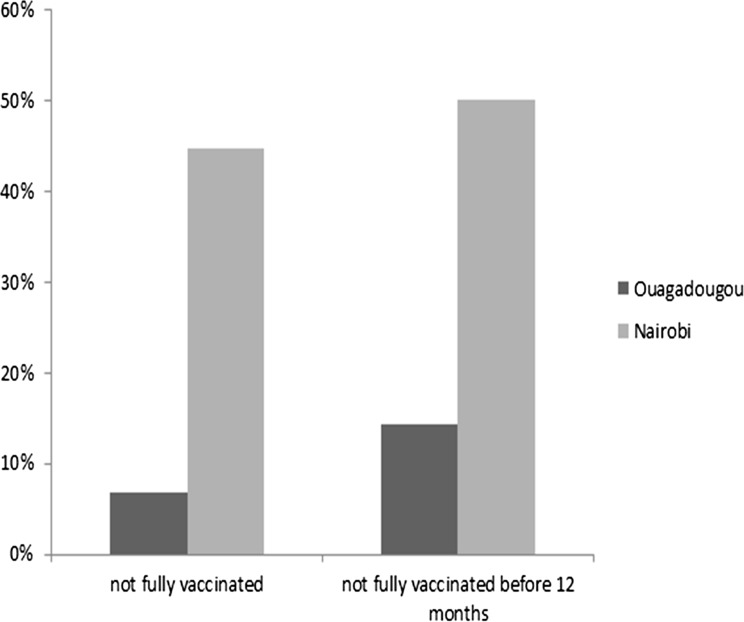
Studies on informal settlements in sub-Saharan Africa have questioned the health benefits of urban residence, but this should not suggest that informal settlements (within cities and across cities and/or countries) are homogeneous. They vary in terms of poverty, pollution, overcrowding, criminality, and social exclusion. Moreover, while some informal settlements completely lack public services, others have access to health facilities, sewers, running water, and electricity. There are few comparative studies that have looked at informal settlements across countries accounting for these contextual nuances. In this paper, we comparatively examine the differences in child vaccination rates between Nairobi and Ouagadougou's informal settlements. We further investigate whether the identified differences are related to the differences in demographic and socioeconomic composition between the two settings. We use data from the Ouagadougou and Nairobi Urban Health and Demographic Surveillance Systems (HDSSs), which are the only two urban-based HDSSs in Africa. The results show that children in the slums of Nairobi are less vaccinated than children in the informal settlements in Ouagadougou. The difference in child vaccination rates between Nairobi and Ouagadougou informal settlements are not related to the differences in their demographic and socioeconomic composition but to the inequalities in access to immunization services.
对撒哈拉以南非洲地区非正式住区的研究对城市居住的健康益处提出了质疑,但这并不意味着非正式住区(在城市内部以及不同城市和/或国家之间)是同质化的。它们在贫困、污染、过度拥挤、犯罪和社会排斥方面存在差异。此外,虽然一些非正式住区完全缺乏公共服务,但其他一些住区能够使用卫生设施、下水道、自来水和电力。很少有比较研究考虑到这些背景细微差别,对不同国家的非正式住区进行考察。在本文中,我们比较研究了内罗毕和瓦加杜古非正式住区儿童疫苗接种率的差异。我们进一步调查所发现的差异是否与这两个地区人口和社会经济构成的差异有关。我们使用了来自瓦加杜古和内罗毕城市卫生与人口监测系统(HDSS)的数据,这是非洲仅有的两个基于城市的卫生与人口监测系统。结果表明,内罗毕贫民窟的儿童疫苗接种率低于瓦加杜古非正式住区的儿童。内罗毕和瓦加杜古非正式住区儿童疫苗接种率的差异与它们的人口和社会经济构成差异无关,而是与免疫服务获取方面的不平等有关。