Alzolibani Abdullateef A
Department of Dermatology, College of Medicine, Qassim University, Buraidah, Kingdom of Saudi Arabia.
Ann Dermatol. 2014 Oct;26(5):576-83. doi: 10.5021/ad.2014.26.5.576. Epub 2014 Sep 26.
Alopecia areata (AA) is a common form of localized, non-scarring hair loss. The cause of AA is unknown but reports suggest an autoimmune etiology, where oxygen free radicals play an important role.
The aim of this study was to investigate the role of a hydroxyl radicals (·OH)-modified antioxidant enzyme, superoxide dismutase (SOD), in AA autoimmunity.
SOD was modified by ·OH radicals. Binding characteristics of autoantibodies in AA patients (n=26) against ·OH-modified SOD (·OH-SOD) were evaluated by immunoassays and the results were compared with those of healthy, age-matched controls (n=30). The effects of ·OH radicals on immunoglobulin G (IgG) isolated from AA patients were studied.
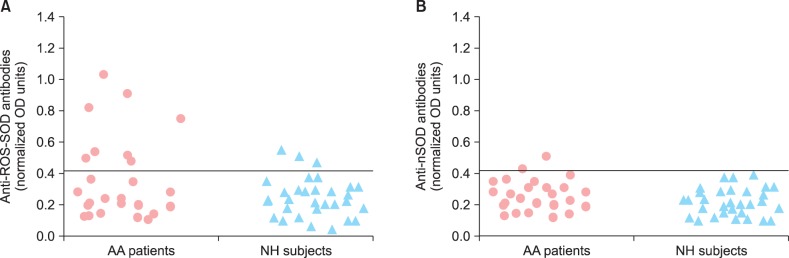
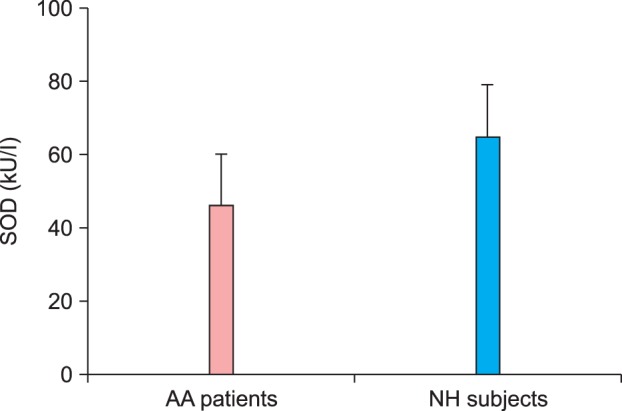
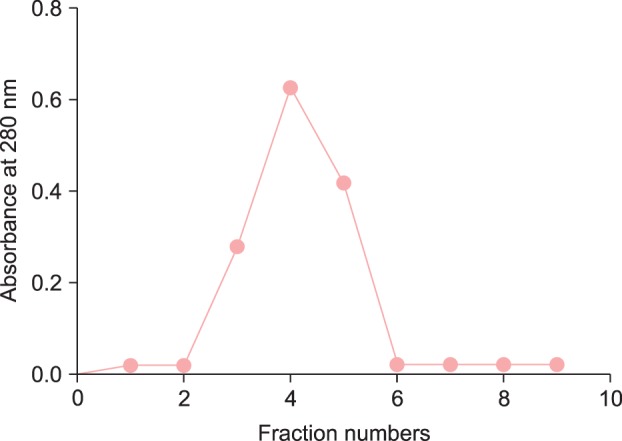
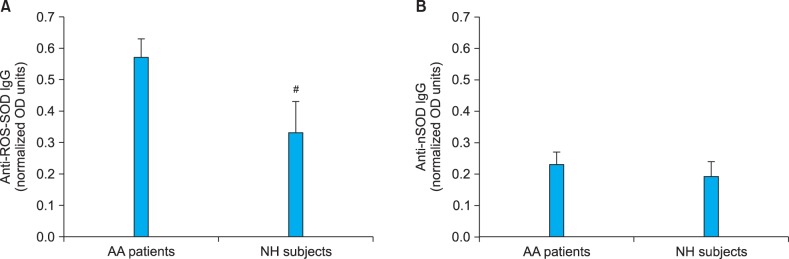
Highly specific binding to ·OH-SOD was observed in 32% of the samples of patient sera, whereas normal human sera showed negligible binding with either antigen. Competitive inhibition immunoassays reiterated the results from direct binding. Protein-A-purified IgG from AA patients (AA-IgG) also showed strong binding to ·OH-SOD as compared to IgG from normal human controls (p<0.001). In addition, AA-IgG from patients with alopecia universalis recognized ·OH-SOD to a greater extent than did AA-IgG from patients with the patchy, persistent type of alopecia. Furthermore, sera from AA patients had lower levels of SOD activity as compared to control sera.
This is the first report showing an association between ·OH-modified SOD and AA. These novel results demonstrate that ·OH radical-mediated changes in SOD present unique neo-epitopes that might contribute to antigen-driven antibody induction in AA.
斑秃(AA)是局限性非瘢痕性脱发的常见形式。AA的病因尚不清楚,但报告表明其发病机制为自身免疫,其中氧自由基起重要作用。
本研究旨在探讨羟基自由基(·OH)修饰的抗氧化酶超氧化物歧化酶(SOD)在AA自身免疫中的作用。
用·OH自由基修饰SOD。通过免疫测定评估AA患者(n = 26)血清中自身抗体与·OH修饰的SOD(·OH-SOD)的结合特性,并将结果与年龄匹配的健康对照者(n = 30)进行比较。研究·OH自由基对从AA患者分离的免疫球蛋白G(IgG)的影响。
在32%的患者血清样本中观察到与·OH-SOD的高度特异性结合,而正常人血清与两种抗原的结合均可忽略不计。竞争性抑制免疫测定重复了直接结合的结果。与正常人对照的IgG相比,蛋白A纯化的AA患者IgG(AA-IgG)也显示出与·OH-SOD的强烈结合(p<0.001)。此外,全秃患者的AA-IgG比斑秃、持续性斑秃患者的AA-IgG在更大程度上识别·OH-SOD。此外,与对照血清相比,AA患者血清的SOD活性水平较低。
这是首次报道·OH修饰的SOD与AA之间存在关联。这些新结果表明,·OH自由基介导的SOD变化呈现出独特的新表位,可能有助于AA中抗原驱动的抗体诱导。