Department of Neuroscience, Karolinska Institute Stockholm, Sweden.
Barrow Neurological Institute Phoenix, AZ, USA.
Front Integr Neurosci. 2014 Oct 1;8:76. doi: 10.3389/fnint.2014.00076. eCollection 2014.
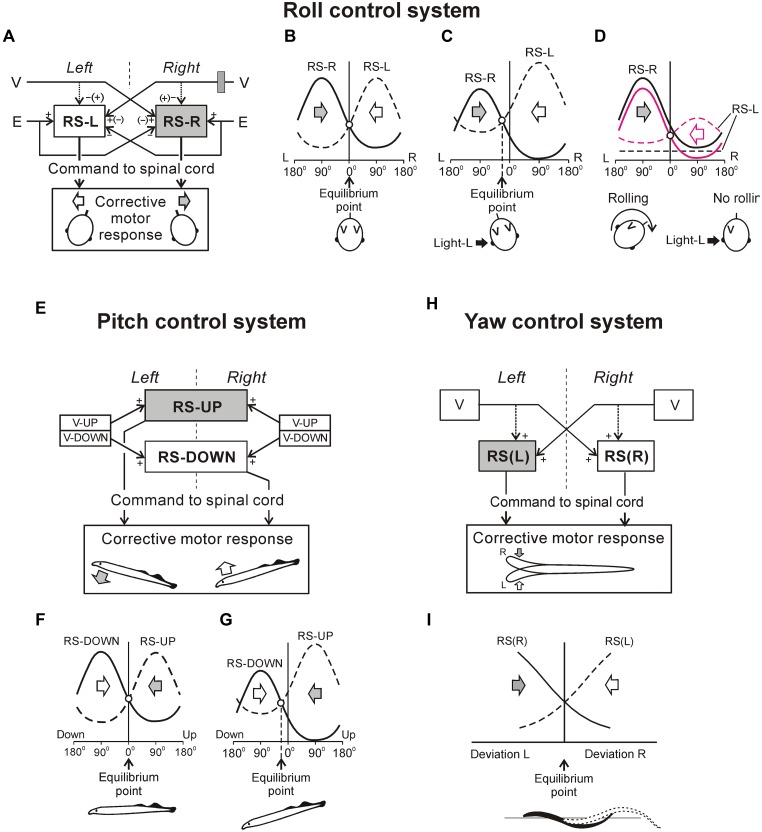
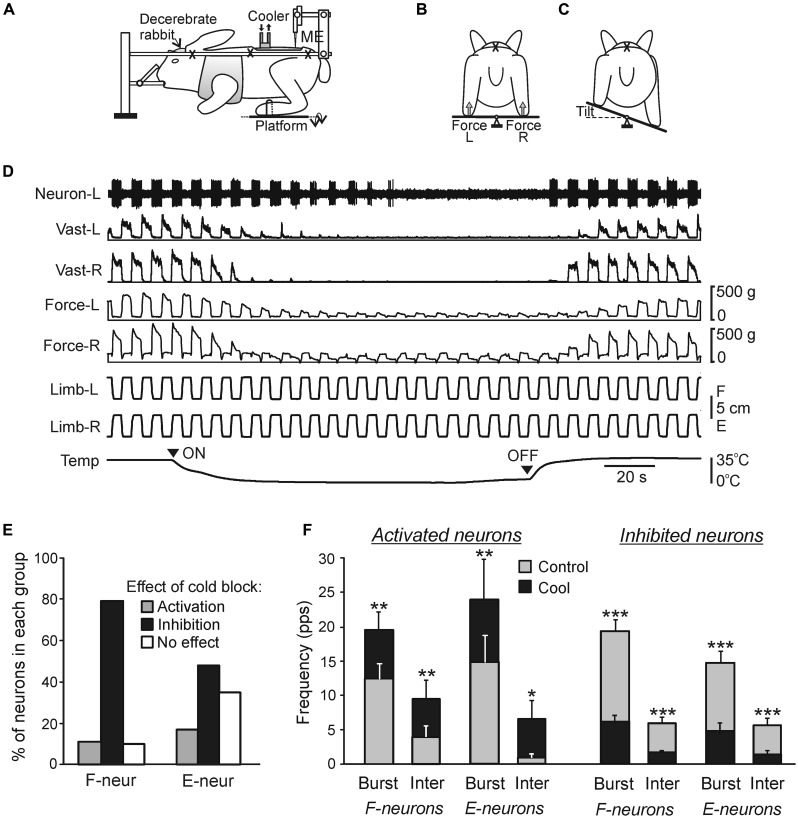
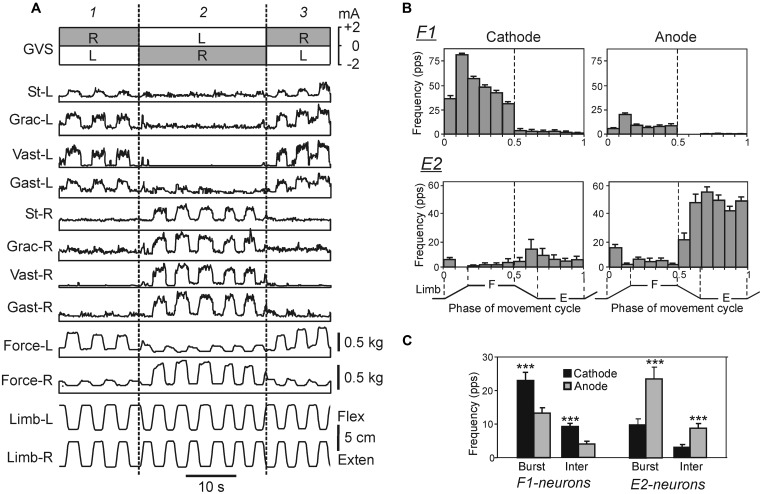
Different species maintain a particular body orientation in space due to activity of the closed-loop postural control system. In this review we discuss the role of neurons of descending pathways in operation of this system as revealed in animal models of differing complexity: lower vertebrate (lamprey) and higher vertebrates (rabbit and cat). In the lamprey and quadruped mammals, the role of spinal and supraspinal mechanisms in the control of posture is different. In the lamprey, the system contains one closed-loop mechanism consisting of supraspino-spinal networks. Reticulospinal (RS) neurons play a key role in generation of postural corrections. Due to vestibular input, any deviation from the stabilized body orientation leads to activation of a specific population of RS neurons. Each of the neurons activates a specific motor synergy. Collectively, these neurons evoke the motor output necessary for the postural correction. In contrast to lampreys, postural corrections in quadrupeds are primarily based not on the vestibular input but on the somatosensory input from limb mechanoreceptors. The system contains two closed-loop mechanisms - spinal and spino-supraspinal networks, which supplement each other. Spinal networks receive somatosensory input from the limb signaling postural perturbations, and generate spinal postural limb reflexes. These reflexes are relatively weak, but in intact animals they are enhanced due to both tonic supraspinal drive and phasic supraspinal commands. Recent studies of these supraspinal influences are considered in this review. A hypothesis suggesting common principles of operation of the postural systems stabilizing body orientation in a particular plane in the lamprey and quadrupeds, that is interaction of antagonistic postural reflexes, is discussed.
不同物种由于闭环姿势控制系统的活动,在空间中保持特定的身体方向。在本综述中,我们讨论了在具有不同复杂程度的动物模型中(如低等脊椎动物(七鳃鳗)和高等脊椎动物(兔和猫)),下行途径神经元在该系统中的作用。在七鳃鳗和四足哺乳动物中,脊髓和脑脊髓机制在姿势控制中的作用是不同的。在七鳃鳗中,该系统包含一个由脑脊髓网络组成的闭环机制。网状脊髓(RS)神经元在姿势校正的产生中起着关键作用。由于前庭输入,任何偏离稳定身体方向的偏差都会导致特定的 RS 神经元群的激活。每个神经元激活一个特定的运动协同作用。这些神经元共同引发了进行姿势校正所需的运动输出。与七鳃鳗不同,四足动物的姿势校正主要不是基于前庭输入,而是基于来自肢体机械感受器的躯体感觉输入。该系统包含两个闭环机制——脊髓和脊髓-脑脊髓网络,它们相互补充。脊髓网络接收来自肢体的躯体感觉输入,用于信号姿势扰动,并产生脊髓姿势肢体反射。这些反射相对较弱,但在完整的动物中,由于紧张的脑脊髓驱动和相位脑脊髓命令,它们会增强。本综述考虑了这些脑脊髓影响的最新研究。本文讨论了一个假设,即稳定特定平面上身体方向的姿势系统在七鳃鳗和四足动物中的操作具有共同的原则,即拮抗姿势反射的相互作用。