Institute of Synergetics and Psychotherapy Research, Paracelsus Medical University Salzburg, Austria.
Day Treatment Center Westend Munich, Germany.
Front Psychol. 2014 Oct 2;5:1089. doi: 10.3389/fpsyg.2014.01089. eCollection 2014.
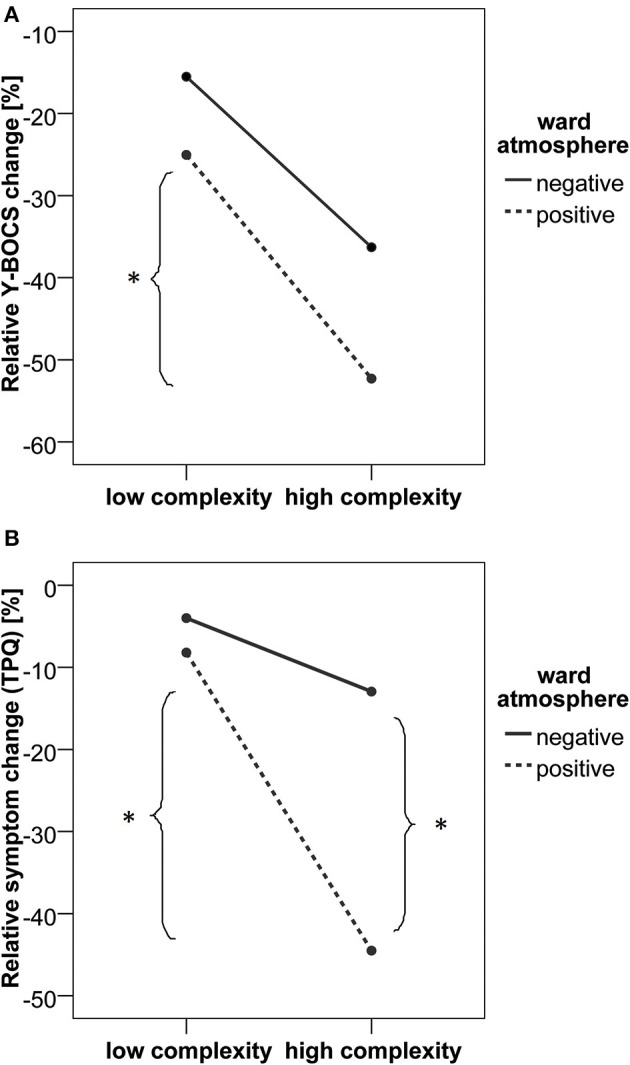
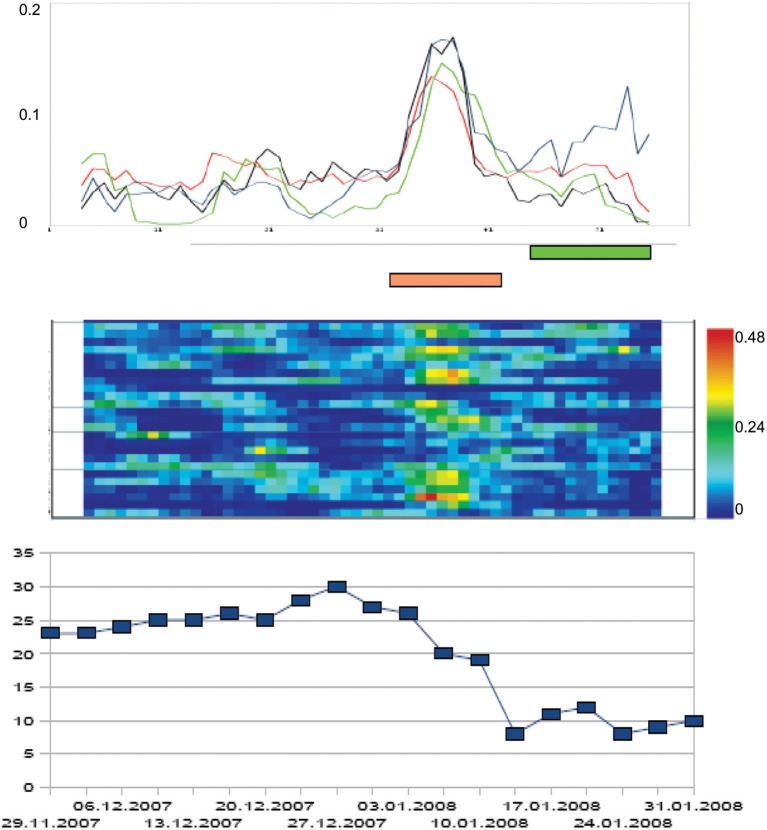
In recent years, models have been developed that conceive psychotherapy as a self-organizing process of bio-psycho-social systems. These models originate from the theory of self-organization (Synergetics), from the theory of deterministic chaos, or from the approach of self-organized criticality. This process-outcome study examines several hypotheses mainly derived from Synergetics, including the assumption of discontinuous changes in psychotherapy (instead of linear incremental gains), the occurrence of critical instabilities in temporal proximity of pattern transitions, the hypothesis of necessary stable boundary conditions during destabilization processes, and of motivation to change playing the role of a control parameter for psychotherapeutic self-organization. Our study was realized at a day treatment center; 23 patients with obsessive compulsive disorder (OCD) were included. Client self-assessment was performed by an Internet-based process monitoring (referred to as the Synergetic Navigation System), whereby daily ratings were recorded through administering the Therapy Process Questionnaire (TPQ). The process measures of the study were extracted from the subscale dynamics (including the dynamic complexity of their time series) of the TPQ. The outcome criterion was measured by the Yale-Brown Obsessive Compulsive Scale (Y-BOCS) which was completed pre-post and on a bi-weekly schedule by all patients. A second outcome criterion was based on the symptom severity subscale of the TPQ. Results supported the hypothesis of discontinuous changes (pattern transitions), the occurrence of critical instabilities preparing pattern transitions, and of stable boundary conditions as prerequisites for such transitions, but not the assumption of motivation to change as a control parameter.
近年来,已经开发出了一些模型,这些模型将心理治疗视为生物心理社会系统的自组织过程。这些模型源自自组织理论(协同论)、确定性混沌理论或自组织临界性方法。这项过程-结果研究检验了几个主要源自协同论的假设,包括心理治疗中不连续变化的假设(而不是线性增量增益)、模式转变时临近的临界不稳定性的发生、在去稳定化过程中必要的稳定边界条件的假设,以及变化动机作为心理治疗自组织的控制参数的作用。我们的研究是在一个日间治疗中心进行的,共纳入了 23 名强迫症患者。采用基于互联网的过程监测(称为协同导航系统)对患者进行自我评估,通过实施治疗过程问卷(TPQ)来记录每日评分。研究的过程指标是从 TPQ 的子量表动态(包括其时间序列的动态复杂性)中提取出来的。研究的结果标准通过耶鲁-布朗强迫症量表(Y-BOCS)进行衡量,所有患者在治疗前后和两周一次的时间内完成该量表。第二个结果标准基于 TPQ 的症状严重程度子量表。研究结果支持不连续变化(模式转变)、准备模式转变的临界不稳定性的发生,以及稳定边界条件作为这种转变的前提的假设,但不支持变化动机作为控制参数的假设。