Hedner Charlotta, Gaber Alexander, Korkocic Dejan, Nodin Björn, Uhlén Mathias, Kuteeva Eugenia, Johannesson Henrik, Jirström Karin, Eberhard Jakob
Department of Clinical Sciences, Division of Oncology and Pathology, Lund University, Skåne University Hospital, 221 85, Lund, Sweden,
Virchows Arch. 2014 Dec;465(6):649-59. doi: 10.1007/s00428-014-1667-6. Epub 2014 Oct 19.
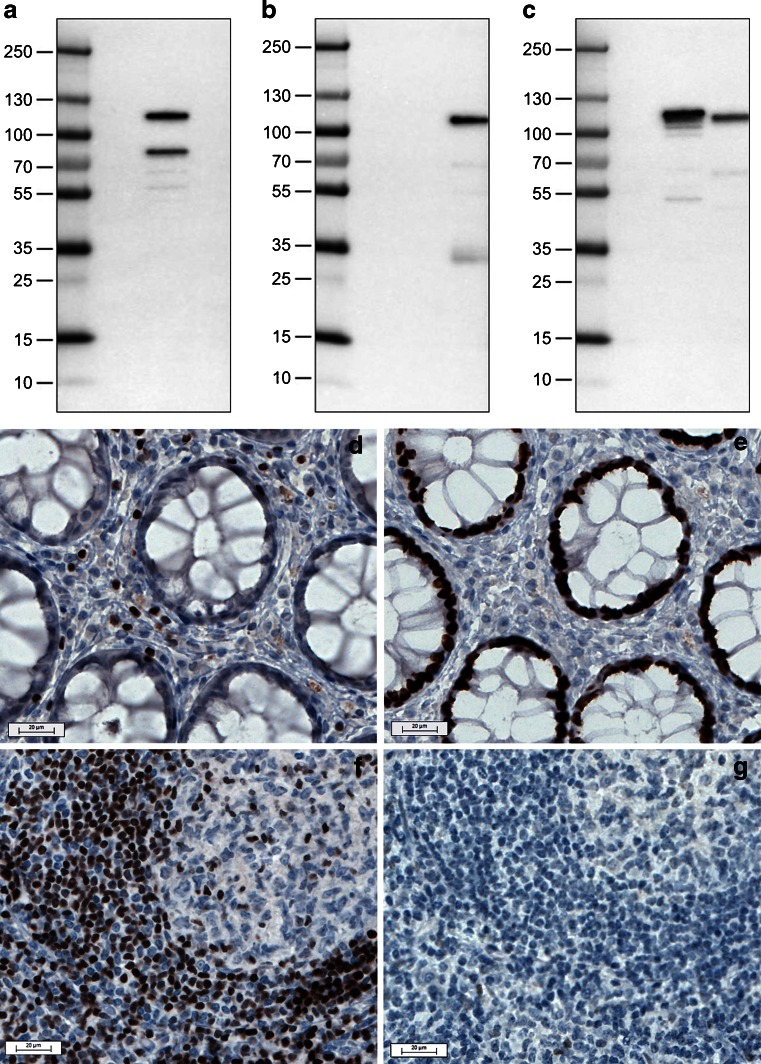
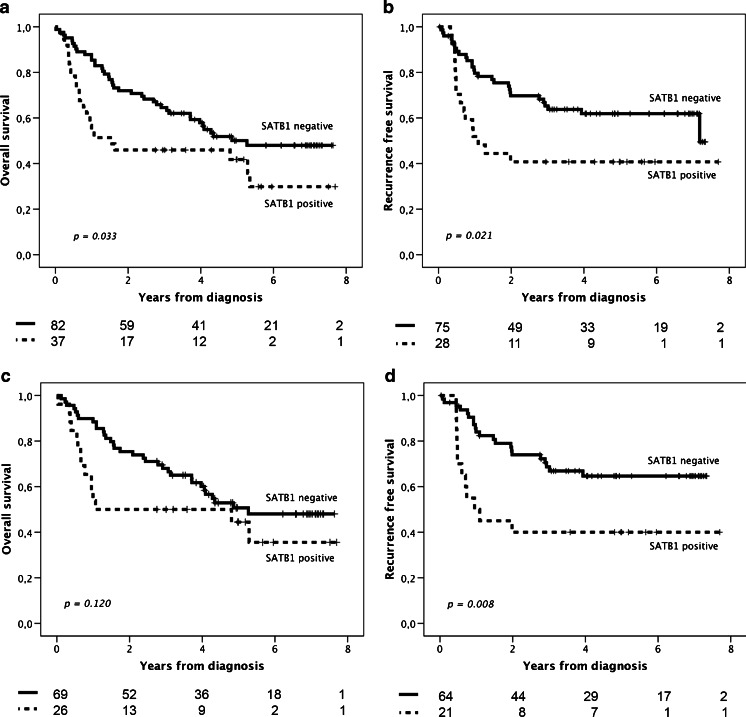
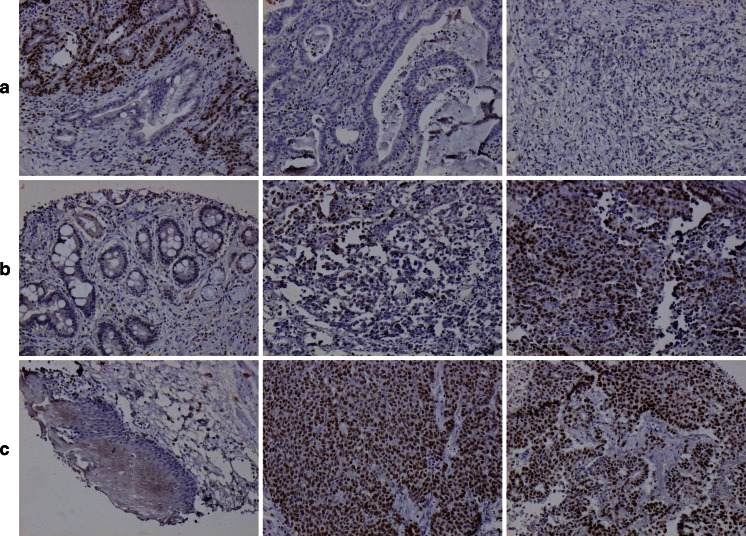
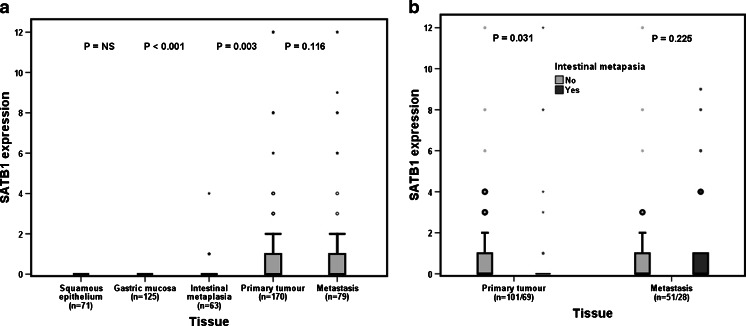
Gastric cancer is the second most common cause of cancer-related death worldwide, and the incidence of esophageal adenocarcinoma is rising. While some progress has been made in treatment strategies, overall survival remains very poor for patients with adenocarcinoma in the upper gastrointestinal tract. Special AT-rich sequence binding protein 1 (SATB1) is a global genome organizer that has been demonstrated to promote aggressive tumor behavior in several different types of cancer, including gastric cancer. The prognostic value of SATB1 expression in esophageal cancer has, however, not yet been described. In this study, expression of SATB1 was examined by immunohistochemistry on tissue microarrays prepared from tissue samples from 175 patients with adenocarcinoma of the esophagus, cardia, or stomach and containing normal tissue, intestinal metaplasia, primary tumors, and metastases. A well-validated antibody was used. We found SATB1 to be an independent prognostic factor in patients with a radically resected tumor, correlating with shorter overall survival as well as with shorter recurrence-free survival. SATB1 expression was also found to be significantly lower in primary tumors associated with intestinal metaplasia than those without intestinal metaplasia. This observation is of potential biological interest as it has been proposed that intestinal metaplasia-associated tumors constitute a less aggressive phenotype.
胃癌是全球癌症相关死亡的第二大常见原因,且食管腺癌的发病率正在上升。虽然治疗策略已取得一些进展,但上消化道腺癌患者的总体生存率仍然很低。富含AT序列结合蛋白1(SATB1)是一种全局基因组组织者,已被证明在包括胃癌在内的几种不同类型癌症中促进侵袭性肿瘤行为。然而,SATB1表达在食管癌中的预后价值尚未见报道。在本研究中,通过免疫组织化学方法检测了175例食管、贲门或胃癌腺癌组织样本制备的组织微阵列中SATB1的表达,这些组织微阵列包含正常组织、肠化生、原发性肿瘤和转移灶。使用了一种经过充分验证的抗体。我们发现SATB1是根治性切除肿瘤患者的独立预后因素,与较短的总生存期以及较短的无复发生存期相关。还发现与无肠化生的原发性肿瘤相比,与肠化生相关的原发性肿瘤中SATB1表达显著降低。这一观察结果具有潜在的生物学意义,因为有人提出与肠化生相关的肿瘤构成侵袭性较小的表型。