Ichiishi Naoko, Canty Allan J, Yates Brian F, Sanford Melanie S
Department of Chemistry, University of Michigan , 930 North University Avenue, Ann Arbor, Michigan 48109, United States.
School of Chemistry, University of Tasmania , Private Bag 75, Hobart, Tasmania 7001, Australia.
Organometallics. 2014 Oct 13;33(19):5525-5534. doi: 10.1021/om5007903. Epub 2014 Sep 22.
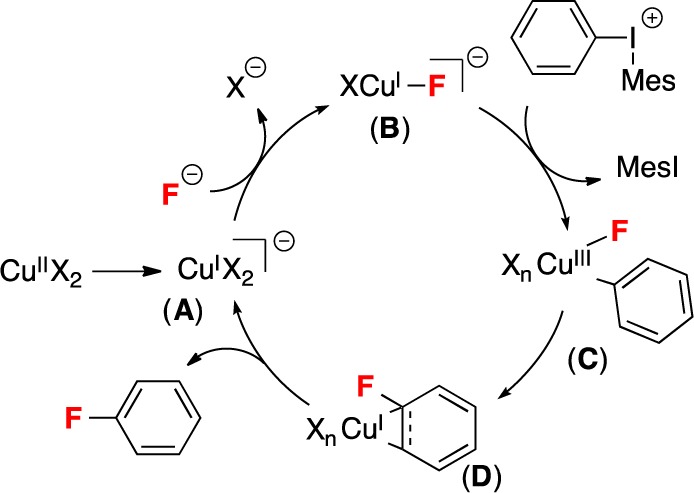
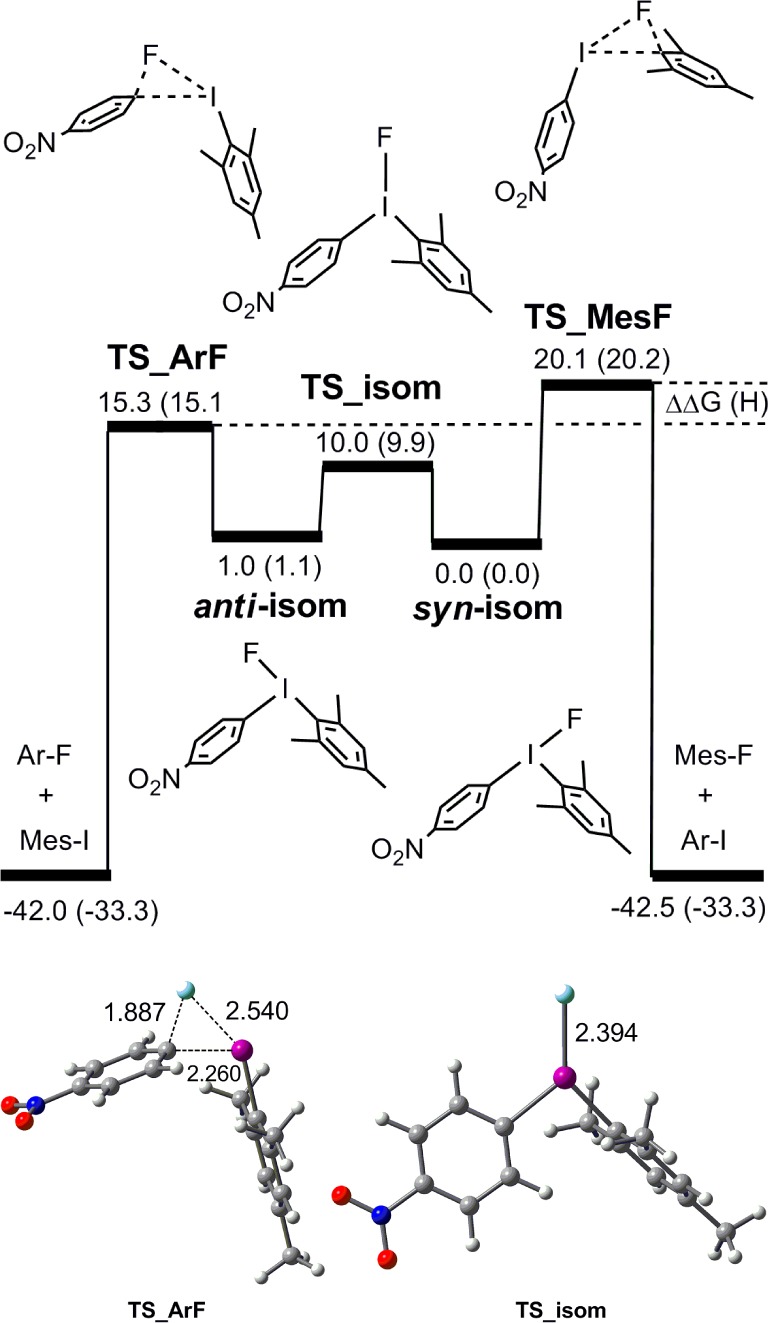
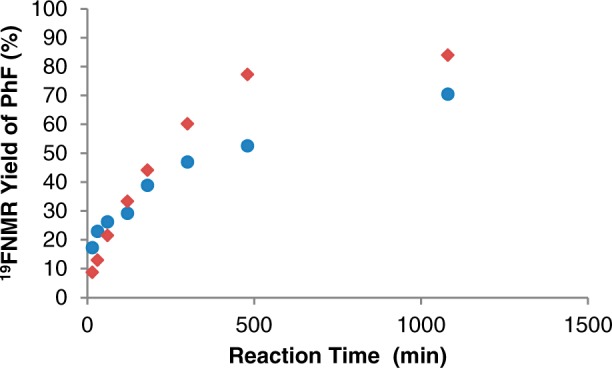
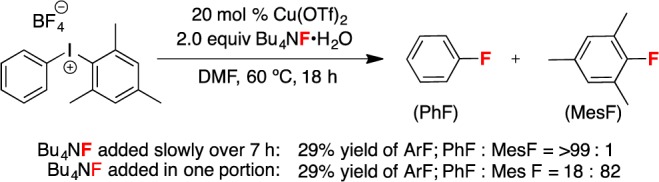
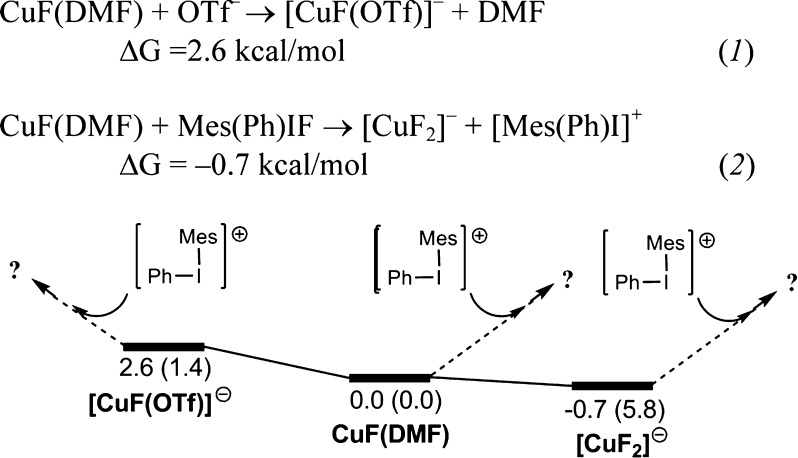
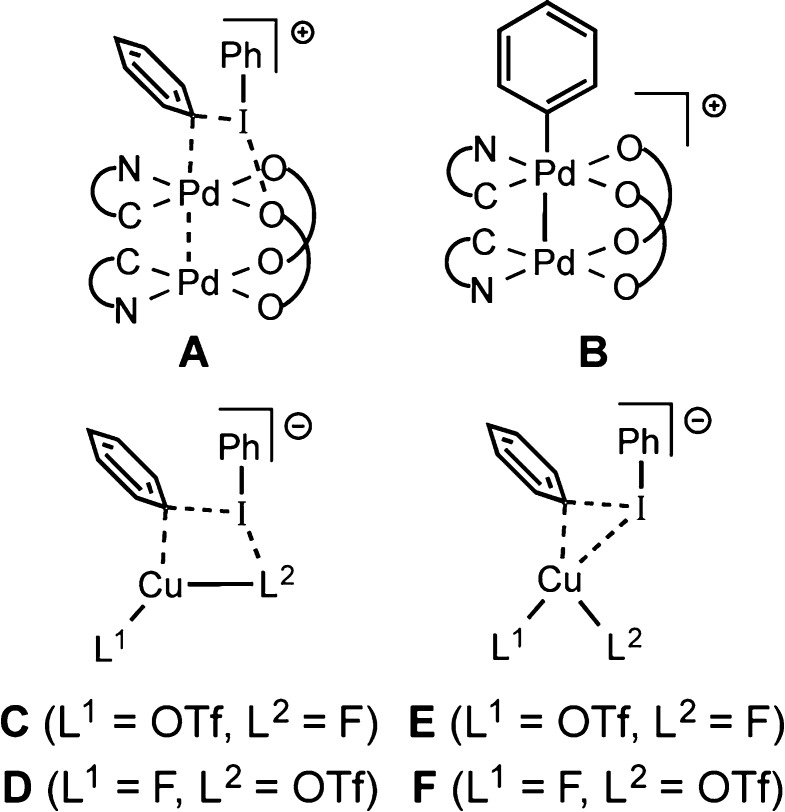
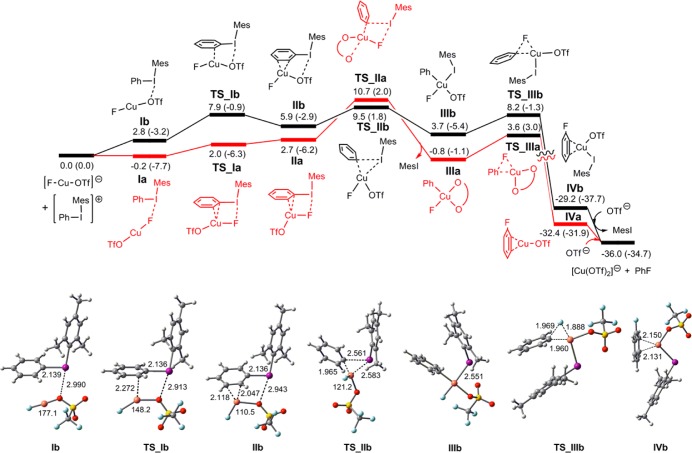
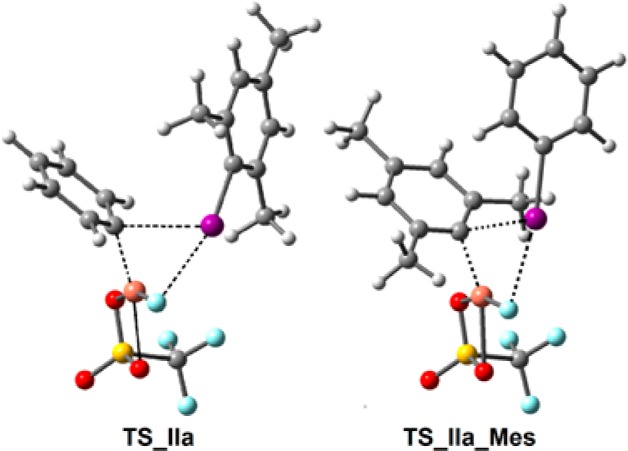
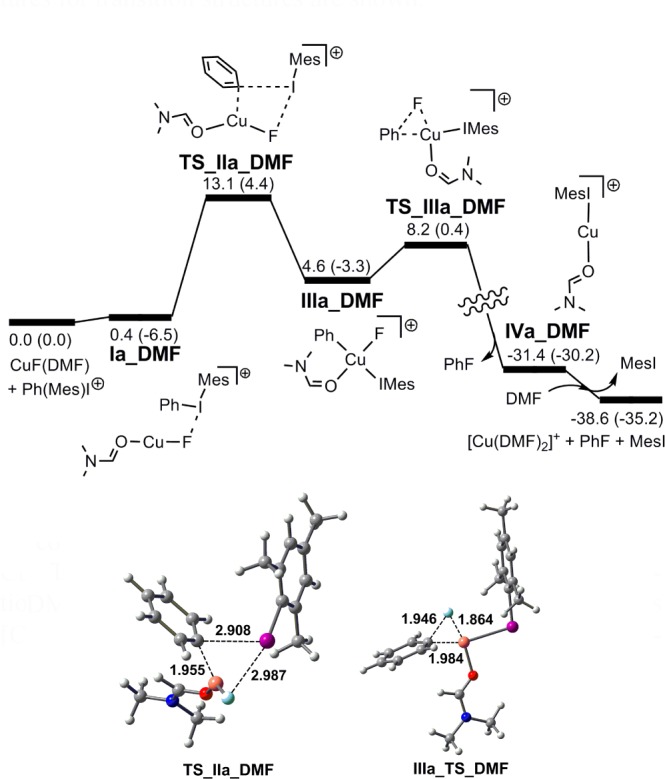
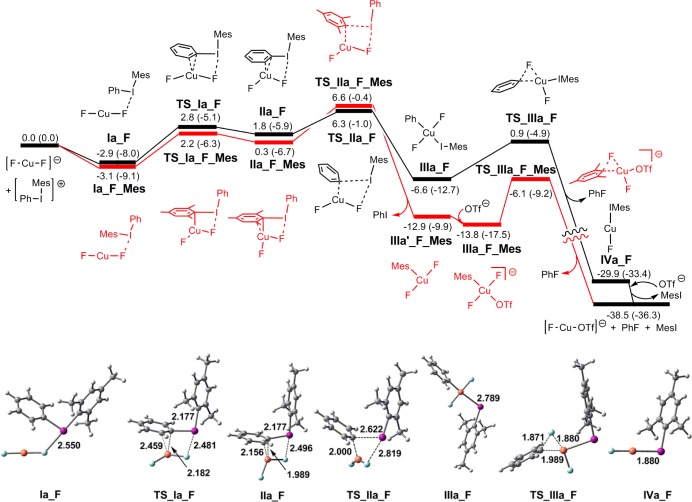
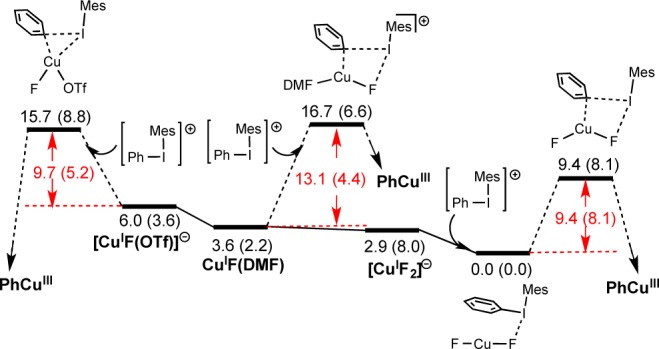
A combination of experimental and density functional theory (DFT) investigations suggests that the Cu-catalyzed fluorination of unsymmetrical diaryliodonium salts with general structure [Mes(Ar)I] in ,'-dimethylformamide proceeds through a Cu/Cu catalytic cycle. A low concentration of fluoride relative to combined iodonium reagent plus copper ensures that [Mes(Ar)I] is available as the reactive species for oxidative "Ar" transfer to a Cu center containing one or two fluoride ligands. A series of different possible Cu active catalysts (containing fluoride, triflate, and DMF ligands) have been evaluated computationally, and all show low-energy pathways to fluorinated products. The oxidation of these Cu species by [Mes(Ar)I] to form -Ar(F)Cu intermediates is proposed to be rate-limiting in all cases. Ar-F bond-forming reductive elimination from Cu is computed to be very facile in all of the systems examined. The conclusions of the DFT experiments are supported by several experimental studies, including tests showing that Cu is formed rapidly under the reaction conditions and that the fluoride concentration strongly impacts the reaction yields/selectivities.
实验研究与密度泛函理论(DFT)研究相结合表明,在N,N'-二甲基甲酰胺中,具有通用结构[Mes(Ar)I]的不对称二芳基碘鎓盐的铜催化氟化反应通过Cu(I)/Cu(II)催化循环进行。相对于碘鎓试剂与铜的总量,低浓度的氟化物可确保[Mes(Ar)I]作为活性物种,将芳基“Ar”氧化转移至含有一个或两个氟配体的铜中心。通过计算评估了一系列不同的可能的铜活性催化剂(含有氟化物、三氟甲磺酸盐和DMF配体),所有这些催化剂均显示出通往氟化产物的低能量途径。在所有情况下,均认为[Mes(Ar)I]将这些铜物种氧化以形成芳基氟铜(Ar(F)Cu)中间体是限速步骤。在所研究的所有体系中,计算得出从铜形成芳基氟键的还原消除反应都非常容易。DFT实验的结论得到了多项实验研究的支持,包括表明在反应条件下能快速形成Cu(II)以及氟化物浓度对反应产率/选择性有强烈影响的测试。