Neppl Ronald L, Wang Da-Zhi
Boston Children's Hospital, Department of Cardiology ; Harvard Medical School, Department of Pediatrics Boston MA, 02115.
Genes Dis. 2014 Mar 1;1(1):18-39. doi: 10.1016/j.gendis.2014.06.003.
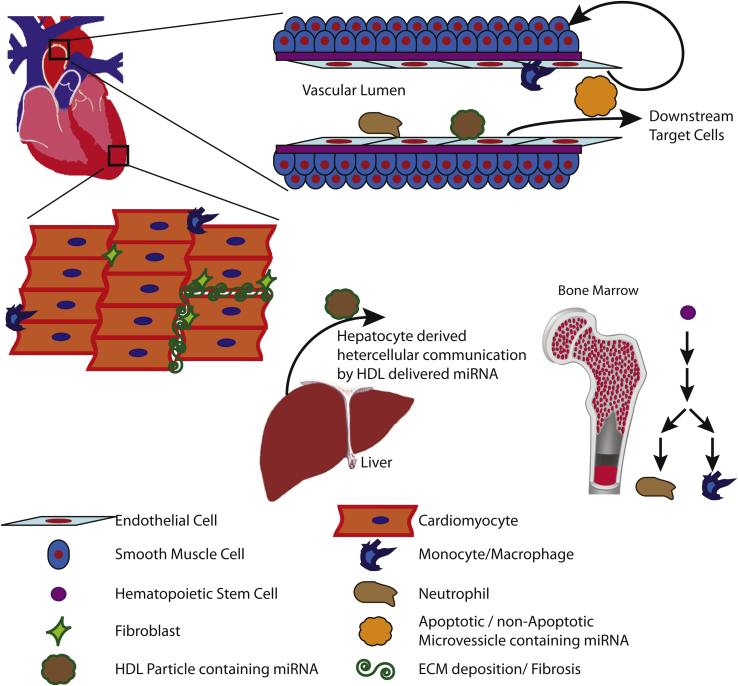
According to the World Health Organization, cardiovascular disease accounts for approximately 30% of all deaths in the United States, and is the worldwide leading cause of morbidity and mortality. Over the last several years, microRNAs have emerged as critical regulators of physiological homeostasis in multiple organ systems, including the cardiovascular system. The focus of this review is to provide an overview of the current state of knowledge of the molecular mechanisms contributing to the multiple causes of cardiovascular disease with respect to regulation by microRNAs. A major challenge in understanding the roles of microRNAs in the pathophysiology of cardiovascular disease is that cardiovascular disease may arise from perturbations in intracellular signaling in multiple cell types including vascular smooth muscle and endothelial cells, cardiac myocytes and fibroblasts, as well as hepatocytes, pancreatic β-cells, and others. Additionally, perturbations in intracellular signaling cascades may also have profound effects on heterocellular communication via secreted cytokines and growth factors. There has been much progress in recent years to identify the microRNAs that are both dysregulated under pathological conditions, as well as the signaling pathway(s) regulated by an individual microRNA. The goal of this review is to summarize what is currently known about the mechanisms whereby microRNAs maintain cardiovascular homeostasis and to attempt to identify some key unresolved questions that require further study.
根据世界卫生组织的数据,心血管疾病约占美国所有死亡人数的30%,并且是全球发病和死亡的主要原因。在过去几年中,微小RNA已成为包括心血管系统在内的多个器官系统中生理稳态的关键调节因子。本综述的重点是概述微小RNA调控在导致心血管疾病多种病因的分子机制方面的当前知识状态。理解微小RNA在心血管疾病病理生理学中作用的一个主要挑战是,心血管疾病可能源于多种细胞类型(包括血管平滑肌和内皮细胞、心肌细胞和成纤维细胞,以及肝细胞、胰腺β细胞等)细胞内信号传导的紊乱。此外,细胞内信号级联反应的紊乱也可能通过分泌的细胞因子和生长因子对异细胞通讯产生深远影响。近年来,在确定病理条件下失调的微小RNA以及单个微小RNA调控的信号通路方面取得了很大进展。本综述的目的是总结目前已知的微小RNA维持心血管稳态的机制,并试图确定一些需要进一步研究的关键未解决问题。