Husain Shahid, Abdul Yasir, Singh Sudha, Ahmad Anis, Husain Mahvash
Hewitt Laboratory of the Ola B. Williams Glaucoma Center, Department of Ophthalmology, Storm Eye Institute, Medical University of South Carolina, Charleston, South Carolina, United States of America.
PLoS One. 2014 Oct 17;9(10):e110397. doi: 10.1371/journal.pone.0110397. eCollection 2014.
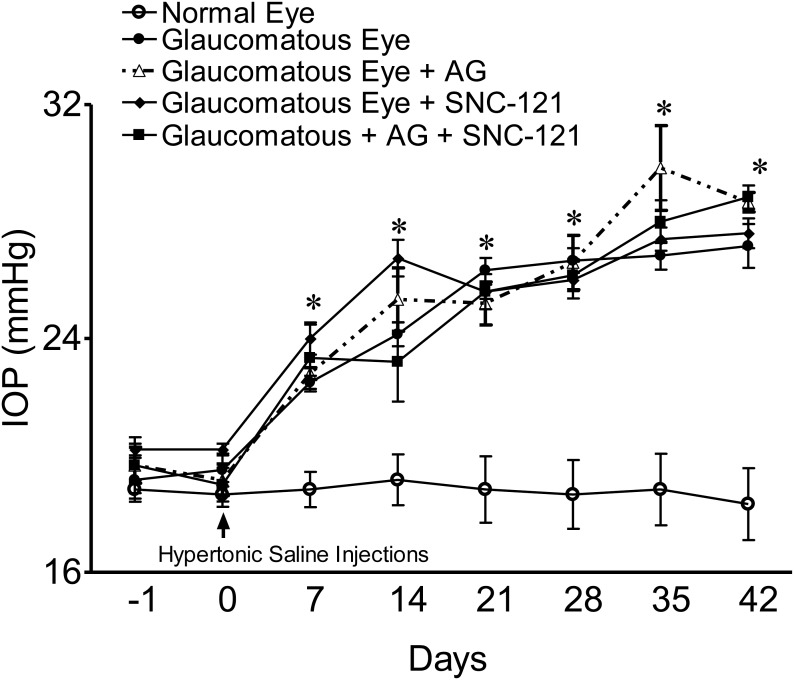
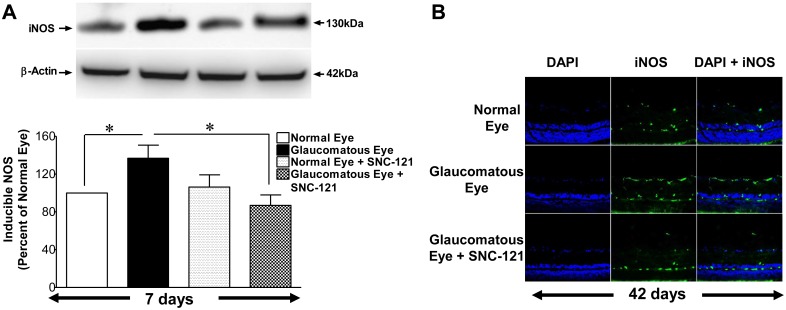
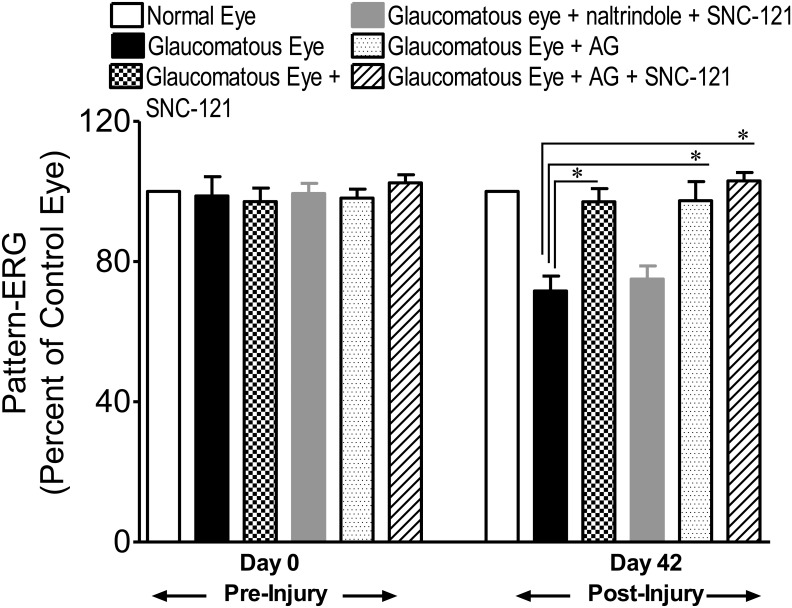
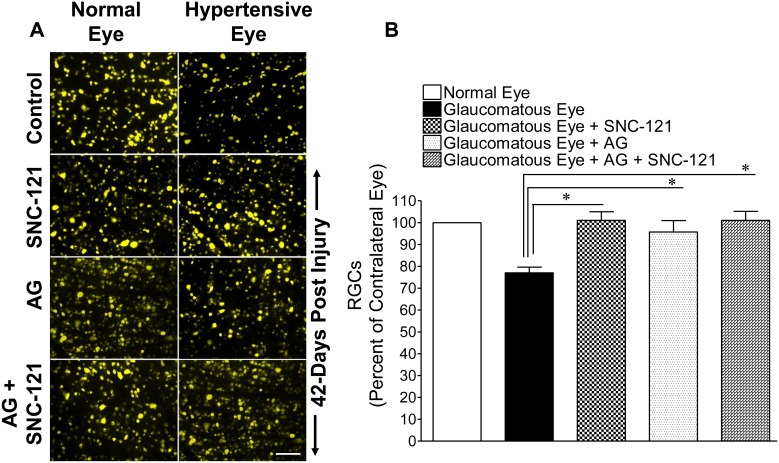
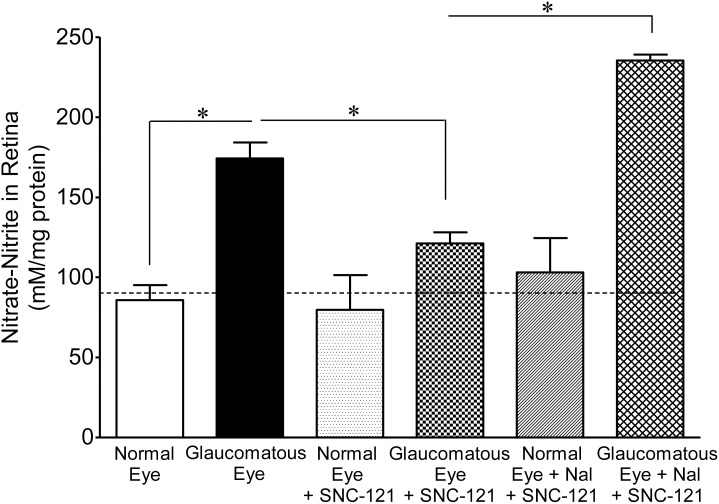
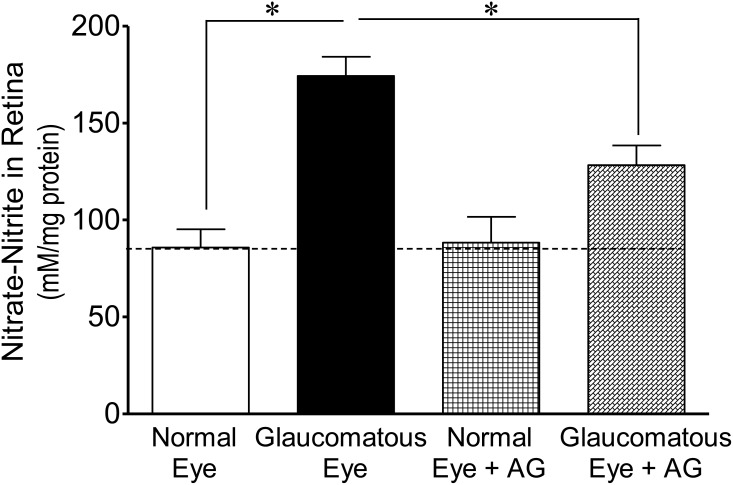
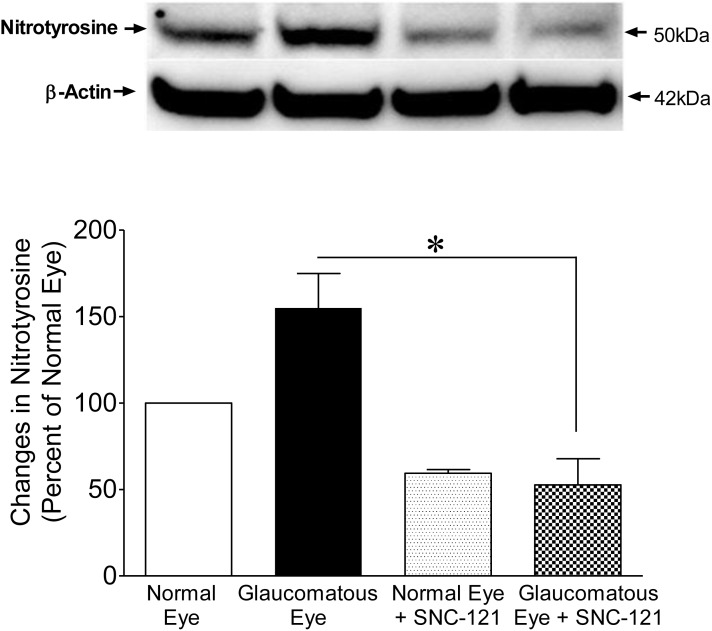
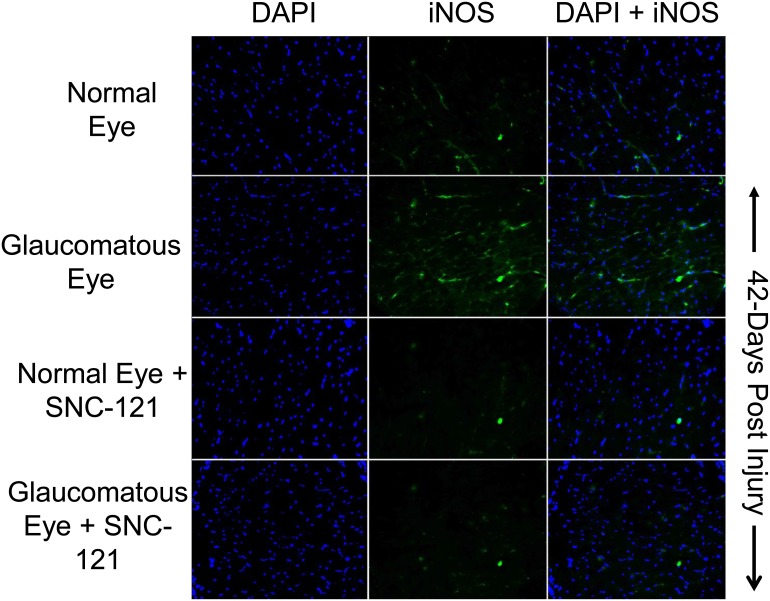
To determine the roles of nitric oxide in glaucomatous injury and its regulation by δ-opioid-receptor activation, animals were treated with: 1) a selective inducible nitric oxide synthase (iNOS) inhibitor (aminoguanidine; AG; 25 mg/kg, i.p.); 2) δ-opioid-receptor agonist (SNC-121; 1 mg/kg, i.p.); or 3) with both drugs simultaneously for 7 days, once daily. The loss in retinal ganglion cell (RGC) numbers and their function in glaucomatous eyes were significantly improved in the presence of AG or SNC-121; however, we did not see any significant additive or synergistic effects when animals were treated with both drugs simultaneously. The levels of nitrate-nitrite were significantly increased in the glaucomatous retina when compared with normal retina (normal retina 86±9 vs. glaucomatous retina 174±10 mM/mg protein), which was reduced significantly when animals were treated either with SNC-121 (121±7 mM/mg protein; P<0.05) or AG (128±10 mM/mg protein; P<0.05). Additionally, SNC-121-mediated reduction in nitrate-nitrite levels was not only blocked by naltrindole (a δ-opioid-receptor antagonist), but naltrindole treatment potentiated the nitrate-nitrite production in glaucomatous retina (235±4 mM/mg protein; P<0.001). As expected, naltrindole treatment also fully-blocked SNC-121-mediated retina neuroprotection. The nitrotyrosine level in the glaucomatous retina was also increased, which was significantly reduced in the SNC-121-treated animals. Additionally, the expression level of iNOS was clearly increased over the control levels in the glaucomatous retina and optic nerves, which was also reduced by SNC-121 treatment. In conclusion, our data support the notion that nitric oxide plays a detrimental role during glaucomatous injury and inhibition of nitric oxide production provided RGC neuroprotection. Furthermore, δ-opioid receptor activation regulates the production of nitric oxide via inhibiting the activity of iNOS in the retina and optic nerve.
为了确定一氧化氮在青光眼性损伤中的作用及其受δ-阿片受体激活的调节情况,对动物进行了以下处理:1)一种选择性诱导型一氧化氮合酶(iNOS)抑制剂(氨基胍;AG;25mg/kg,腹腔注射);2)δ-阿片受体激动剂(SNC-121;1mg/kg,腹腔注射);或3)同时使用这两种药物,持续7天,每天一次。在使用AG或SNC-121的情况下,青光眼眼中视网膜神经节细胞(RGC)数量的减少及其功能均得到显著改善;然而,当同时用这两种药物处理动物时,我们未观察到任何显著的相加或协同效应。与正常视网膜相比,青光眼视网膜中的硝酸盐-亚硝酸盐水平显著升高(正常视网膜86±9 vs. 青光眼视网膜174±10 mM/mg蛋白),当动物用SNC-121(121±7 mM/mg蛋白;P<0.05)或AG(128±10 mM/mg蛋白;P<0.05)处理时,该水平显著降低。此外,SNC-121介导的硝酸盐-亚硝酸盐水平降低不仅被纳曲吲哚(一种δ-阿片受体拮抗剂)阻断,而且纳曲吲哚处理增强了青光眼视网膜中的硝酸盐-亚硝酸盐生成(235±4 mM/mg蛋白;P<0.001)。正如预期的那样,纳曲吲哚处理也完全阻断了SNC-121介导的视网膜神经保护作用。青光眼视网膜中的硝基酪氨酸水平也升高,在SNC-121处理的动物中显著降低。此外,青光眼视网膜和视神经中iNOS的表达水平明显高于对照水平,SNC-121处理也使其降低。总之,我们的数据支持这样的观点,即一氧化氮在青光眼性损伤中起有害作用,抑制一氧化氮生成可提供RGC神经保护。此外,δ-阿片受体激活通过抑制视网膜和视神经中iNOS的活性来调节一氧化氮的生成。