Sridhar Akila, Kedziora Sylwia, Donaldson Anne D
Institute of Medical Sciences, University of Aberdeen, Foresterhill, Aberdeen, Scotland, United Kingdom.
PLoS Genet. 2014 Oct 16;10(10):e1004691. doi: 10.1371/journal.pgen.1004691. eCollection 2014 Oct.
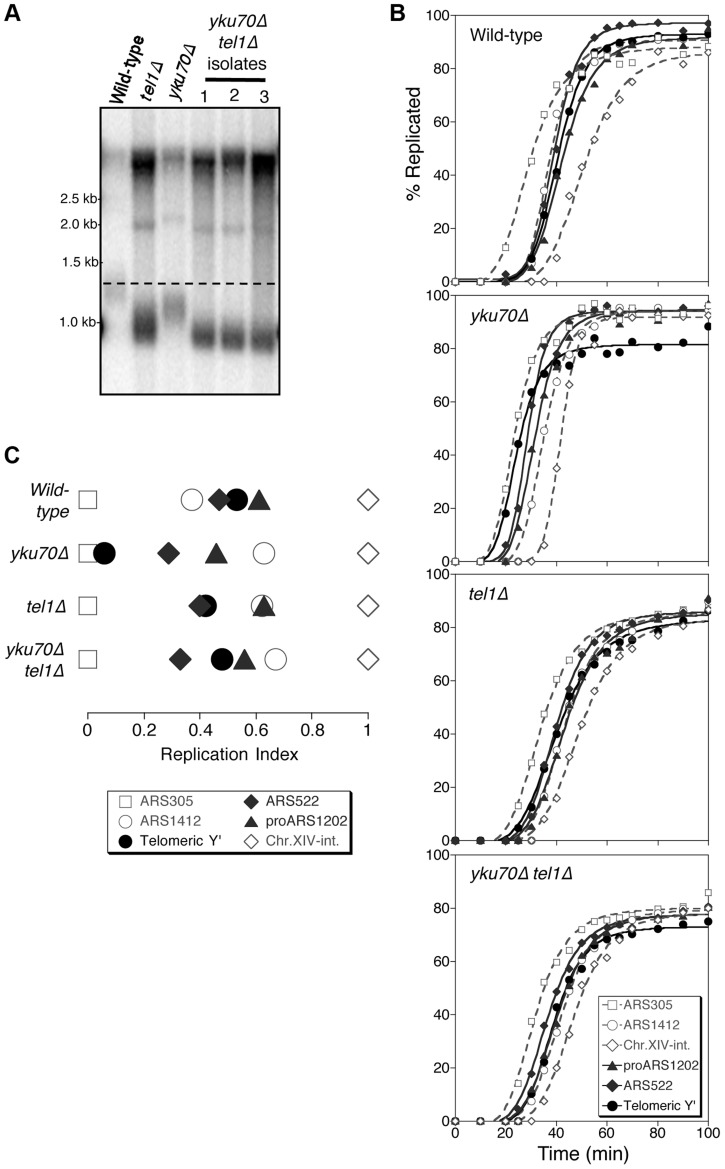
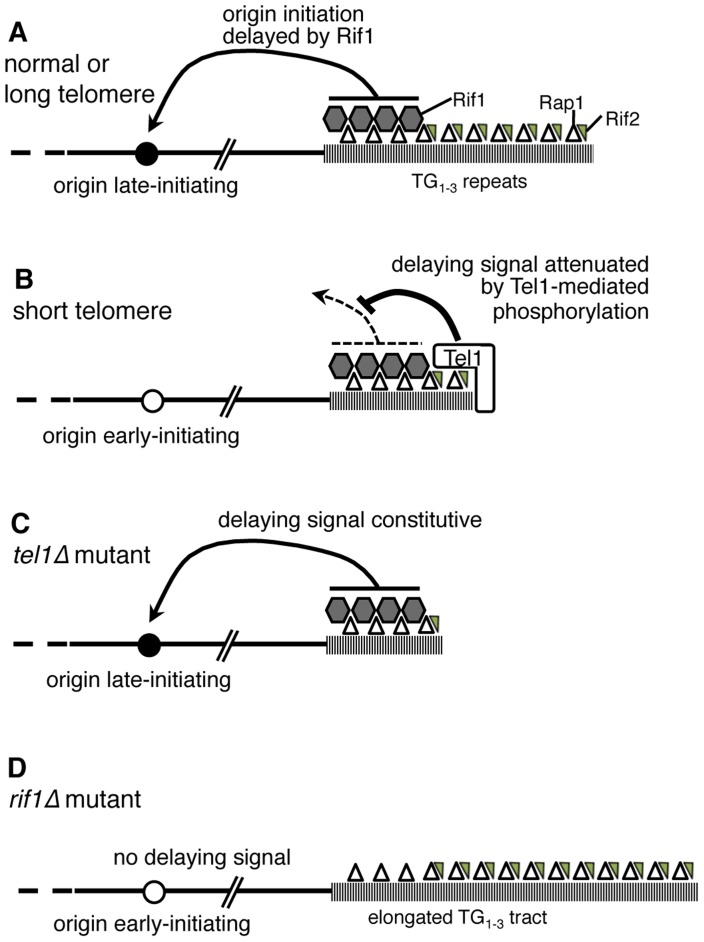
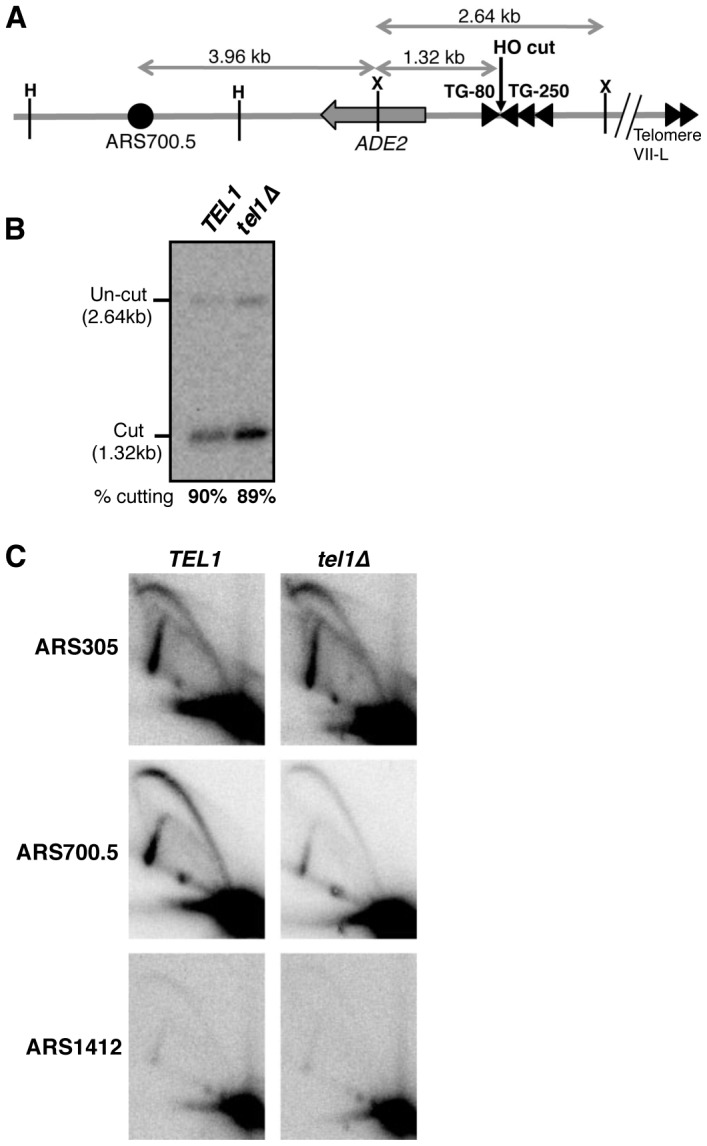
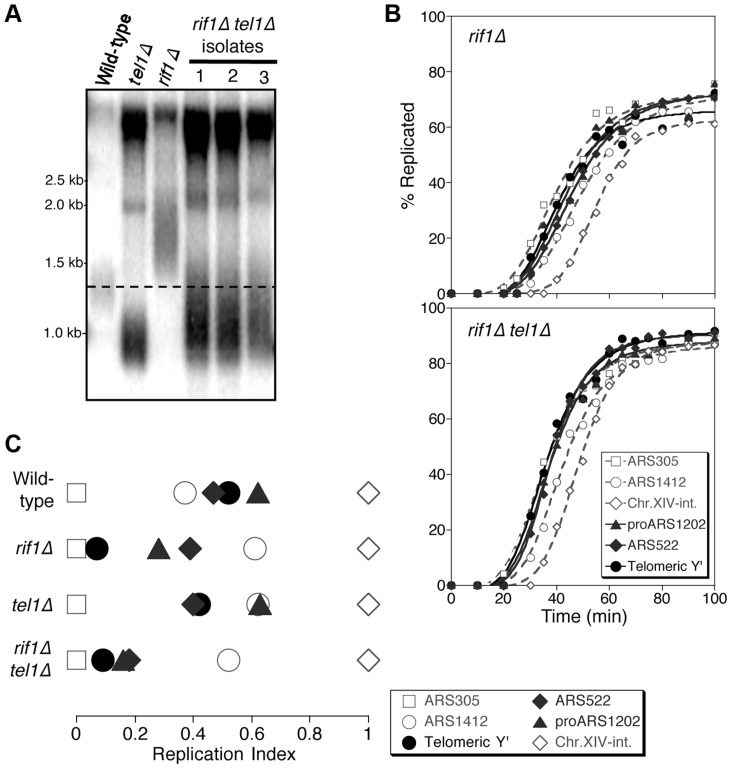
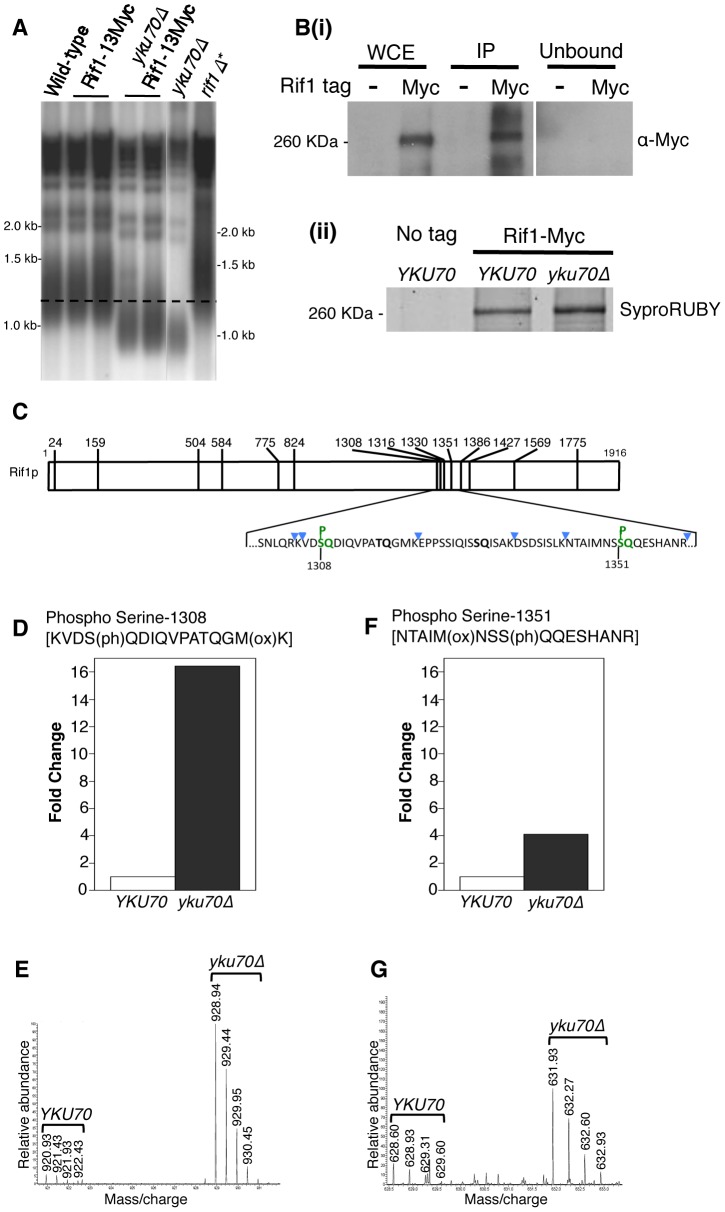
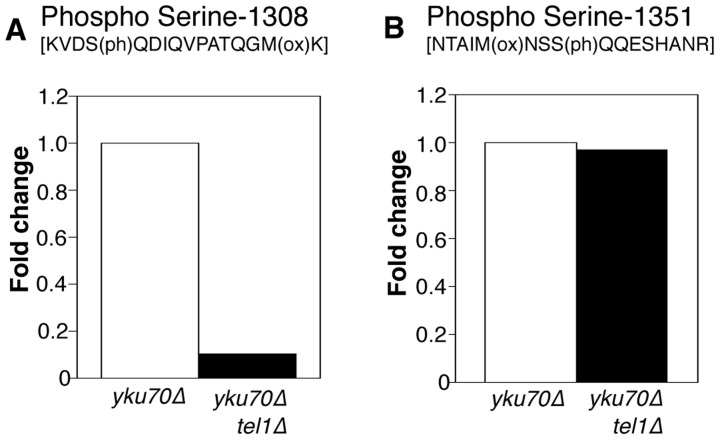
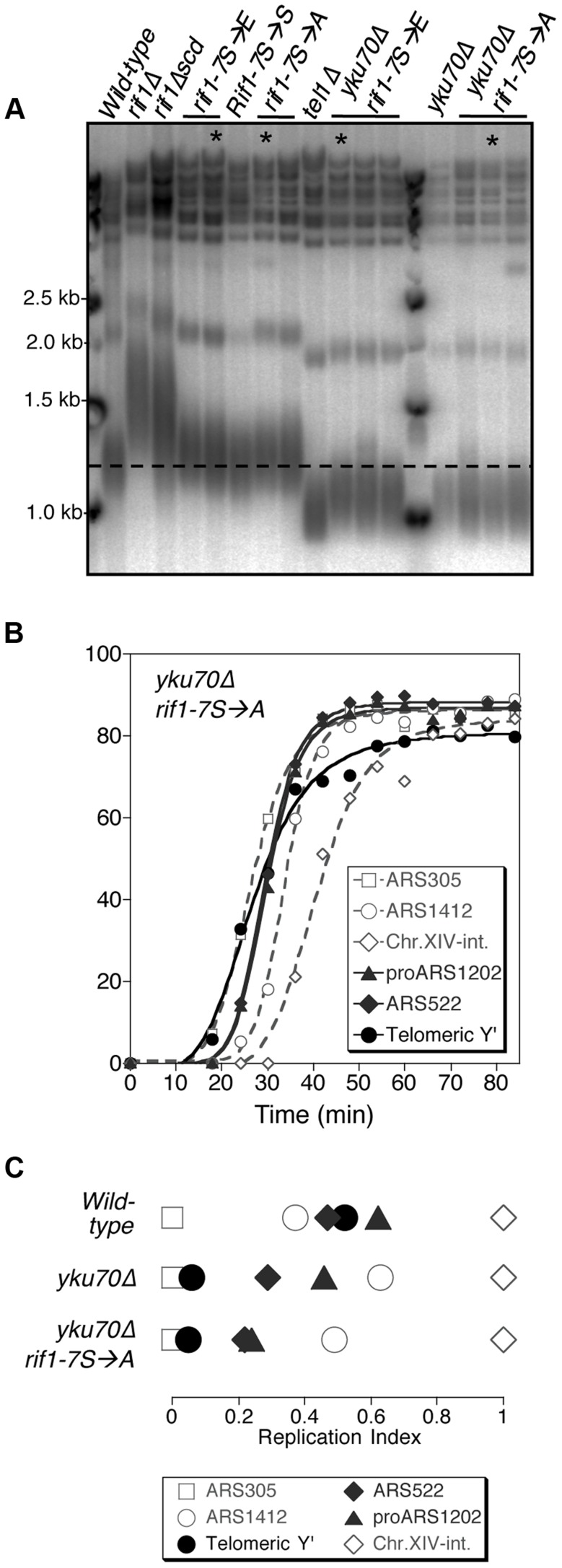
The replication time of Saccharomyces cerevisiae telomeres responds to TG1-3 repeat length, with telomeres of normal length replicating late during S phase and short telomeres replicating early. Here we show that Tel1 kinase, which is recruited to short telomeres, specifies their early replication, because we find a tel1Δ mutant has short telomeres that nonetheless replicate late. Consistent with a role for Tel1 in driving early telomere replication, initiation at a replication origin close to an induced short telomere was reduced in tel1Δ cells, in an S phase blocked by hydroxyurea. The telomeric chromatin component Rif1 mediates late replication of normal telomeres and is a potential substrate of Tel1 phosphorylation, so we tested whether Tel1 directs early replication of short telomeres by inactivating Rif1. A strain lacking both Rif1 and Tel1 behaves like a rif1Δ mutant by replicating its telomeres early, implying that Tel1 can counteract the delaying effect of Rif1 to control telomere replication time. Proteomic analyses reveals that in yku70Δ cells that have short telomeres, Rif1 is phosphorylated at Tel1 consensus sequences (S/TQ sites), with phosphorylation of Serine-1308 being completely dependent on Tel1. Replication timing analysis of a strain mutated at these phosphorylation sites, however, suggested that Tel1-mediated phosphorylation of Rif1 is not the sole mechanism of replication timing control at telomeres. Overall, our results reveal two new functions of Tel1 at shortened telomeres: phosphorylation of Rif1, and specification of early replication by counteracting the Rif1-mediated delay in initiation at nearby replication origins.
酿酒酵母端粒的复制时间对TG1-3重复序列长度有响应,正常长度的端粒在S期后期复制,而短端粒则在早期复制。我们在此表明,被招募到短端粒的Tel1激酶决定了它们的早期复制,因为我们发现tel1Δ突变体的端粒虽短但仍在后期复制。与Tel1在驱动端粒早期复制中的作用一致,在羟基脲阻断的S期,靠近诱导产生的短端粒的复制起点处的起始在tel1Δ细胞中减少。端粒染色质成分Rif1介导正常端粒的后期复制,并且是Tel1磷酸化的潜在底物,因此我们测试了Tel1是否通过使Rif1失活来指导短端粒的早期复制。同时缺乏Rif1和Tel1的菌株通过早期复制其端粒,表现得像rif1Δ突变体,这意味着Tel1可以抵消Rif1的延迟作用以控制端粒复制时间。蛋白质组学分析表明,在具有短端粒的yku70Δ细胞中,Rif1在Tel1共有序列(S/TQ位点)处被磷酸化,丝氨酸13’08的磷酸化完全依赖于Tel1。然而,对在这些磷酸化位点发生突变的菌株进行的复制时间分析表明,Tel1介导的Rif1磷酸化不是端粒复制时间控制的唯一机制。总体而言,我们的结果揭示了Tel1在缩短的端粒上的两个新功能:Rif1的磷酸化,以及通过抵消Rif1介导的附近复制起点起始延迟来确定早期复制。