Cheng Y, Rodriguiz R M, Murthy S R K, Senatorov V, Thouennon E, Cawley N X, Aryal D K, Ahn S, Lecka-Czernik B, Wetsel W C, Loh Y P
Section on Cellular Neurobiology, Program on Developmental Neuroscience, Bethesda, MD, USA.
Department of Psychiatry and Behavioral Sciences, Durham, NC, USA.
Mol Psychiatry. 2015 Jun;20(6):744-54. doi: 10.1038/mp.2014.136. Epub 2014 Oct 21.
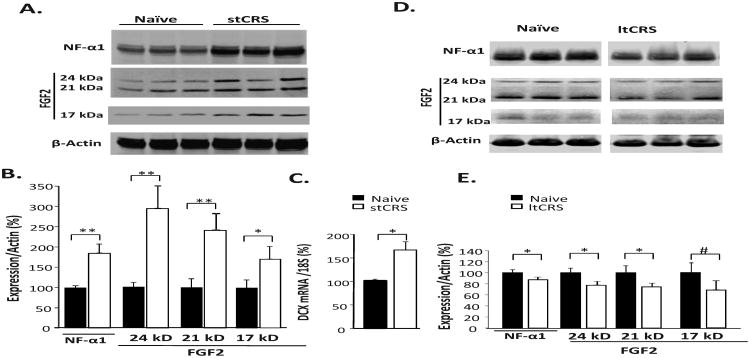
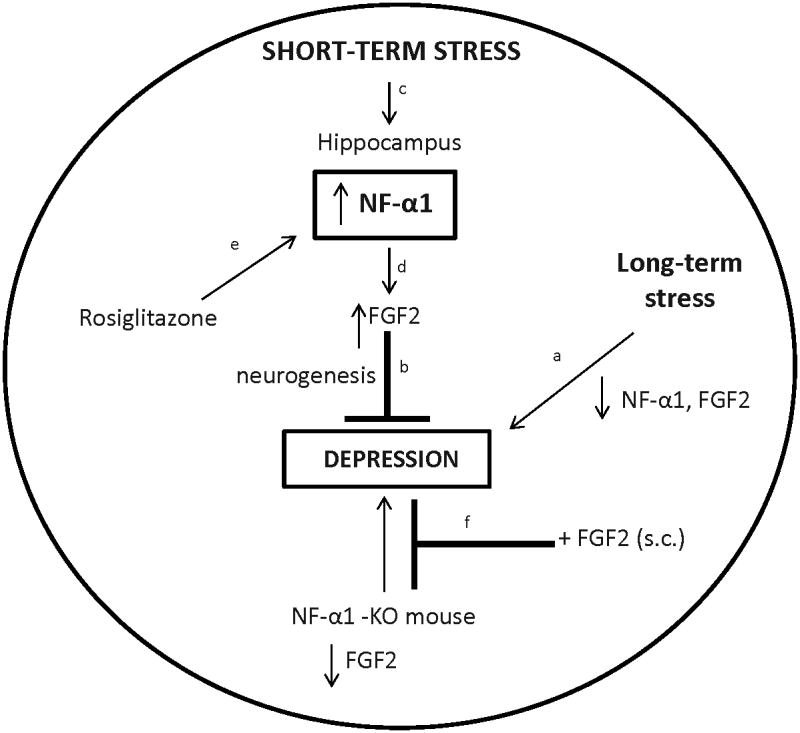
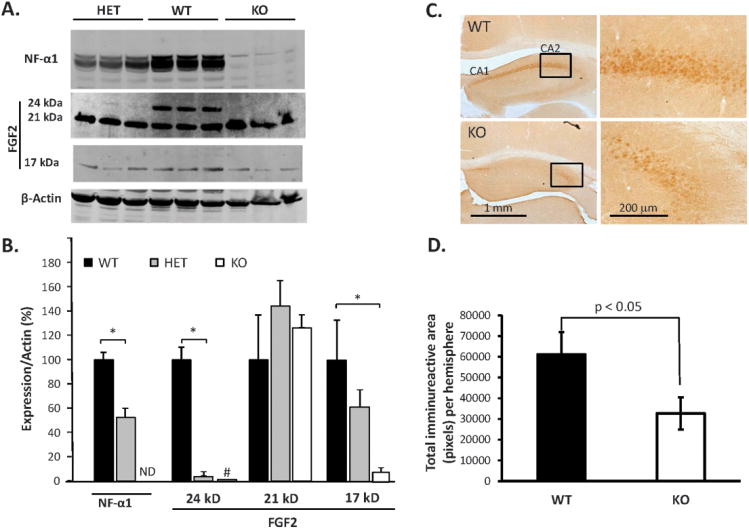
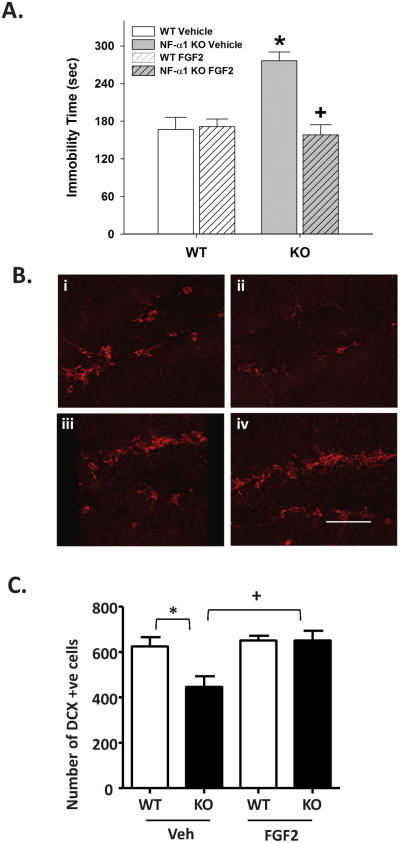
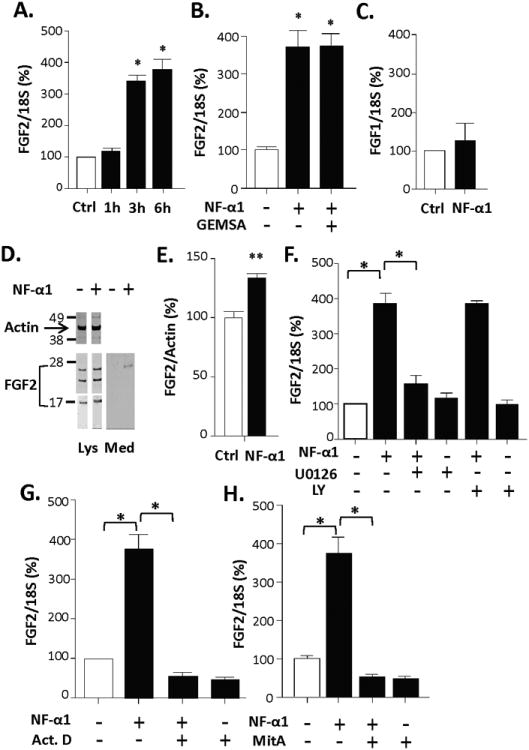
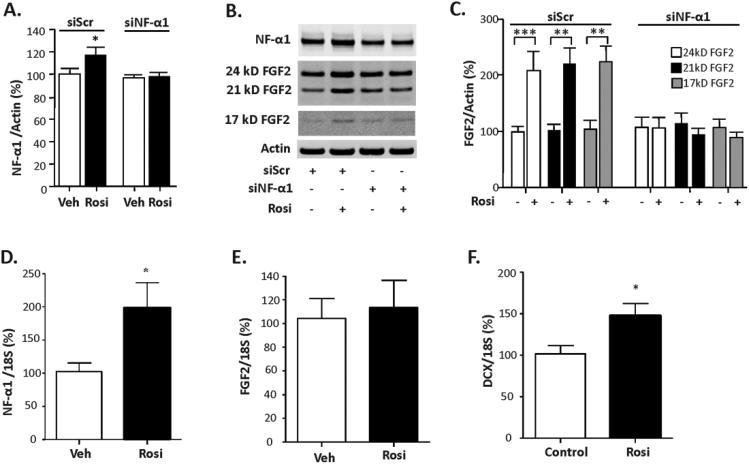
Major depressive disorder is often linked to stress. Although short-term stress is without effect in mice, prolonged stress leads to depressive-like behavior, indicating that an allostatic mechanism exists in this difference. Here we demonstrate that mice after short-term (1 h per day for 7 days) chronic restraint stress (CRS), do not display depressive-like behavior. Analysis of the hippocampus of these mice showed increased levels of neurotrophic factor-α1 (NF-α1; also known as carboxypeptidase E, CPE), concomitant with enhanced fibroblast growth factor 2 (FGF2) expression, and an increase in neurogenesis in the dentate gyrus. In contrast, after prolonged (6 h per day for 21 days) CRS, mice show decreased hippocampal NF-α1 and FGF2 levels and depressive-like responses. In NF-α1-knockout mice, hippocampal FGF2 levels and neurogenesis are reduced. These mice exhibit depressive-like behavior that is reversed by FGF2 administration. Indeed, studies in cultured hippocampal neurons reveal that NF-α1 treatment directly upregulates FGF2 expression through extracellular signal-regulated kinase-Sp1 signaling. Thus, during short-term CRS, hippocampal NF-α1 expression is upregulated and has a key role in preventing the onset of depressive-like behavior through enhanced FGF2-mediated neurogenesis. To evaluate the therapeutic potential of this pathway, we examined, rosiglitazone (Rosi), a PPARγ agonist, which has been shown to have antidepressant activity in rodents and humans. Rosi upregulates FGF2 expression in a NF-α1-dependent manner in hippocampal neurons. Mice fed Rosi show increased hippocampal NF-α1 levels and neurogenesis compared with controls, thereby indicating the antidepressant action of this drug. Development of drugs that activate the NF-α1/FGF2/neurogenesis pathway can offer a new approach to depression therapy.
重度抑郁症常与压力有关。虽然短期压力对小鼠没有影响,但长期压力会导致类似抑郁的行为,这表明这种差异中存在一种适应性机制。在这里,我们证明,经过短期(每天1小时,共7天)慢性束缚应激(CRS)的小鼠不会表现出类似抑郁的行为。对这些小鼠海马体的分析显示,神经营养因子-α1(NF-α1;也称为羧肽酶E,CPE)水平升高,同时成纤维细胞生长因子2(FGF2)表达增强,齿状回中的神经发生增加。相反,经过长期(每天6小时,共21天)CRS后,小鼠海马体中的NF-α1和FGF2水平降低,并出现类似抑郁的反应。在NF-α1基因敲除小鼠中,海马体中的FGF2水平和神经发生减少。这些小鼠表现出类似抑郁的行为,而给予FGF2可使其逆转。事实上,在培养的海马神经元中的研究表明,NF-α1处理通过细胞外信号调节激酶-Sp1信号通路直接上调FGF2的表达。因此,在短期CRS期间,海马体中NF-α1的表达上调,并通过增强FGF2介导的神经发生在预防类似抑郁行为的发生中起关键作用。为了评估这条通路的治疗潜力,我们研究了罗格列酮(Rosi),一种PPARγ激动剂,它已被证明在啮齿动物和人类中具有抗抑郁活性。Rosi以NF-α1依赖的方式上调海马神经元中FGF2的表达。与对照组相比,喂食Rosi的小鼠海马体中NF-α1水平和神经发生增加,从而表明该药物的抗抑郁作用。开发激活NF-α1/FGF2/神经发生通路的药物可为抑郁症治疗提供一种新方法。