Tonne Jason M, Sakuma Toshie, Munoz-Gomez Miguel, El Khatib Moustafa, Barry Michael A, Kudva Yogish C, Ikeda Yasuhiro
Department of Molecular Medicine, Mayo Clinic College of Medicine, 200 First Street SW, Rochester, MN, 55905, USA.
Diabetologia. 2015 Feb;58(2):313-23. doi: 10.1007/s00125-014-3416-4. Epub 2014 Oct 23.
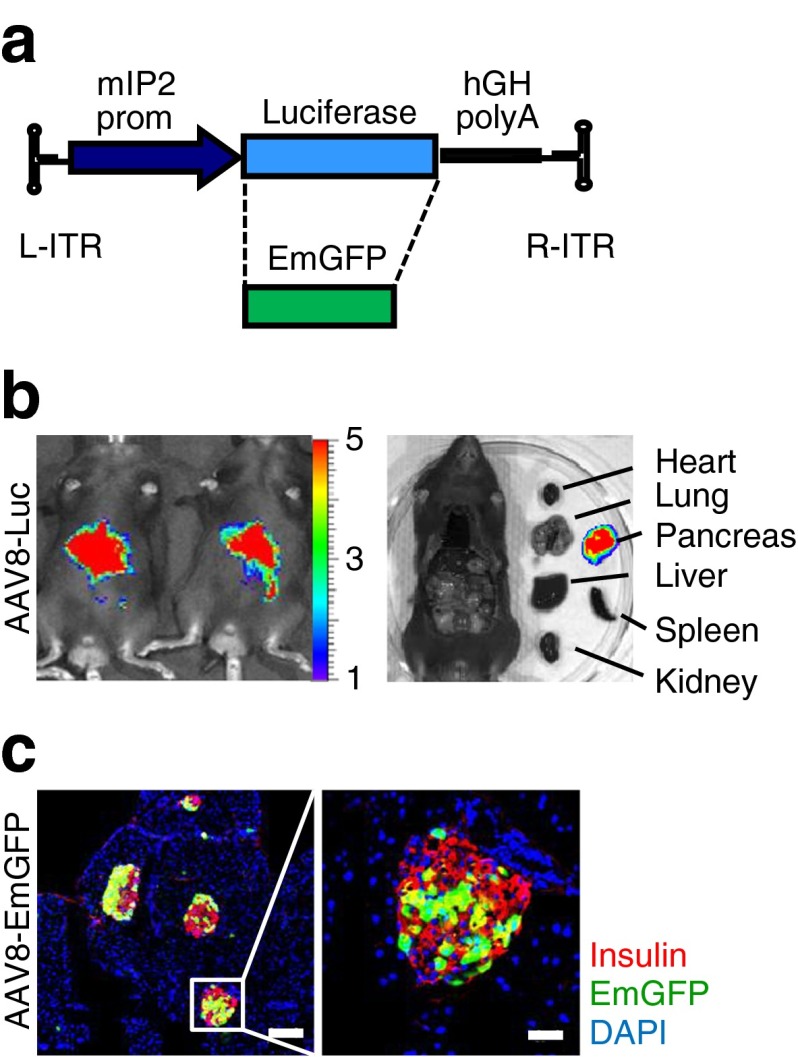
AIMS/HYPOTHESIS: Achieving a better understanding of beta cell regeneration after immunological destruction is crucial for the development of immunotherapy approaches for type 1 diabetes. In previous type 1 diabetes models, sustained immune activation eliminates regenerating beta cells, thus limiting the study of the regenerative capacity of beta cells upon immunological destruction. Here, we employed an adeno-associated virus 8 (AAV8) vector for beta cell-targeted overexpression of a foreign antigen to induce single-round immunological destruction of existing beta cells.
Young and aged C57BL/6J mice were treated with AAV8 vectors expressing the foreign antigen luciferase. Islet inflammation and regeneration was observed at 3, 6, 10 and 22 weeks post-AAV delivery.
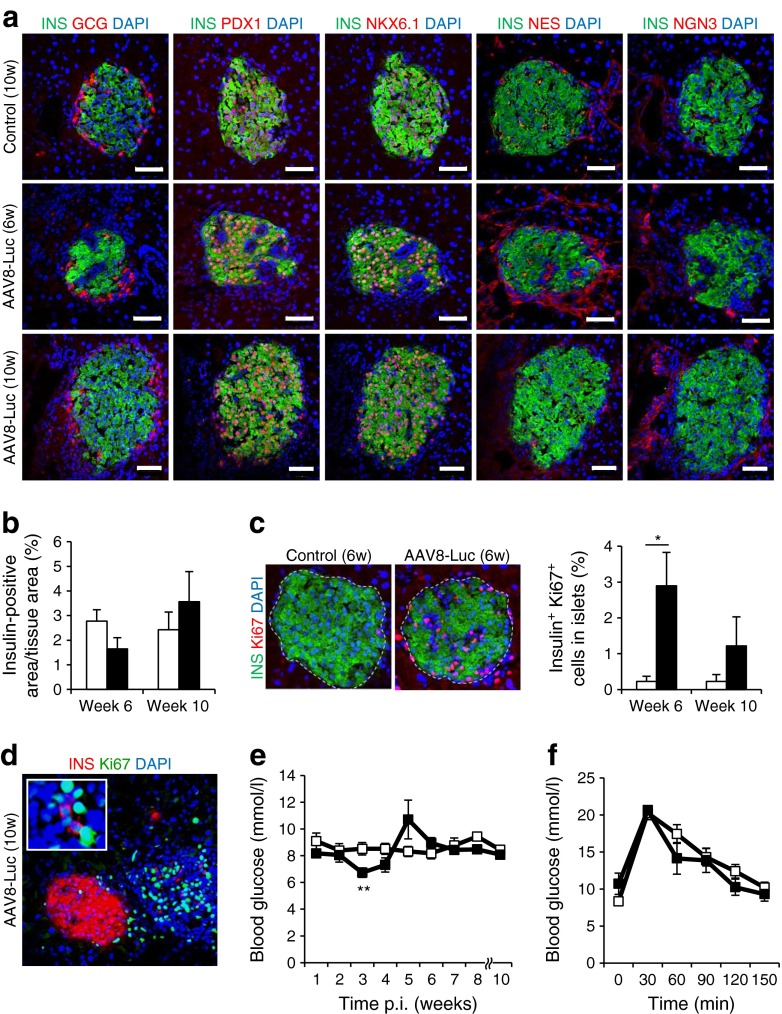
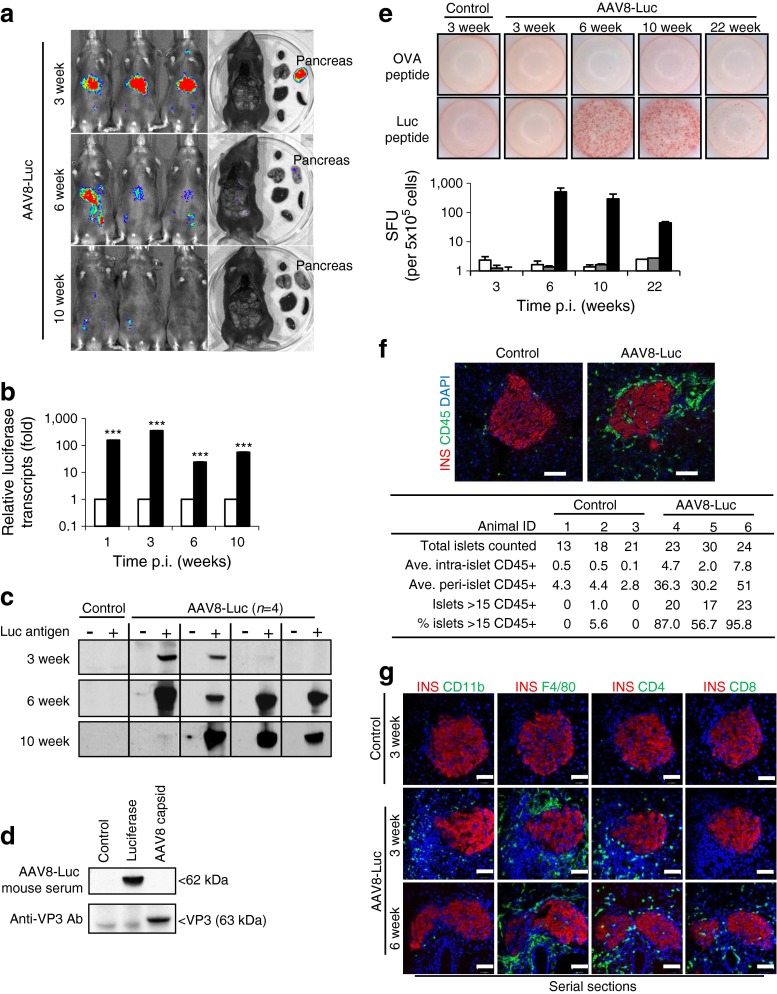
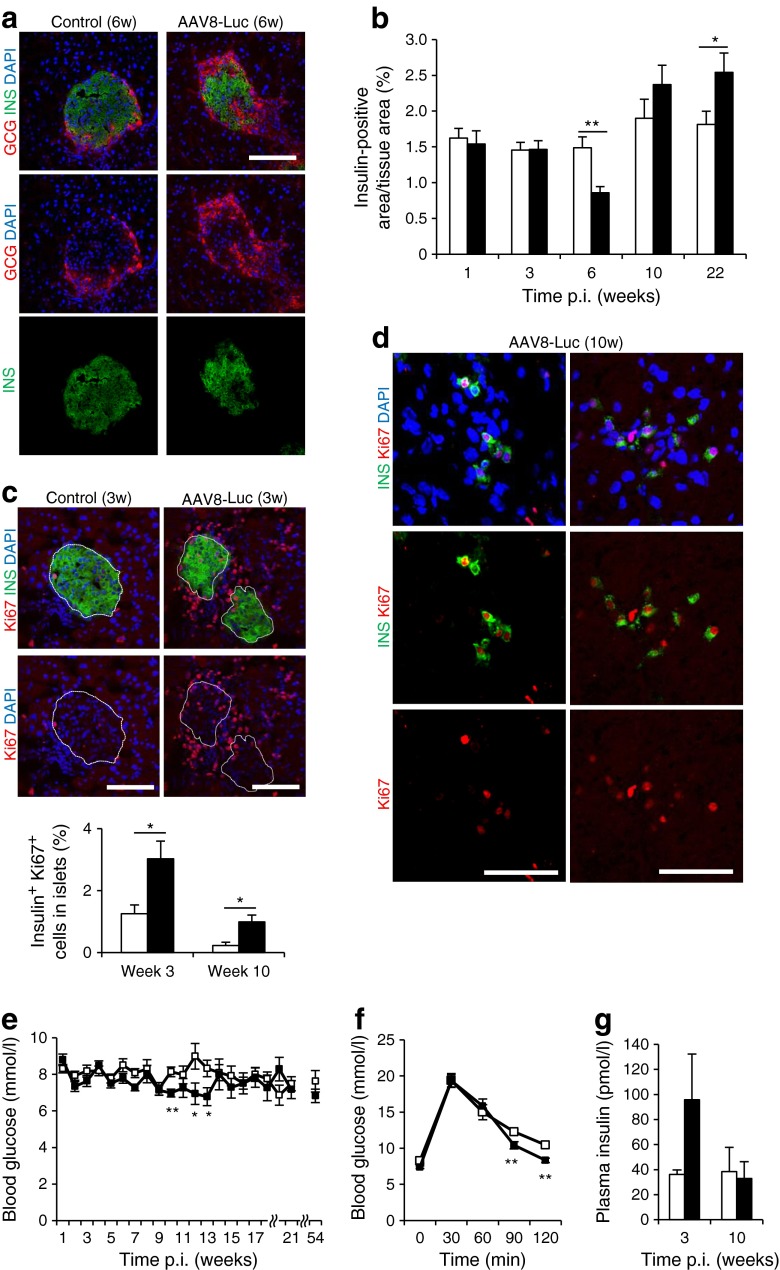
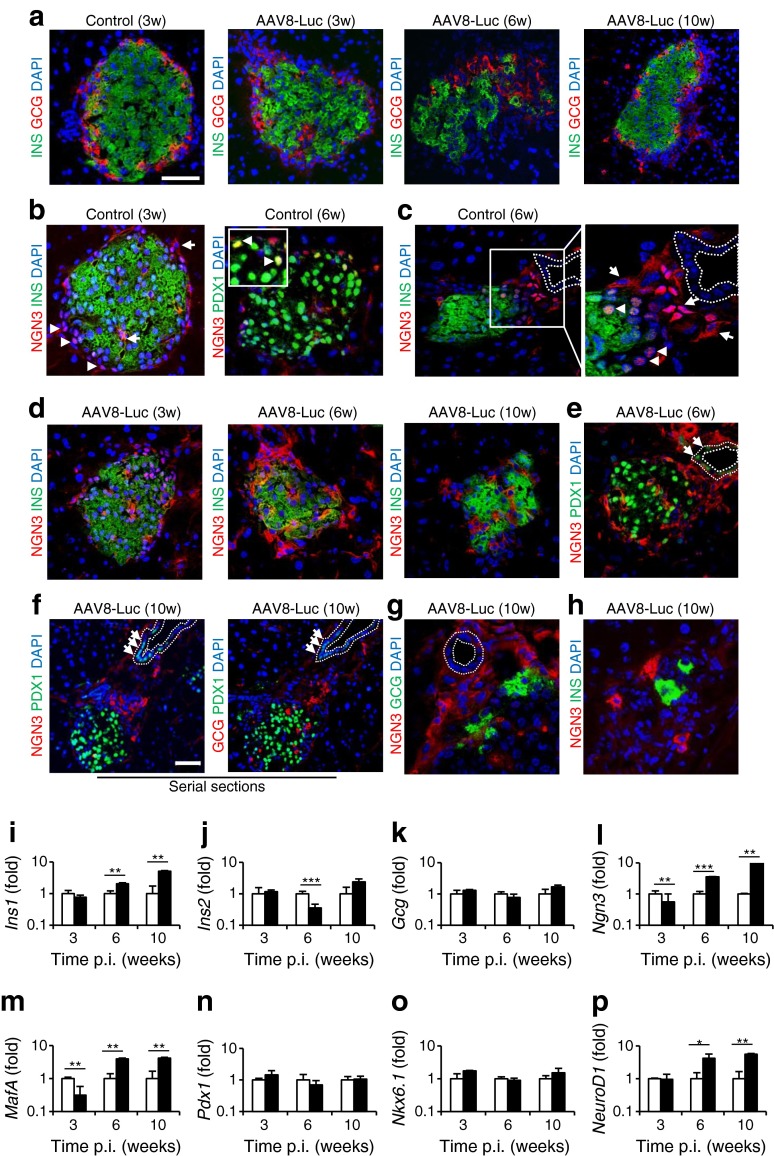
In young C57BL/6J mice, robust humoral and cellular immune responses were developed towards antigen-expressing beta cells, leading to decreased beta cell mass. This was followed by beta cell mass replenishment, along with enhanced proliferation of insulin-positive cells, recruitment of nestin/CD34-positive endothelial cells, displacement of alpha cells and mobilisation of cytoplasmic neurogenin 3-positive cells. Mice with recovering beta cells showed normal or reduced fasting blood glucose levels and faster glucose clearance than controls. Although aged mice demonstrated similar responses to the treatment, they initially exhibited notable islet scarring and fluctuations in blood glucose levels, indicating that beta cell regeneration is slower in aged mice.
CONCLUSIONS/INTERPRETATION: Our hit-and-run, beta cell-targeted antigen expression system provides an opportunity to monitor the impact of single-round immunological beta cell destruction in animals with diverse genetic backgrounds or ageing status.
目的/假设:更好地了解免疫破坏后β细胞再生对于1型糖尿病免疫治疗方法的开发至关重要。在先前的1型糖尿病模型中,持续的免疫激活会消除再生的β细胞,从而限制了对免疫破坏后β细胞再生能力的研究。在此,我们采用腺相关病毒8(AAV8)载体对β细胞进行外源抗原的靶向过表达,以诱导现有β细胞的单次免疫破坏。
用表达外源抗原荧光素酶的AAV8载体处理年轻和老年C57BL/6J小鼠。在AAV递送后3、6、10和22周观察胰岛炎症和再生情况。
在年轻的C57BL/6J小鼠中,针对表达抗原的β细胞产生了强烈的体液和细胞免疫反应,导致β细胞量减少。随后β细胞量得到补充,同时胰岛素阳性细胞的增殖增强、巢蛋白/CD34阳性内皮细胞的募集、α细胞的替代以及细胞质神经生成素3阳性细胞的动员。β细胞恢复的小鼠空腹血糖水平正常或降低,且葡萄糖清除速度比对照组快。尽管老年小鼠对该治疗表现出相似的反应,但它们最初表现出明显的胰岛瘢痕形成和血糖水平波动,表明老年小鼠的β细胞再生较慢。
结论/解读:我们的“打了就跑”的β细胞靶向抗原表达系统为监测单次免疫性β细胞破坏在具有不同遗传背景或衰老状态的动物中的影响提供了机会。