Traboulsi Hussein, Davoli Serena, Catez Philippe, Egly Jean-Marc, Compe Emmanuel
Institut de Génétique et de Biologie Moléculaire et Cellulaire, Illkirch, Strasbourg, France.
PLoS Genet. 2014 Oct 23;10(10):e1004732. doi: 10.1371/journal.pgen.1004732. eCollection 2014 Oct.
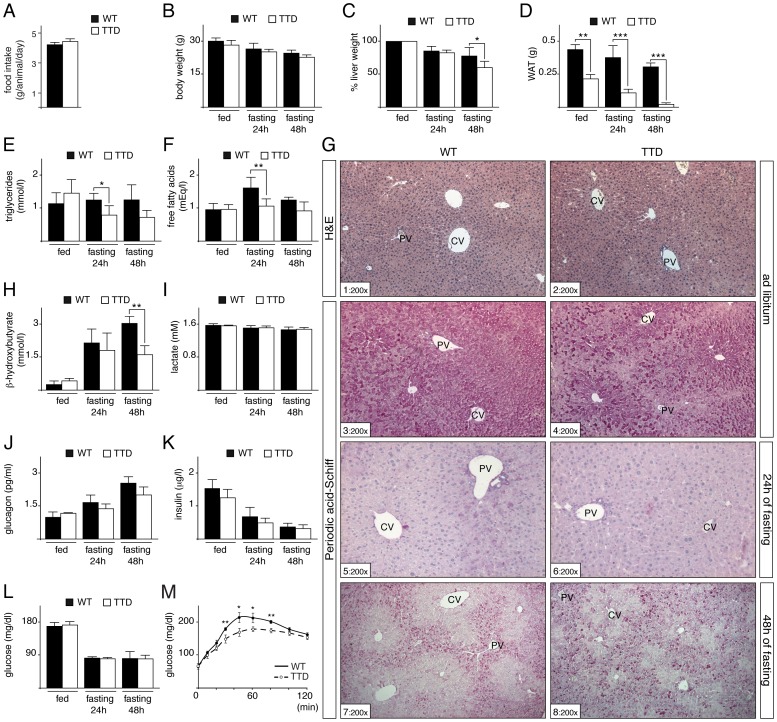
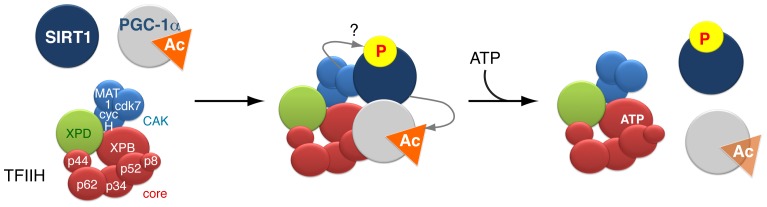
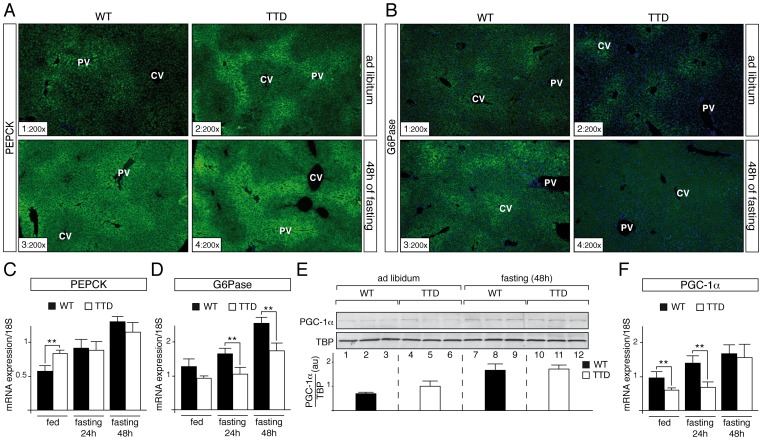
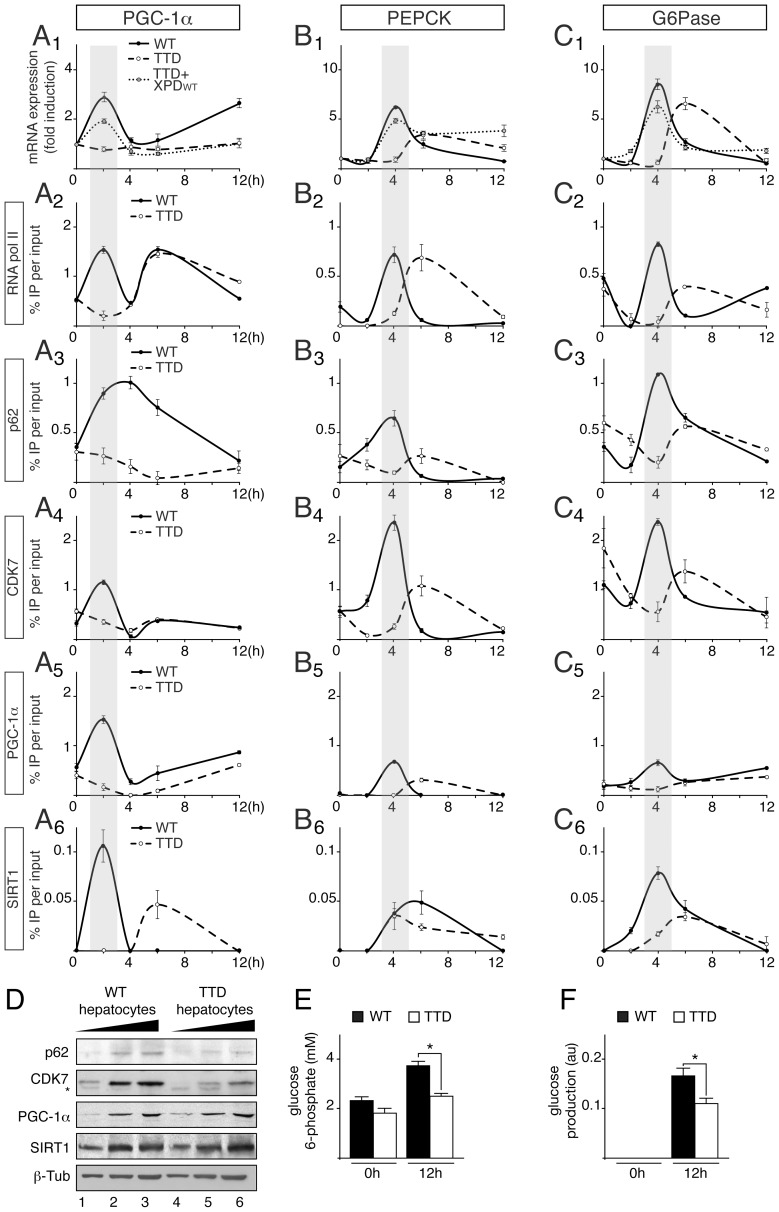
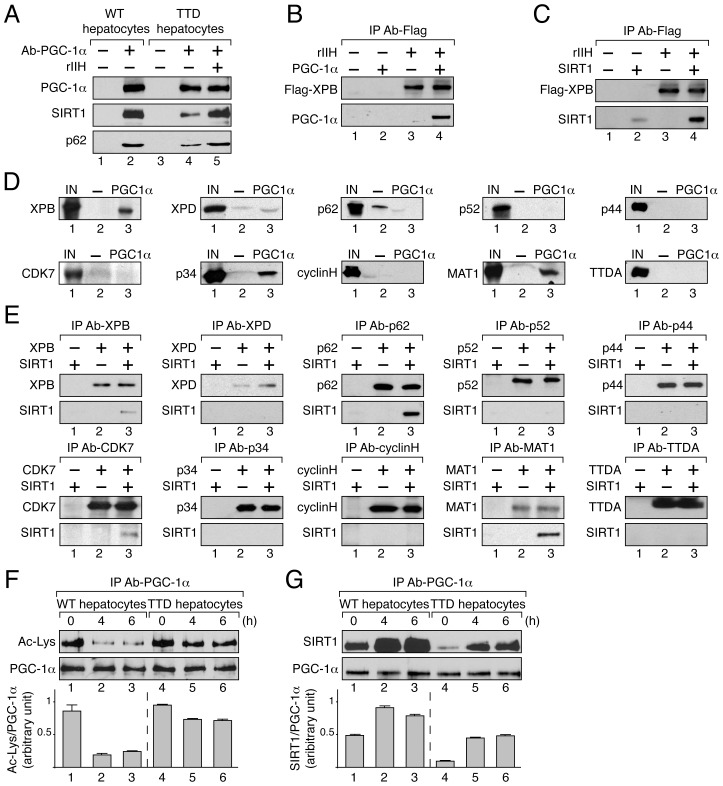
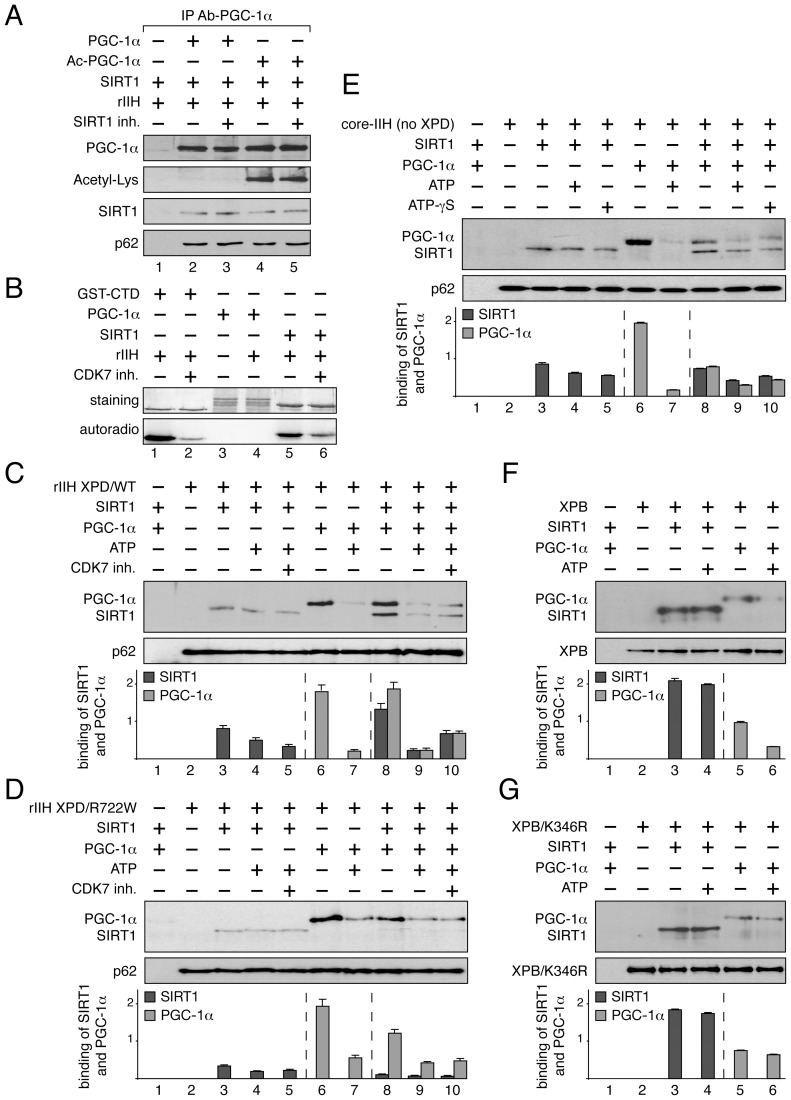
The expression of protein-coding genes requires the selective role of many transcription factors, whose coordinated actions remain poorly understood. To further grasp the molecular mechanisms that govern transcription, we focused our attention on the general transcription factor TFIIH, which gives rise, once mutated, to Trichothiodystrophy (TTD), a rare autosomal premature-ageing disease causing inter alia, metabolic dysfunctions. Since this syndrome could be connected to transcriptional defects, we investigated the ability of a TTD mouse model to cope with food deprivation, knowing that energy homeostasis during fasting involves an accurate regulation of the gluconeogenic genes in the liver. Abnormal amounts of gluconeogenic enzymes were thus observed in TTD hepatic parenchyma, which was related to the dysregulation of the corresponding genes. Strikingly, such gene expression defects resulted from the inability of PGC1-α to fulfill its role of coactivator. Indeed, extensive molecular analyses unveiled that wild-type TFIIH cooperated in an ATP-dependent manner with PGC1-α as well as with the deacetylase SIRT1, thereby contributing to the PGC1-α deacetylation by SIRT1. Such dynamic partnership was, however, impaired when TFIIH was mutated, having as a consequence the disruption of PGC1-α recruitment to the promoter of target genes. Therefore, besides a better understanding of the etiology of TFIIH-related disease, our results shed light on the synergistic relationship that exist between different types of transcription factors, which is necessary to properly regulate the expression of protein coding genes.
蛋白质编码基因的表达需要多种转录因子的选择性作用,而它们的协同作用仍知之甚少。为了进一步掌握转录调控的分子机制,我们将注意力集中在通用转录因子TFIIH上,该因子一旦发生突变,就会引发毛发硫营养不良(TTD),这是一种罕见的常染色体早衰疾病,尤其会导致代谢功能障碍。由于这种综合征可能与转录缺陷有关,我们研究了一种TTD小鼠模型应对食物剥夺的能力,因为我们知道禁食期间的能量稳态涉及肝脏中糖异生基因的精确调控。因此,在TTD肝实质中观察到糖异生酶的异常量,这与相应基因的失调有关。令人惊讶的是,这种基因表达缺陷是由于PGC1-α无法发挥其共激活因子的作用所致。事实上,广泛的分子分析表明,野生型TFIIH以ATP依赖的方式与PGC1-α以及去乙酰化酶SIRT1协同作用,从而促进SIRT1对PGC1-α的去乙酰化。然而,当TFIIH发生突变时,这种动态伙伴关系就会受损,结果导致PGC1-α无法招募到靶基因的启动子上。因此,除了更好地理解与TFIIH相关疾病的病因外,我们的研究结果还揭示了不同类型转录因子之间存在的协同关系,这对于正确调节蛋白质编码基因的表达是必要的。