Wang M, Li S, Xie W, Shen J, Im H J, Holz J D, Wang M, Diekwisch T G, Chen D
Department of Biochemistry, Rush University Medical Center, 1735 West Harrison Street, Cohn Research Building, Suite 508, Chicago, IL 60612,
Eur Cell Mater. 2014 Oct 23;28:223-35. doi: 10.22203/ecm.v028a15.
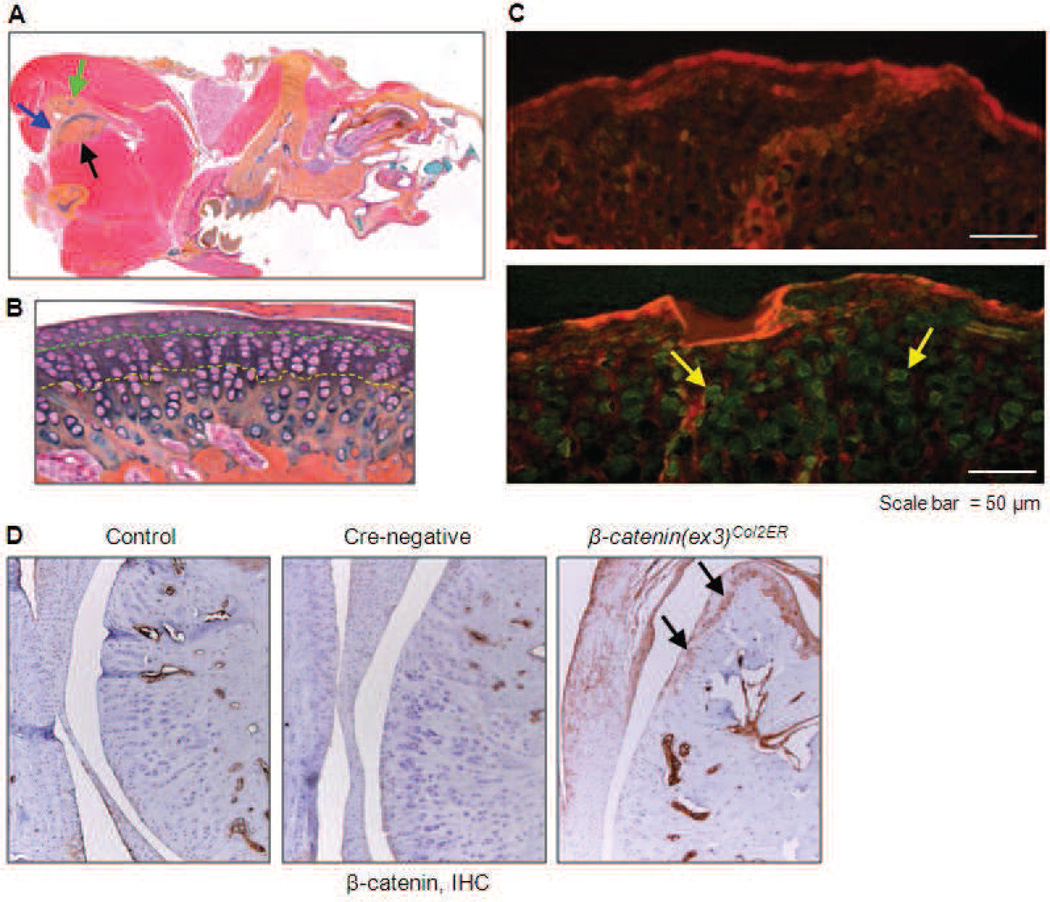
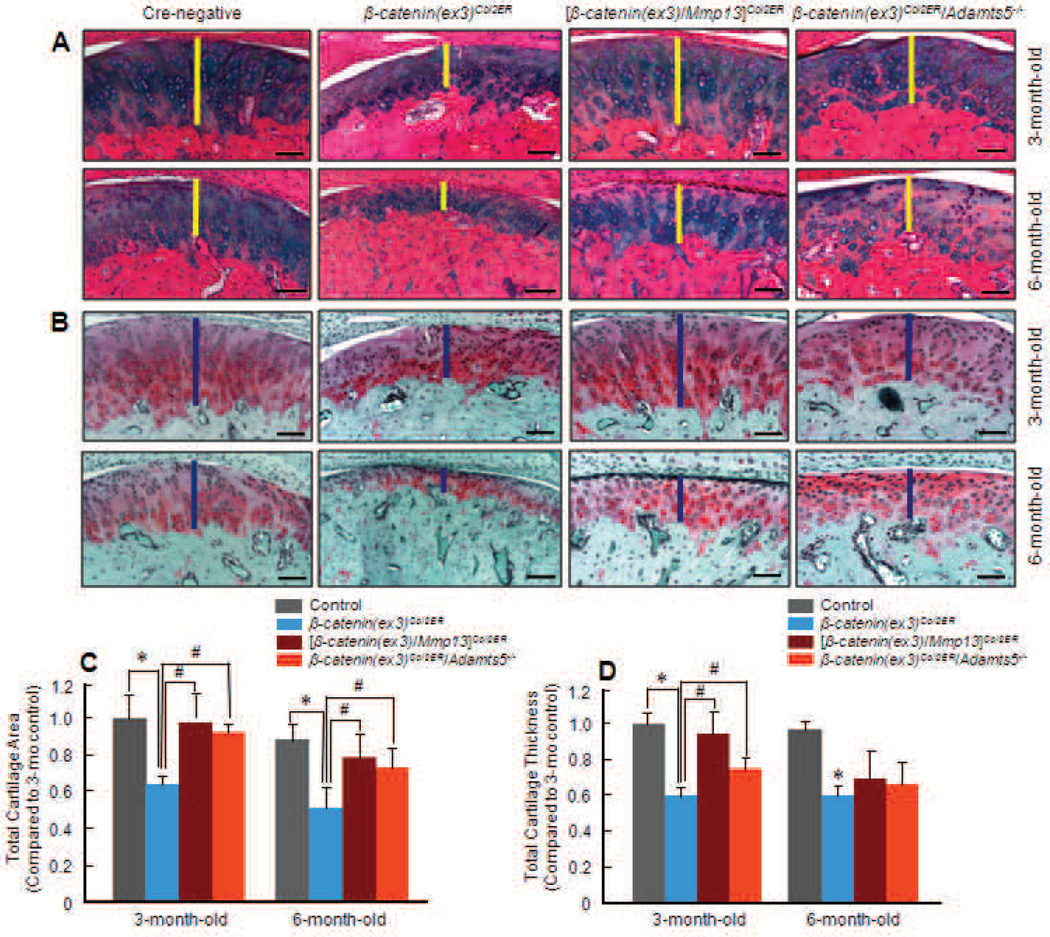
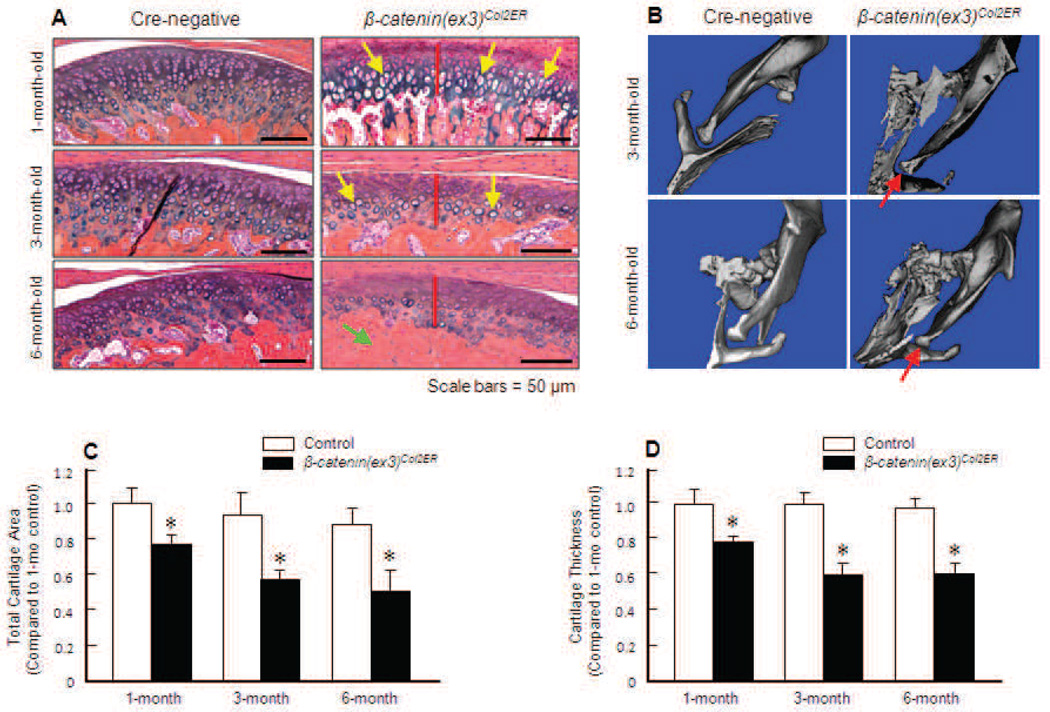
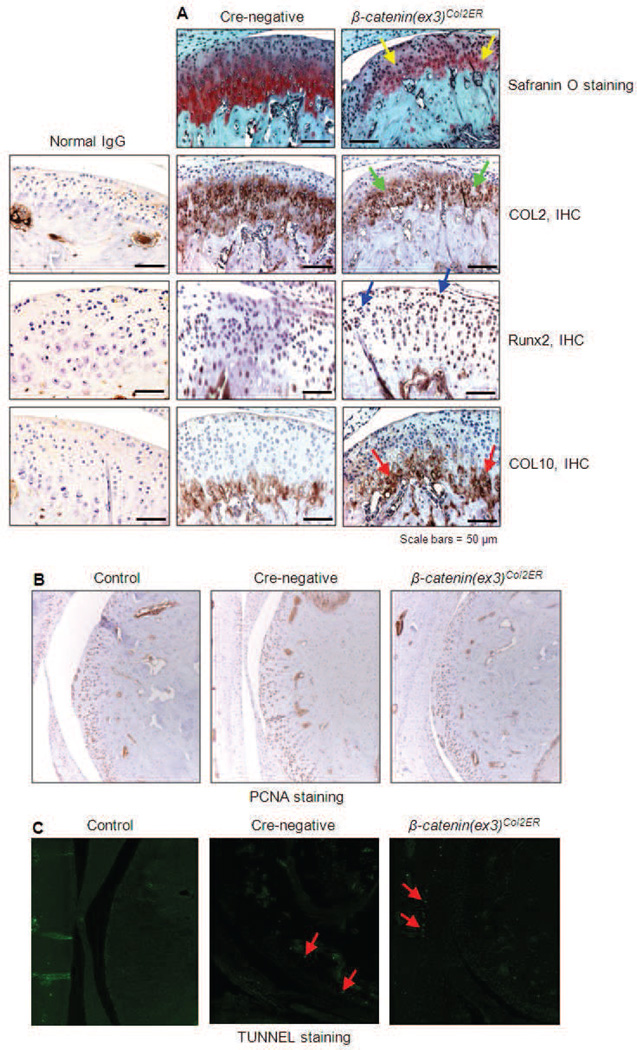
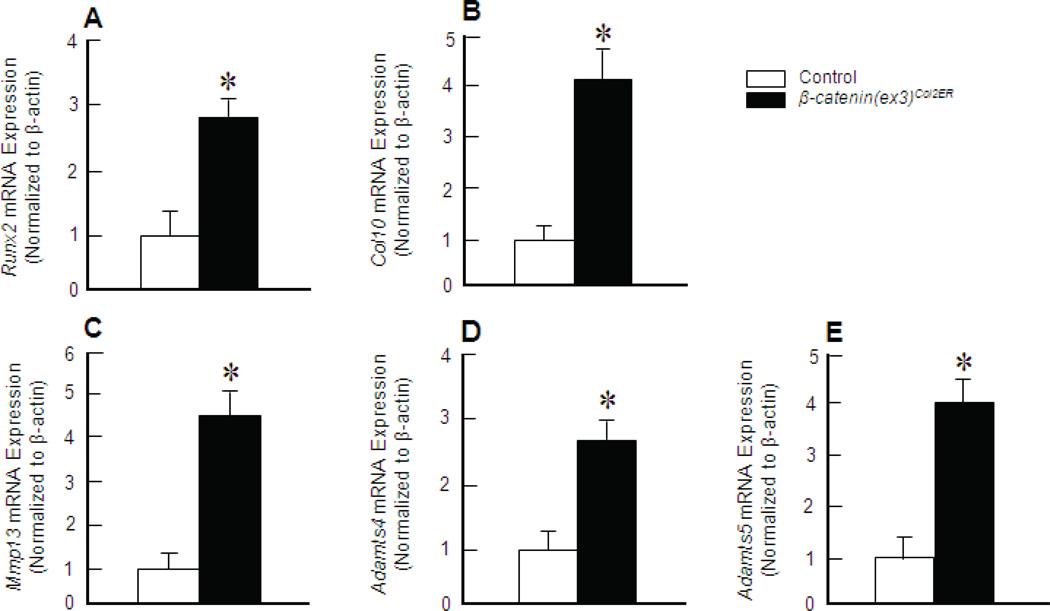
Despite extensive research in knee and hip osteoarthritis (OA), the underlying mechanism of temporomandibular joint (TMJ) disorder remains largely unknown. The purpose of this study was to determine whether the constitutive activation of β-catenin in the middle and deep layers of the articular cartilage can compromise the homeostasis of this tissue in the TMJ. Col2CreERT2 transgenic mice were bred with RosamT/mG reporter mice to determine Cre recombination efficiency. Col2CreERT2 mice were then crossed with β-cateninflox(ex3)+ mice to generate β-catenin conditional activation mice, β-catenin(ex3)Col2ER. TMJ samples were harvested when the mice were 1-, 3- or 6-month-old and evaluated using histology, histomorphometry and immunohistochemistry. β-catenin(ex3)Col2ER mice were further crossed with Mmp13flox/flox and Adamts5-/- mice to generate (β-catenin(ex3)/Mmp13)Col2ER and β-catenin(ex3)Col2ER)/Adamts5-/- double mutant mice to investigate the role of Mmp13 and Adamts5 in the development of TMJ disorder. High levels of Cre-recombination were seen in Col2CreERT2;RosamT/mGmice. Progressive TMJ defects developed in 1-, 3- and 6-month-old β-catenin(ex3)Col2ER mice, as revealed by histology and histomorphometry. Results further demonstrated that the defects observed in β-catenin(ex3)Col2ER mice were significantly decelerated after deletion of the Mmp13 or Adamts5 gene in (β-catenin(ex3)/Mmp13)Col2ER or β-catenin(ex3)Col2ER/Adamts5-/- double mutant mice. In summary, we found that β-catenin is a critical gene in the induction of TMJ cartilage degeneration, and over-expressing β-catenin in TMJ cartilage leads to defects assembling an OA-like phenotype. Deletion of Mmp13 and Adamts5 in β-catenin(ex3)Col2ER mice ameliorates the development of TMJ defects. This study suggests that Mmp13 and Adamts5 could be potential therapeutic targets for the treatment of TMJ disorders.
尽管对膝关节和髋关节骨关节炎(OA)进行了广泛研究,但颞下颌关节(TMJ)紊乱的潜在机制在很大程度上仍不清楚。本研究的目的是确定关节软骨中层和深层中β-连环蛋白的组成性激活是否会破坏TMJ中该组织的稳态。将Col2CreERT2转基因小鼠与RosamT/mG报告基因小鼠杂交,以确定Cre重组效率。然后将Col2CreERT2小鼠与β-连环蛋白flox(ex3)+小鼠杂交,以产生β-连环蛋白条件性激活小鼠,即β-连环蛋白(ex3)Col2ER。在小鼠1、3或6月龄时采集TMJ样本,并使用组织学、组织形态计量学和免疫组织化学进行评估。将β-连环蛋白(ex3)Col2ER小鼠进一步与Mmp13flox/flox和Adamts5-/-小鼠杂交,以产生(β-连环蛋白(ex3)/Mmp13)Col2ER和β-连环蛋白(ex3)Col2ER)/Adamts5-/-双突变小鼠,以研究Mmp13和Adamts5在TMJ紊乱发展中的作用。在Col2CreERT2;RosamT/mG小鼠中观察到高水平的Cre重组。组织学和组织形态计量学显示,1、3和6月龄的β-连环蛋白(ex3)Col2ER小鼠出现进行性TMJ缺陷。结果进一步表明,在(β-连环蛋白(ex3)/Mmp13)Col2ER或β-连环蛋白(ex3)Col2ER/Adamts5-/-双突变小鼠中删除Mmp13或Adamts5基因后,β-连环蛋白(ex3)Col2ER小鼠中观察到的缺陷明显减缓。总之,我们发现β-连环蛋白是诱导TMJ软骨退变的关键基因,在TMJ软骨中过表达β-连环蛋白会导致形成类似OA表型的缺陷。在β-连环蛋白(ex3)Col2ER小鼠中删除Mmp13和Adamts5可改善TMJ缺陷的发展。本研究表明,Mmp13和Adamts5可能是治疗TMJ紊乱的潜在治疗靶点。