Wang Lizhong, Zhou Haihong, Han Jin, Milne Richard I, Wang Mingyu, Liu Bingbing
State Key Laboratory of Grassland Agro-ecosystem, School of Life Science, Lanzhou University, Lanzhou, Gansu, China.
MOE Key Laboratory of Cell Activities and Stress Adaptations, School of Life Sciences, Lanzhou University, Lanzhou, Gansu, China.
PLoS One. 2014 Oct 24;9(10):e110712. doi: 10.1371/journal.pone.0110712. eCollection 2014.
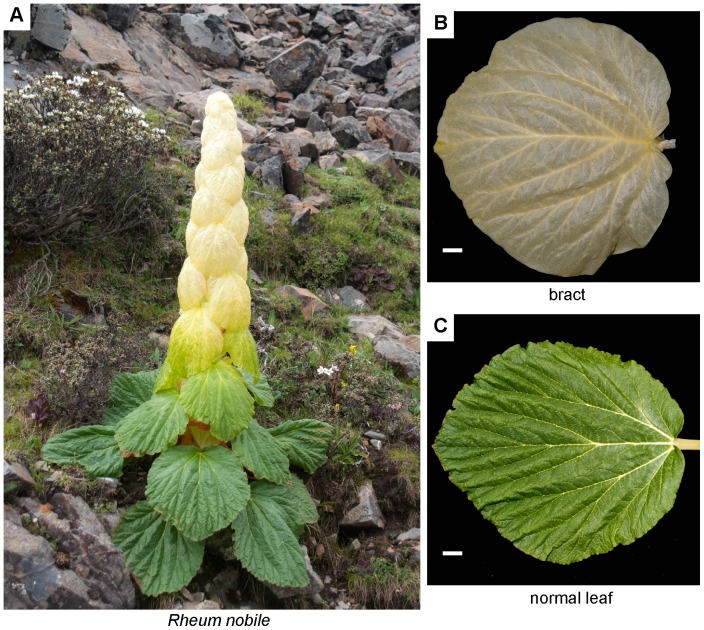
Rheum nobile is an alpine plant with translucent bracts concealing the inflorescence which produce a "glasshouse" effect promoting the development of fertile pollen grains in such conditions. The current understanding of the adaptation of such bracts to alpine environments mainly focuses on the phenotypic and physiological changes while the genetic basis is very limited. By sequencing the upper bract and the lower rosulate leaf from the same R. nobile stem, we identified candidate genes that may be involved in alpine adaption of the translucent bract in "glasshouse" plants and illustrated the changes in gene expression underlying the adaptive and complex evolution of the bracts phenotype.
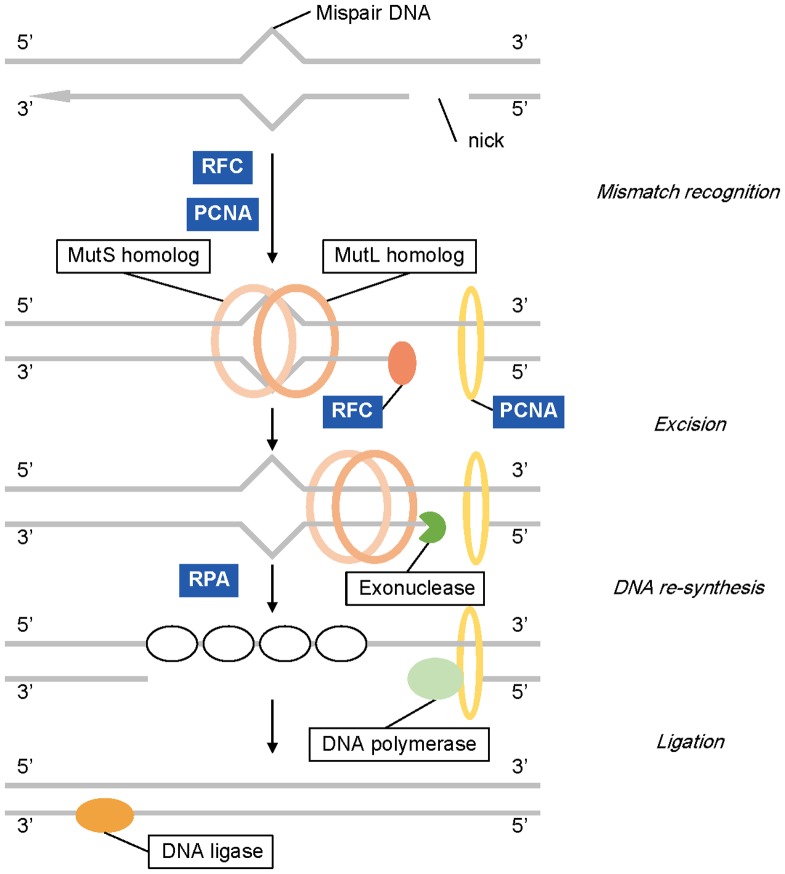
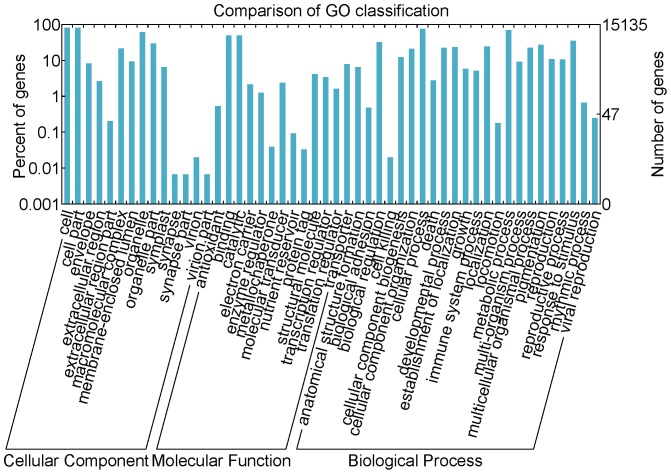
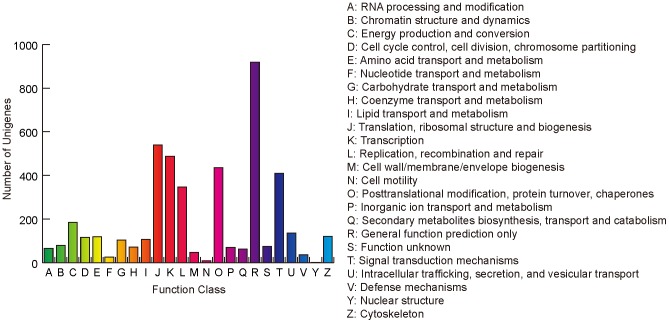
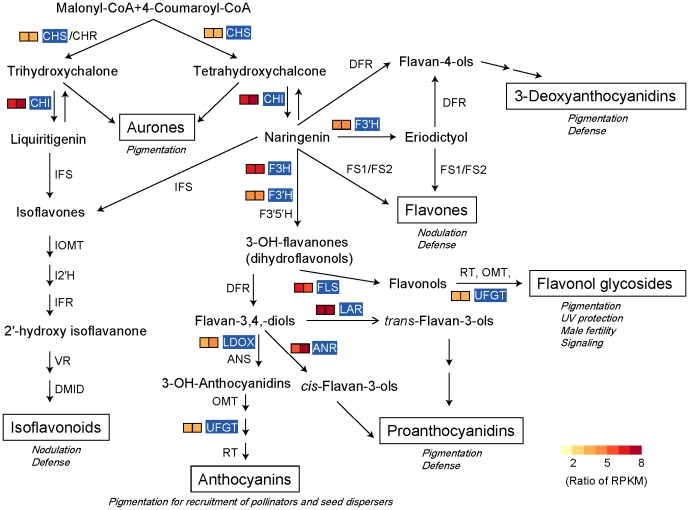
A total of 174.2 million paired-end reads from each transcriptome were assembled into 25,249 unigenes. By comparing the gene expression profiles, we identified 1,063 and 786 genes up-regulated respectively in the upper bract and the lower leaf. Functional enrichment analyses of these genes recovered a number of differential important pathways, including flavonoid biosynthesis, mismatch repair and photosynthesis related pathways. These pathways are mainly involved in three types of functions: 9 genes in the UV protective process, 9 mismatch repair related genes and 88 genes associated with photosynthesis.
This study provides the first comprehensive dataset characterizing Rheum nobile gene expression at the transcriptomic scale, and provides novel insights into the gene expression profiles associated with the adaptation of the "glasshouse" plant bracts. The dataset will be served as a public genetic resources for further functional and evolutionary studies of "glasshouse" plants.
塔黄是一种高山植物,其半透明的苞片包裹着花序,产生一种“温室”效应,有利于在这种条件下可育花粉粒的发育。目前对这种苞片适应高山环境的理解主要集中在表型和生理变化上,而遗传基础方面的研究非常有限。通过对同一塔黄茎上的上部苞片和下部莲座状叶进行测序,我们鉴定出了可能参与“温室”植物半透明苞片高山适应性的候选基因,并阐述了苞片表型适应性和复杂进化背后的基因表达变化。
每个转录组的1.742亿对末端读段被组装成25249个单基因。通过比较基因表达谱,我们分别在上部苞片和下部叶片中鉴定出1063个和786个上调基因。对这些基因的功能富集分析发现了许多差异重要途径,包括类黄酮生物合成、错配修复和光合作用相关途径。这些途径主要涉及三种功能类型:9个参与紫外线防护过程的基因、9个与错配修复相关的基因和88个与光合作用相关的基因。
本研究提供了首个在转录组水平上表征塔黄基因表达的综合数据集,并为与“温室”植物苞片适应性相关的基因表达谱提供了新的见解。该数据集将作为“温室”植物进一步功能和进化研究的公共遗传资源。