Lin Bowen, Koibuchi Nobutaka, Hasegawa Yu, Sueta Daisuke, Toyama Kensuke, Uekawa Ken, Ma MingJie, Nakagawa Takashi, Kusaka Hiroaki, Kim-Mitsuyama Shokei
Department of Pharmacology and Molecular Therapeutics, Kumamoto University Graduate School of Medical Sciences, 1-1-1 Honjyo, Kumamoto, 860-8556, Japan.
Cardiovasc Diabetol. 2014 Oct 26;13:148. doi: 10.1186/s12933-014-0148-1.
There has been uncertainty regarding the benefit of glycemic control with antidiabetic agents in prevention of diabetic macrovascular disease. Further development of novel antidiabetic agents is essential for overcoming the burden of diabetic macrovascular disease. The renal sodium glucose co-transporter 2 (SGLT2) inhibitor is a novel antihyperglycemic agent for treatment of type 2 diabetes. This work was performed to determine whether empagliflozin, a novel SGLT2 inhibitor, can ameliorate cardiovascular injury and cognitive decline in db/db mouse, a model of obesity and type 2 diabetes.
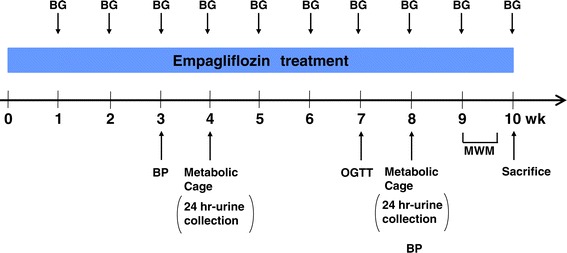
(1) Short-term experiment: The first experiment was performed to examine the effect of 7 days of empagliflozin treatment on urinary glucose excretion and urinary electrolyte excretion in db/db mice. (2) Long-term experiment: The second experiment was undertaken to examine the effect of 10 weeks of empagliflozin treatment on cardiovascular injury, vascular dysfunction, cognitive decline, and renal injury in db/db mice.
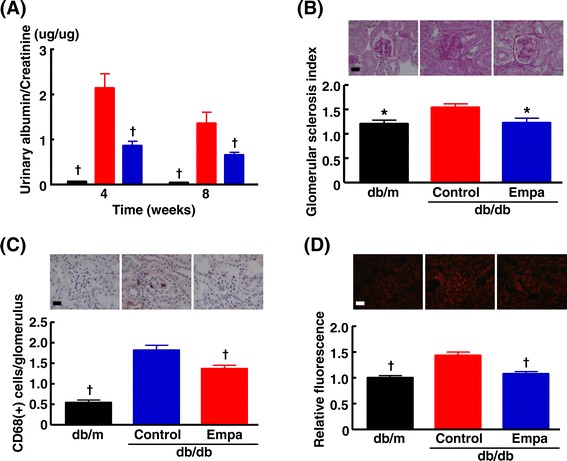
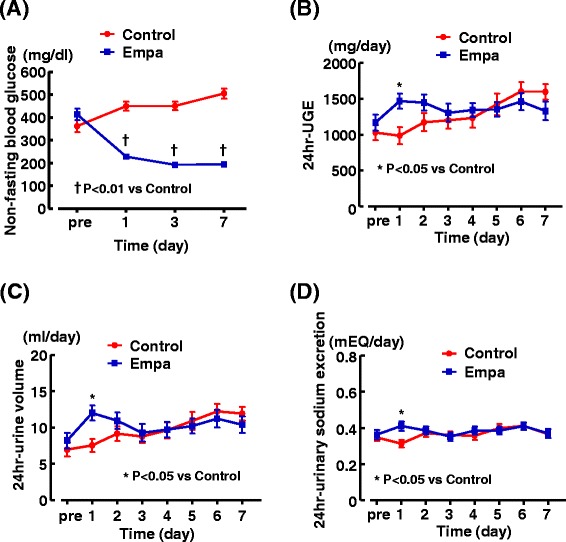
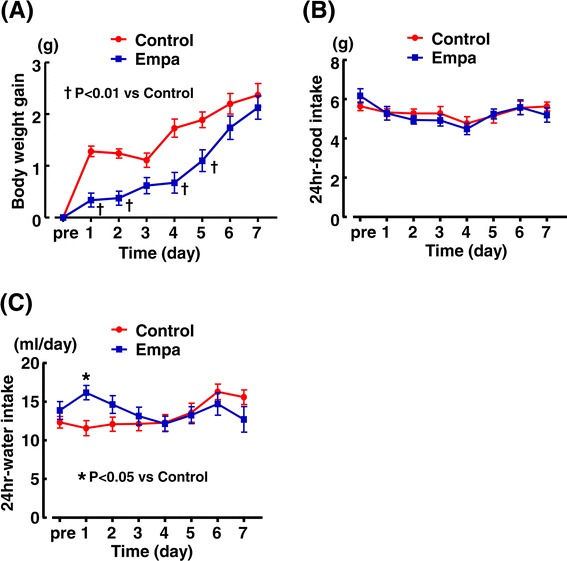
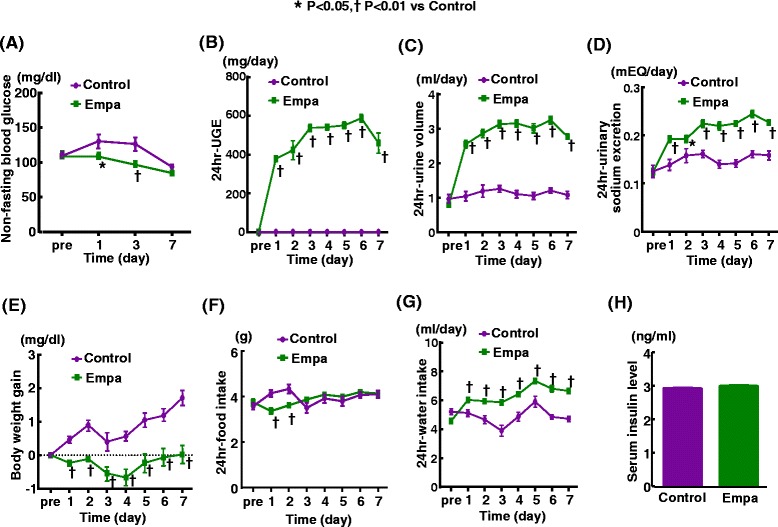
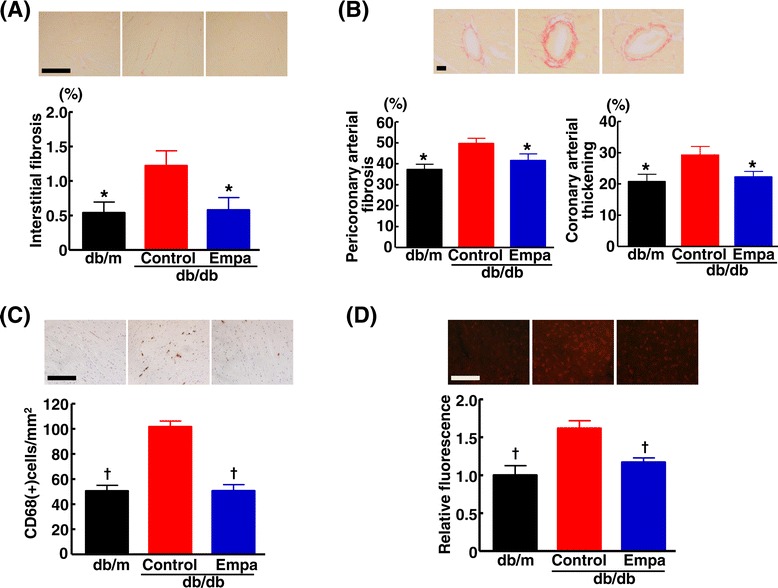
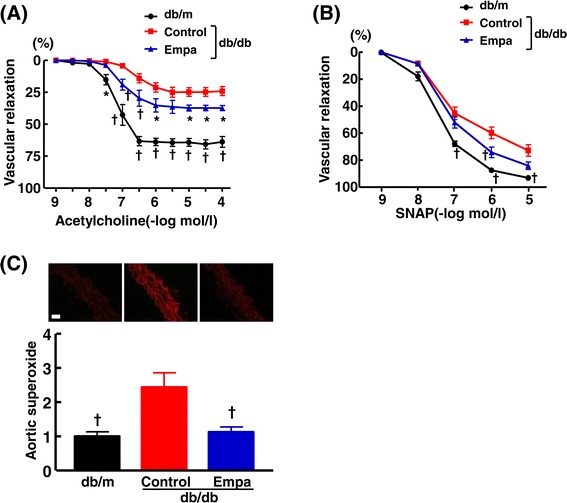
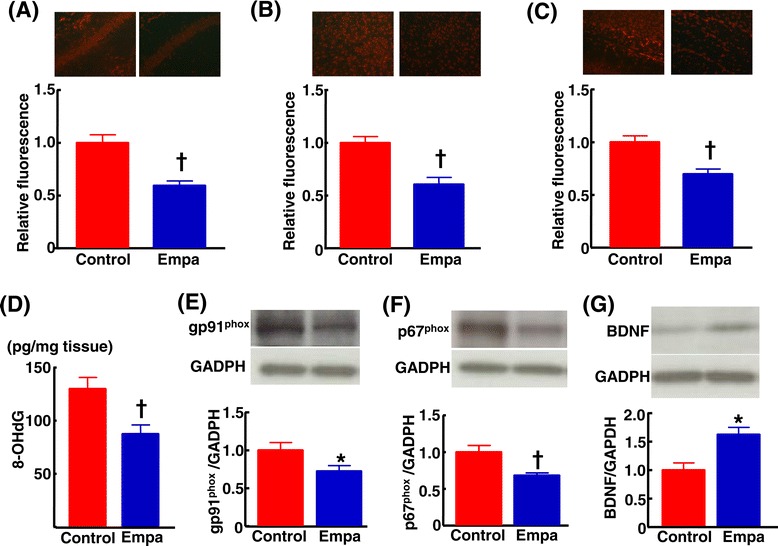
(1) Short-term experiment: Empagliflozin administration significantly increased urinary glucose excretion, urine volume, and urinary sodium excretion in db/db mice on day 1, but did not increase these parameters from day 2. However, blood glucose levels in db/db mice were continuously decreased by empagliflozin throughout 7 days of the treatment. (2) Long-term experiment: Empagliflozin treatment caused sustained decrease in blood glucose in db/db mice throughout 10 weeks of the treatment and significantly slowed the progression of type 2 diabetes. Empagliflozin significantly ameliorated cardiac interstitial fibrosis, pericoronary arterial fibrosis, coronary arterial thickening, cardiac macrophage infiltration, and the impairment of vascular dilating function in db/db mice, and these beneficial effects of empagliflozin were associated with attenuation of oxidative stress in cardiovascular tissue of db/db mice. Furthermore, empagliflozin significantly prevented the impairment of cognitive function in db/db mice, which was associated with the attenuation of cerebral oxidative stress and the increase in cerebral brain-derived neurotrophic factor. Empagliflozin ameliorated albuminuria, and glomerular injury in db/db mice.
Glycemic control with empagliflozin significantly ameliorated cardiovascular injury and remodeling, vascular dysfunction, and cognitive decline in obese and type 2 diabetic mice. Thus, empagliflozin seems to be potentially a promising therapeutic agent for diabetic macrovascular disease and cognitive decline.
使用抗糖尿病药物进行血糖控制在预防糖尿病大血管疾病方面的益处一直存在不确定性。开发新型抗糖尿病药物对于克服糖尿病大血管疾病的负担至关重要。肾钠葡萄糖协同转运蛋白2(SGLT2)抑制剂是一种用于治疗2型糖尿病的新型降糖药物。本研究旨在确定新型SGLT2抑制剂恩格列净是否能改善db/db小鼠(一种肥胖和2型糖尿病模型)的心血管损伤和认知功能下降。
(1)短期实验:第一个实验旨在检测恩格列净治疗7天对db/db小鼠尿糖排泄和尿电解质排泄的影响。(2)长期实验:第二个实验旨在检测恩格列净治疗10周对db/db小鼠心血管损伤、血管功能障碍、认知功能下降和肾损伤的影响。
(1)短期实验:给予恩格列净后,db/db小鼠在第1天尿糖排泄、尿量和尿钠排泄显著增加,但从第2天起这些参数未再增加。然而,在整个7天的治疗过程中,恩格列净持续降低db/db小鼠的血糖水平。(2)长期实验:在整个10周的治疗过程中,恩格列净治疗使db/db小鼠血糖持续降低,并显著减缓2型糖尿病的进展。恩格列净显著改善db/db小鼠的心脏间质纤维化、冠状动脉周围纤维化、冠状动脉增厚、心脏巨噬细胞浸润以及血管舒张功能障碍,且恩格列净的这些有益作用与db/db小鼠心血管组织氧化应激的减轻有关。此外,恩格列净显著预防db/db小鼠的认知功能障碍,这与脑氧化应激的减轻和脑源性神经营养因子的增加有关。恩格列净改善db/db小鼠的蛋白尿和肾小球损伤。
恩格列净控制血糖可显著改善肥胖和2型糖尿病小鼠的心血管损伤和重塑、血管功能障碍及认知功能下降。因此,恩格列净似乎有可能成为治疗糖尿病大血管疾病和认知功能下降的有前景的治疗药物。