Yan Ying, Hein Ashley L, Etekpo Asserewou, Burchett Katrina M, Lin Chi, Enke Charles A, Batra Surinder K, Cowan Kenneth H, Ouellette Michel M
Department of Radiation Oncology, University of Nebraska Medical Center, Omaha, Nebraska, United States of America.
Eppley Institute for Research in Cancer and Allied Diseases, University of Nebraska Medical Center, Omaha, Nebraska, United States of America.
Oncotarget. 2014 Nov 15;5(21):10251-70. doi: 10.18632/oncotarget.2500.
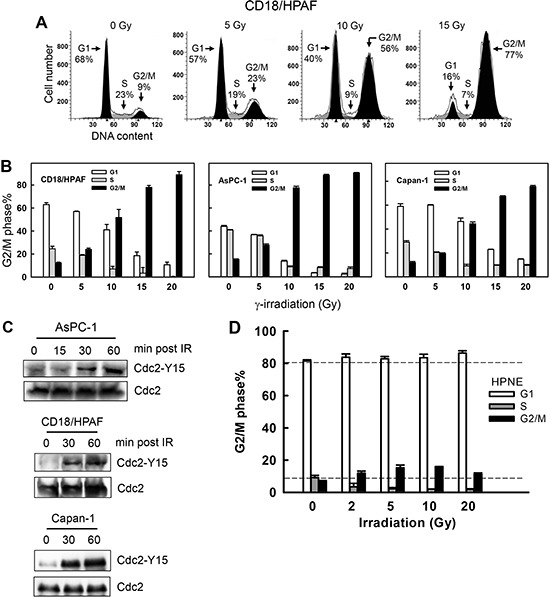
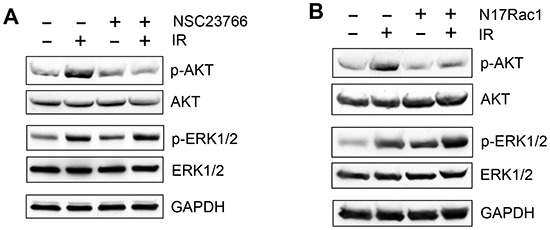
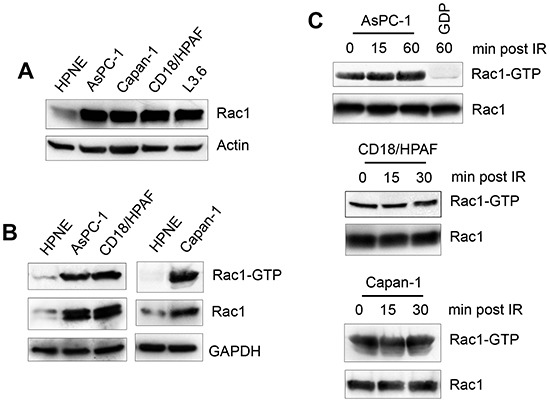
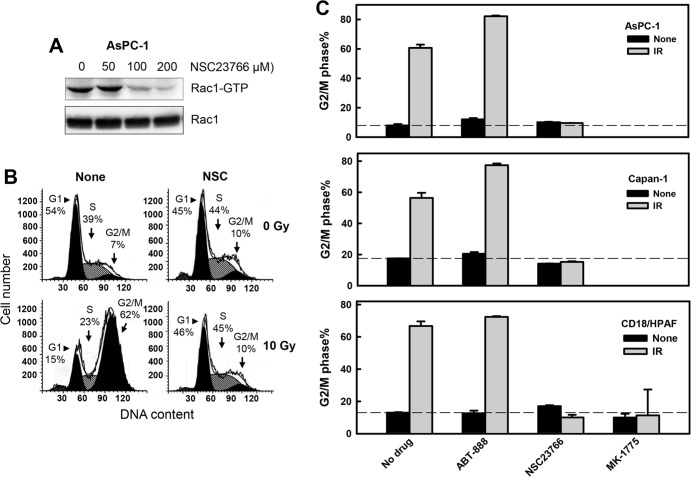
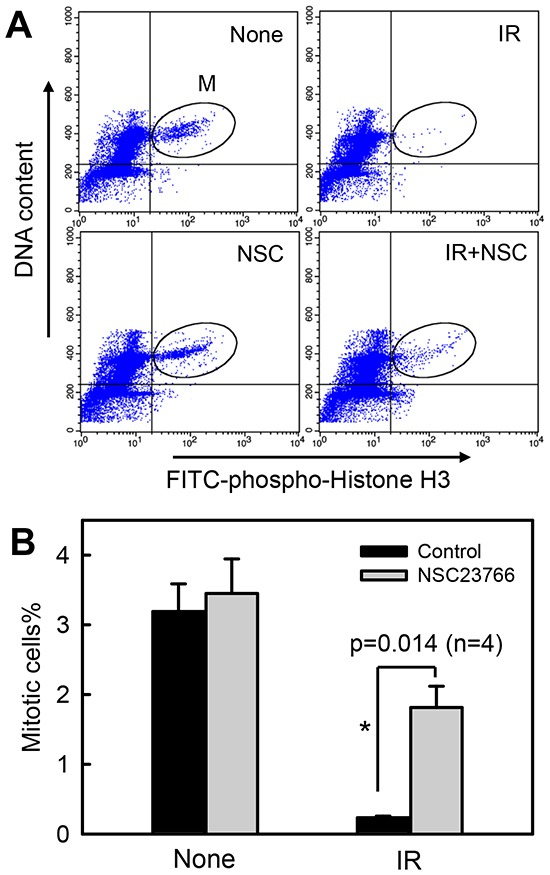
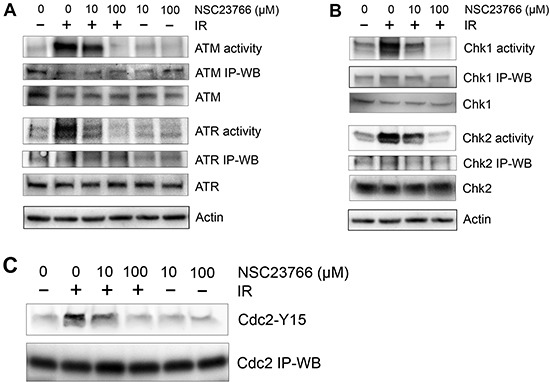
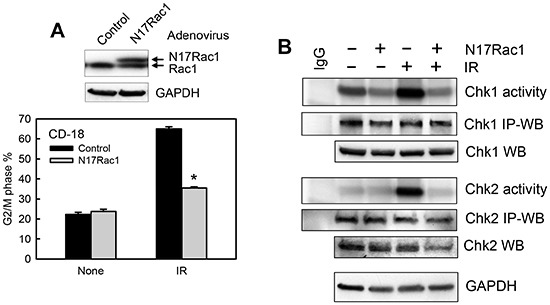
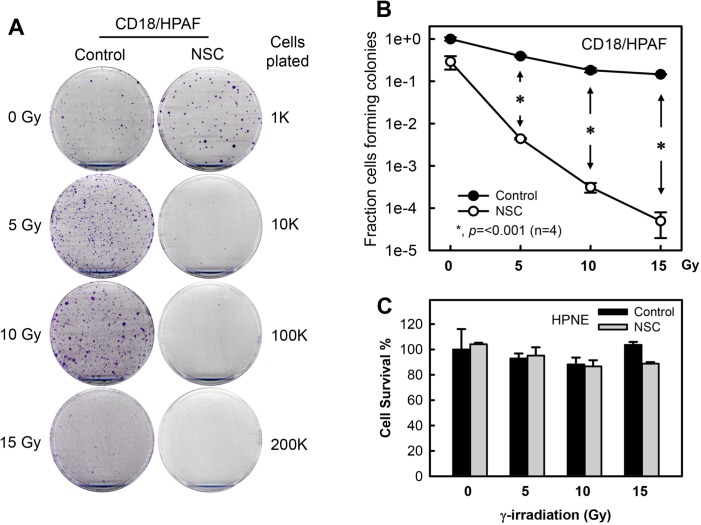
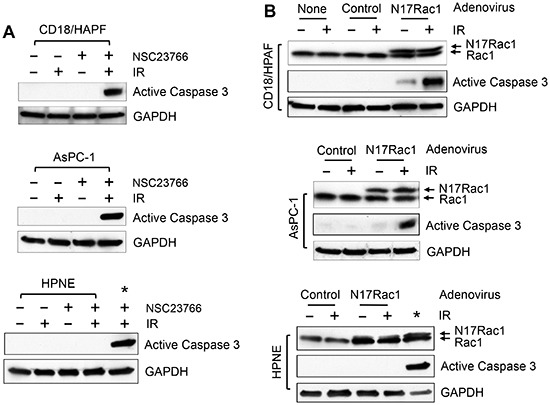
Radiation therapy is a staple treatment for pancreatic cancer. However, owing to the intrinsic radioresistance of pancreatic cancer cells, radiation therapy often fails to increase survival of pancreatic cancer patients. Radiation impedes cancer cells by inducing DNA damage, which can activate cell cycle checkpoints. Normal cells possess both a G1 and G2 checkpoint. However, cancer cells are often defective in G1 checkpoint due to mutations/alterations in key regulators of this checkpoint. Accordingly, our results show that normal pancreatic ductal cells respond to ionizing radiation (IR) with activation of both checkpoints whereas pancreatic cancer cells respond to IR with G2/M arrest only. Overexpression/hyperactivation of Rac1 GTPase is detected in the majority of pancreatic cancers. Rac1 plays important roles in survival and Ras-mediated transformation. Here, we show that Rac1 also plays a critical role in the response of pancreatic cancer cells to IR. Inhibition of Rac1 using specific inhibitor and dominant negative Rac1 mutant not only abrogates IR-induced G2 checkpoint activation, but also increases radiosensitivity of pancreatic cancer cells through induction of apoptosis. These results implicate Rac1 signaling in the survival of pancreatic cancer cells following IR, raising the possibility that this pathway contributes to the intrinsic radioresistance of pancreatic cancer.
放射治疗是胰腺癌的主要治疗方法。然而,由于胰腺癌细胞固有的放射抗性,放射治疗常常无法提高胰腺癌患者的生存率。辐射通过诱导DNA损伤来阻碍癌细胞,而DNA损伤可激活细胞周期检查点。正常细胞同时拥有G1和G2检查点。然而,由于该检查点关键调节因子的突变/改变,癌细胞的G1检查点常常存在缺陷。因此,我们的结果表明,正常胰腺导管细胞对电离辐射(IR)的反应是两个检查点均被激活,而胰腺癌细胞对IR的反应仅是G2/M期阻滞。在大多数胰腺癌中检测到Rac1 GTP酶的过表达/过度激活。Rac1在细胞存活和Ras介导的转化中发挥重要作用。在此,我们表明Rac1在胰腺癌细胞对IR的反应中也起着关键作用。使用特异性抑制剂和显性负性Rac1突变体抑制Rac1,不仅消除了IR诱导的G2检查点激活,还通过诱导凋亡增加了胰腺癌细胞的放射敏感性。这些结果表明Rac1信号传导与IR后胰腺癌细胞的存活有关,这增加了该途径导致胰腺癌固有放射抗性的可能性。