Cheng Y, Ho R L K Y, Chan K C, Kan R, Tung E, Lung H L, Yau W L, Cheung A K L, Ko J M Y, Zhang Z F, Luo D Z, Feng Z B, Chen S, Guan X Y, Kwong D, Stanbridge E J, Lung M L
Department of Clinical Oncology/Center for Nasopharyngeal Carcinoma Research, University of Hong Kong, Hong Kong, SAR, Hong Kong.
Department of Anatomical and Cellular Pathology, Chinese University of Hong Kong, Hong Kong, SAR, Hong Kong.
Oncogene. 2015 Aug 6;34(32):4219-28. doi: 10.1038/onc.2014.353. Epub 2014 Oct 27.
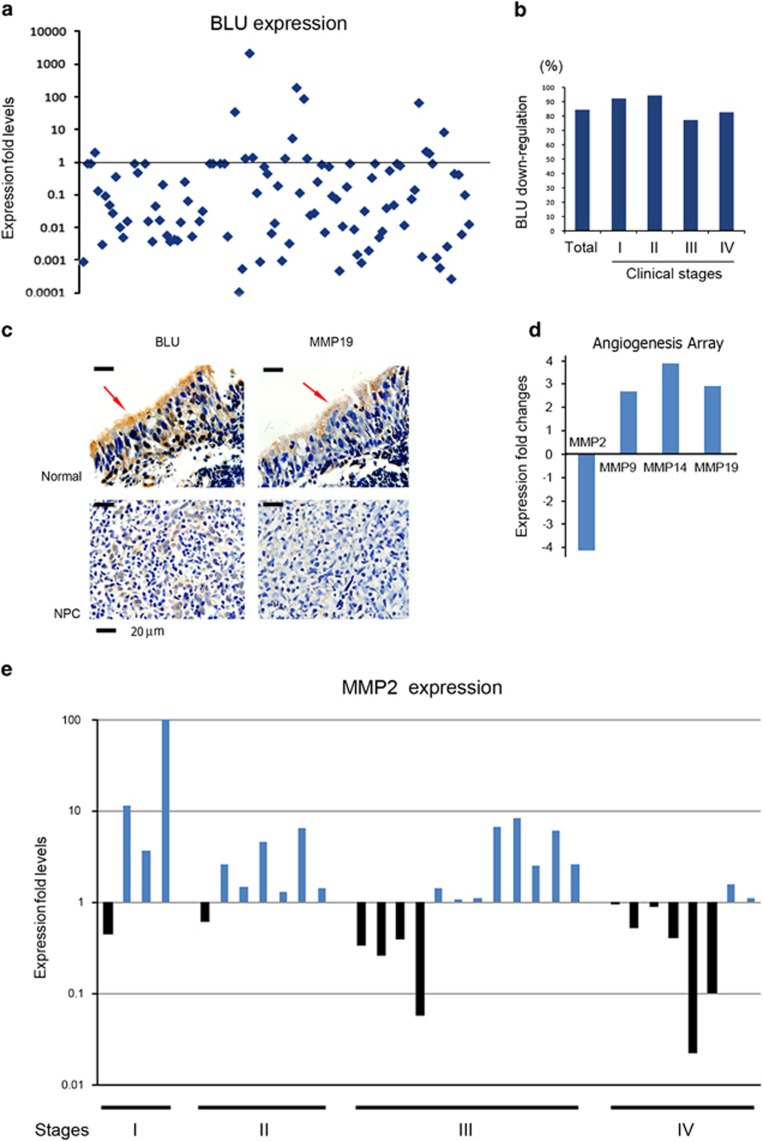
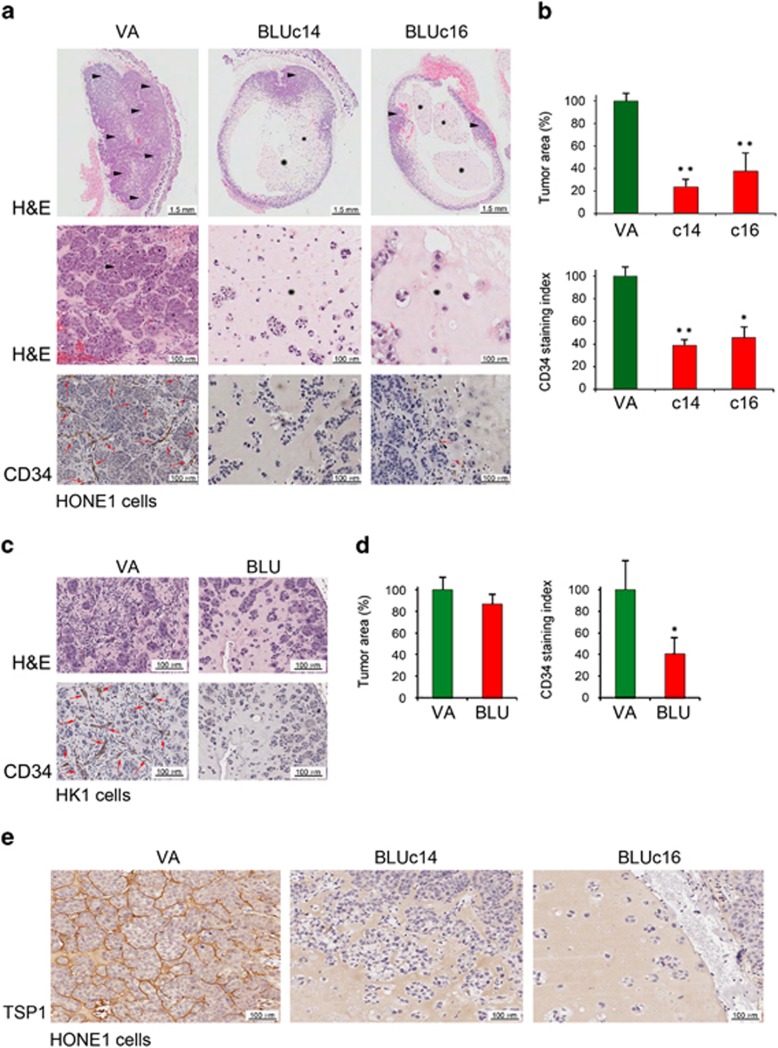
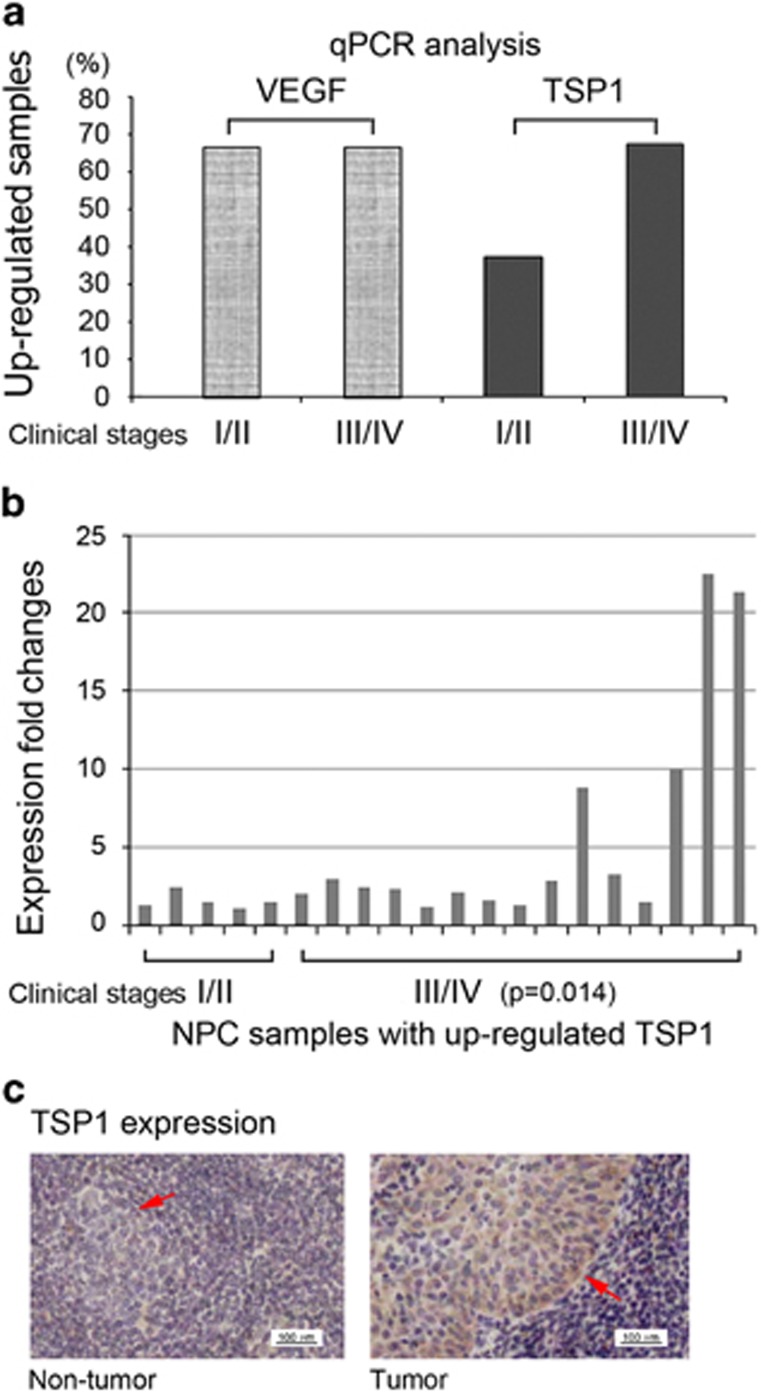
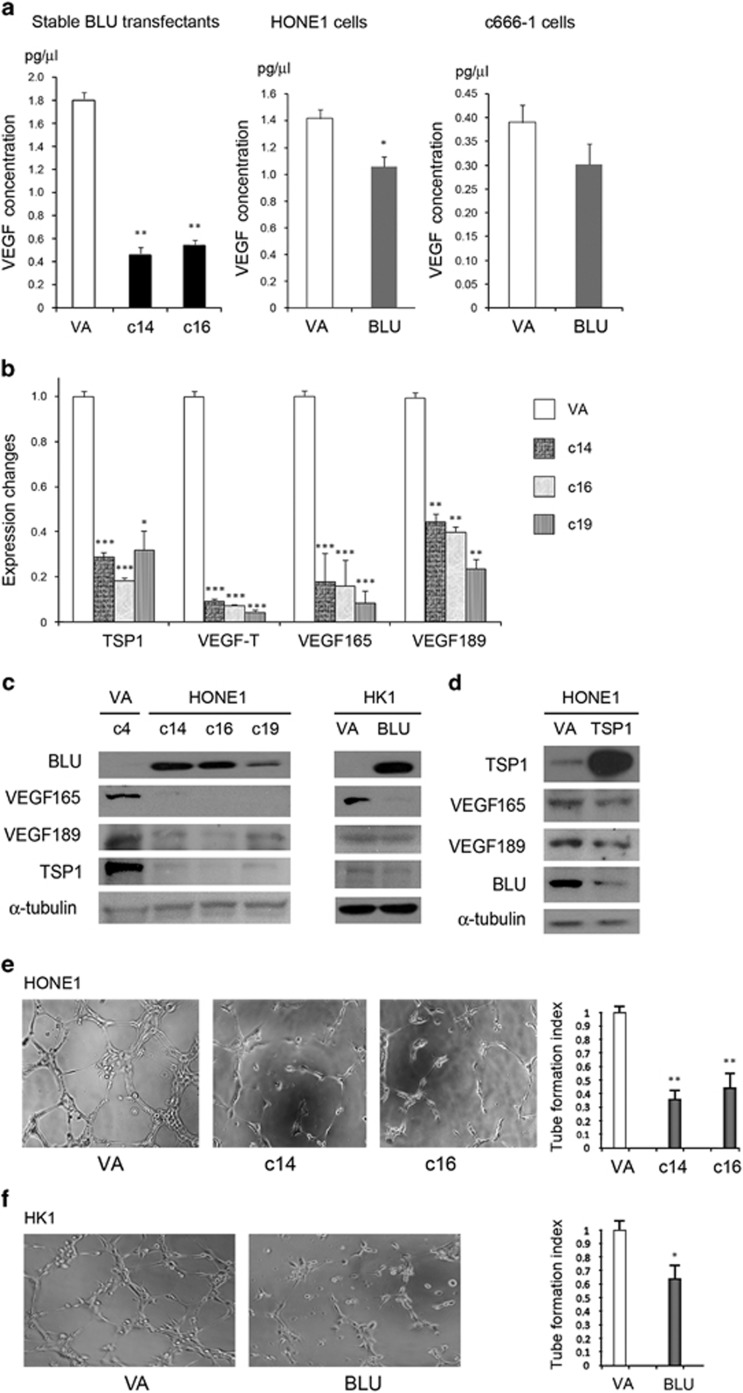
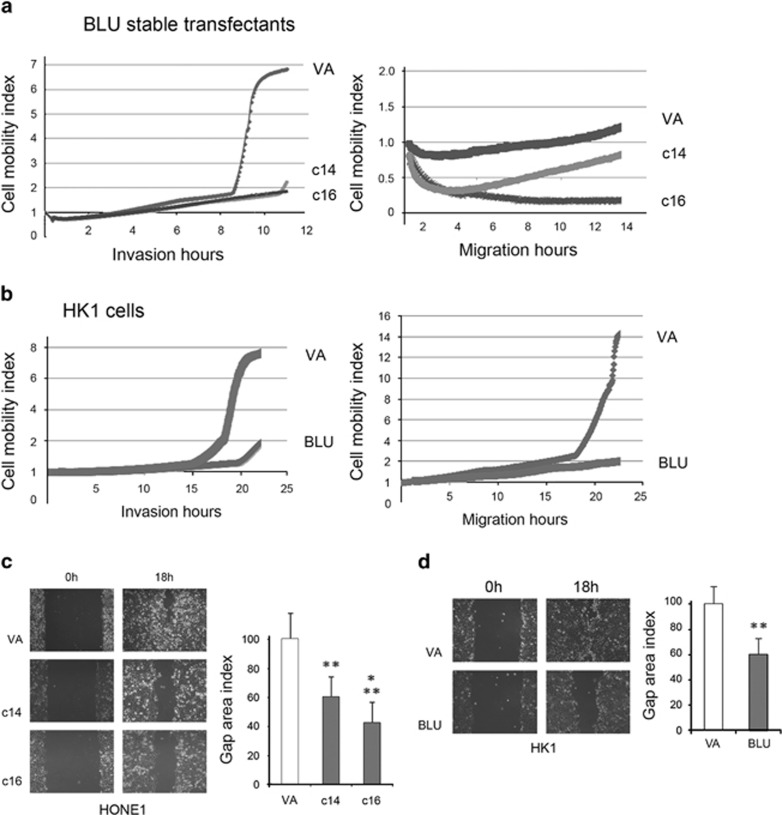
Zinc-finger, MYND-type containing 10 (ZMYND10), or more commonly called BLU, expression is frequently downregulated in nasopharyngeal carcinoma (NPC) and many other tumors due to promoter hypermethylation. Functional evidence shows that the BLU gene inhibits tumor growth in animal assays, but the detailed molecular mechanism responsible for this is still not well understood. In current studies, we find that 93.5% of early-stage primary NPC tumors show downregulated BLU expression. Using a PCR array, overexpression of the BLU gene was correlated to the angiogenesis network in NPC cells. Moreover, expression changes of the MMP family, VEGF and TSP1, were often detected in different stages of NPC, suggesting the possibility that BLU may be directly involved in the microenvironment and anti-angiogenic activity in NPC development. Compared with vector-alone control cells, BLU stable transfectants, derived from poorly-differentiated NPC HONE1 cells, suppress VEGF165, VEGF189 and TSP1 expression at both the RNA and protein levels, and significantly reduce the secreted VEGF protein in these cells, reflecting an unknown regulatory mechanism mediated by the BLU gene in NPC. Cells expressing BLU inhibited cellular invasion, migration and tube formation. These in vitro results were further confirmed by in vivo tumor suppression and a matrigel plug angiogenesis assay in nude mice. Tube-forming ability was clearly inhibited, when the BLU gene is expressed in these cells. Up to 70-90% of injected tumor cells expressing increased exogenous BLU underwent cell death in animal assays. Overexpressed BLU only inhibited VEGF165 expression in differentiated squamous NPC HK1 cells, but also showed an anti-angiogenic effect in the animal assay, revealing a complicated mechanism regulating angiogenesis and the microenvironment in different NPC cell lines. Results of these studies indicate that alteration of BLU gene expression influences anti-angiogenesis pathways and is important for the development of NPC.
锌指MYND型包含蛋白10(ZMYND10),通常称为BLU,由于启动子高甲基化,其表达在鼻咽癌(NPC)和许多其他肿瘤中经常下调。功能证据表明,BLU基因在动物实验中可抑制肿瘤生长,但其具体分子机制仍不清楚。在当前研究中,我们发现93.5%的早期原发性NPC肿瘤显示BLU表达下调。使用PCR阵列,BLU基因的过表达与NPC细胞中的血管生成网络相关。此外,在NPC的不同阶段经常检测到MMP家族、VEGF和TSP1的表达变化,这表明BLU可能直接参与NPC发展中的微环境和抗血管生成活性。与仅载体对照细胞相比,源自低分化NPC HONE1细胞的BLU稳定转染子在RNA和蛋白质水平上均抑制VEGF165、VEGF189和TSP1的表达,并显著降低这些细胞中分泌的VEGF蛋白,这反映了NPC中由BLU基因介导的未知调节机制。表达BLU的细胞抑制细胞侵袭、迁移和管形成。这些体外结果在裸鼠体内肿瘤抑制和基质胶塞血管生成实验中得到进一步证实。当在这些细胞中表达BLU基因时,管形成能力明显受到抑制。在动物实验中,高达70-90%的注射表达增加的外源性BLU的肿瘤细胞发生细胞死亡。过表达的BLU不仅在分化的鳞状NPC HK1细胞中抑制VEGF165表达,而且在动物实验中也显示出抗血管生成作用,揭示了不同NPC细胞系中调节血管生成和微环境的复杂机制。这些研究结果表明,BLU基因表达的改变影响抗血管生成途径,对NPC的发展很重要。