Cheng Yue, Cheung Arthur Kwok Leung, Ko Josephine Mun Yee, Phoon Yee Peng, Chiu Pui Man, Lo Paulisally Hau Yi, Waterman Marian L, Lung Maria Li
Department of Clinical Oncology, Center for Nasopharyngeal Carcinoma Research, University of Hong Kong, L6-02, 21 Sassoon Road, Pokfulam, Hong Kong SAR, China.
BMC Cell Biol. 2013 Sep 27;14:44. doi: 10.1186/1471-2121-14-44.
A few reports suggested that low levels of Wnt signaling might drive cell reprogramming, but these studies could not establish a clear relationship between Wnt signaling and self-renewal networks. There are ongoing debates as to whether and how the Wnt/β-catenin signaling is involved in the control of pluripotency gene networks. Additionally, whether physiological β-catenin signaling generates stem-like cells through interactions with other pathways is as yet unclear. The nasopharyngeal carcinoma HONE1 cells have low expression of β-catenin and wild-type expression of p53, which provided a possibility to study regulatory mechanism of stemness networks induced by physiological levels of Wnt signaling in these cells.
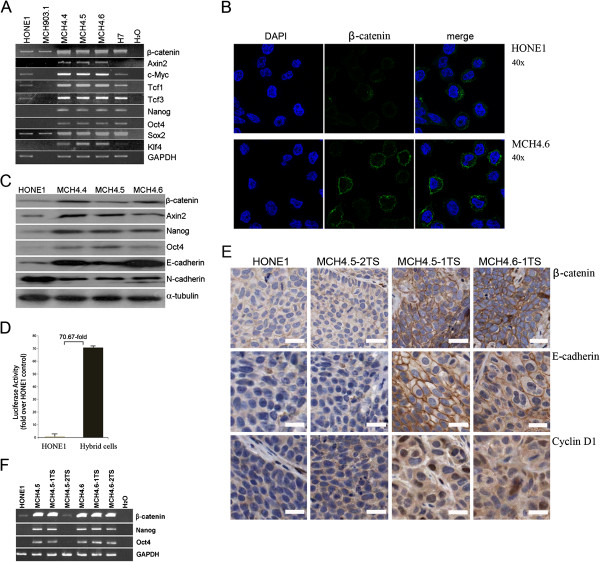
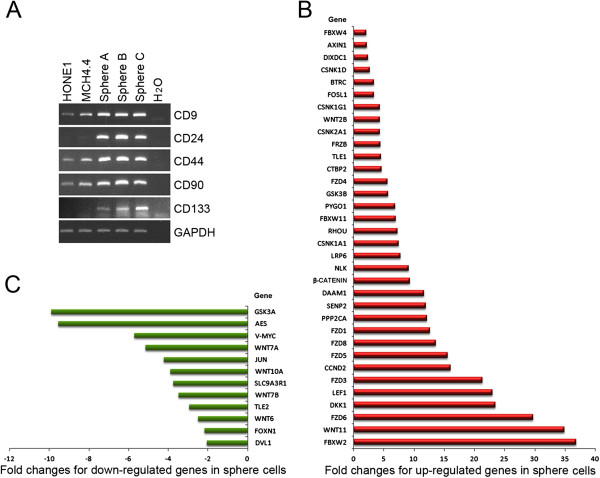
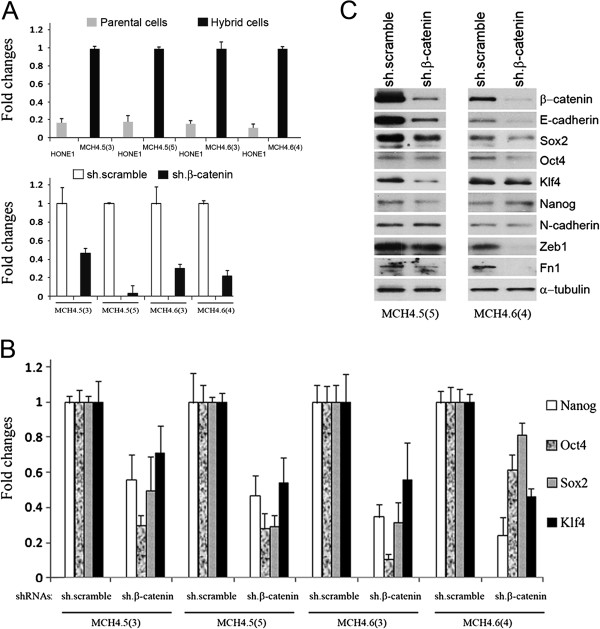
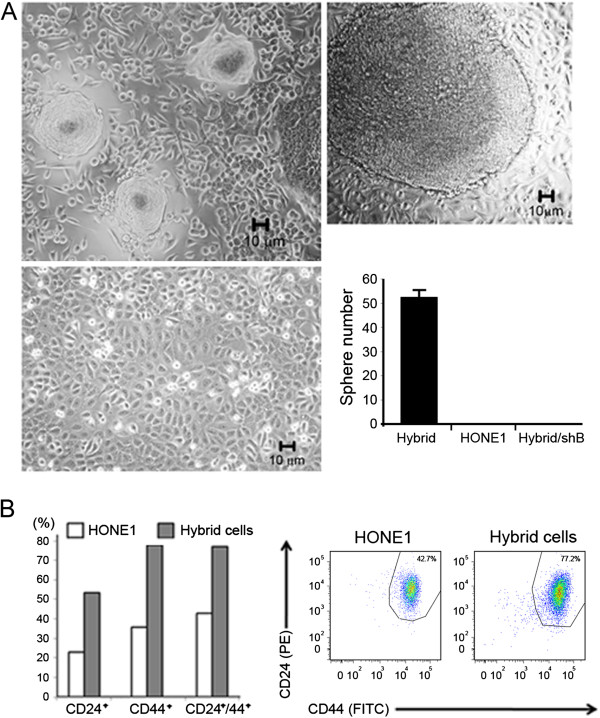
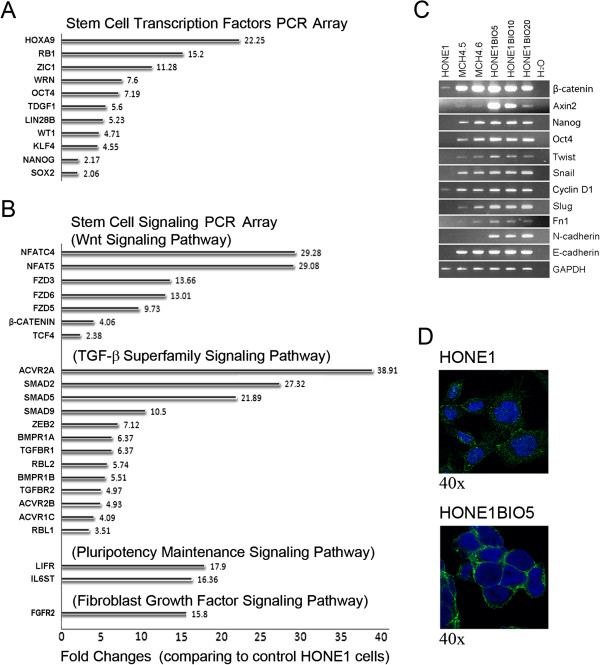
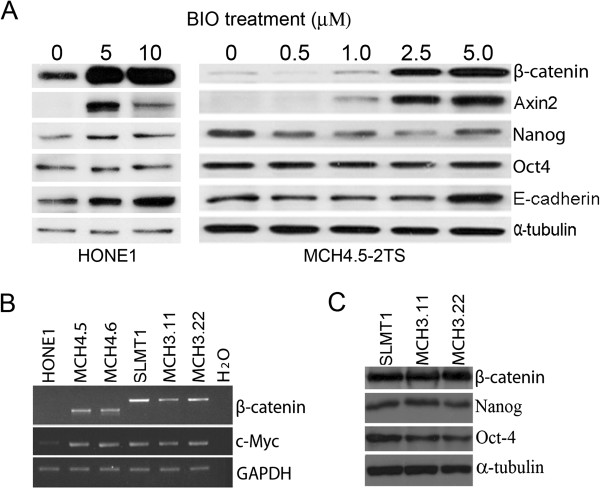
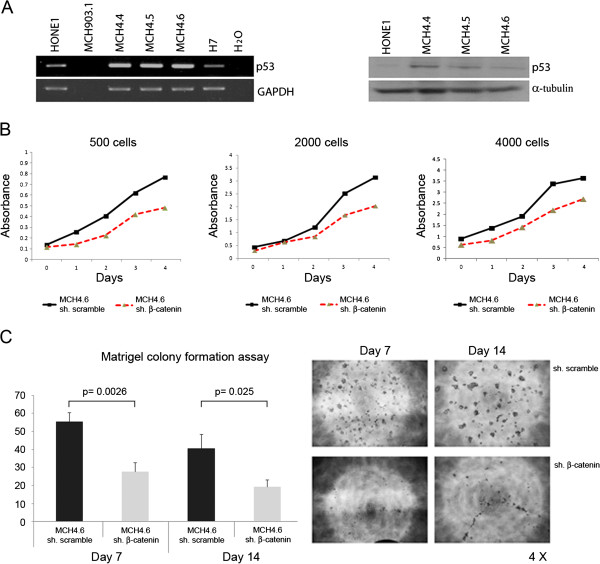
Introduction of increased β-catenin signaling, haploid expression of β-catenin under control by its natural regulators in transferred chromosome 3, resulted in activation of Wnt/β-catenin networks and dedifferentiation in HONE1 hybrid cell lines, but not in esophageal carcinoma SLMT1 hybrid cells that had high levels of endogenous β-catenin expression. HONE1 hybrid cells displayed stem cell-like properties, including enhancement of CD24(+) and CD44(+) populations and generation of spheres that were not observed in parental HONE1 cells. Signaling cascades were detected in HONE1 hybrid cells, including activation of p53- and RB1-mediated tumor suppressor pathways, up-regulation of Nanog-, Oct4-, Sox2-, and Klf4-mediated pluripotency networks, and altered E-cadherin expression in both in vitro and in vivo assays. qPCR array analyses further revealed interactions of physiological Wnt/β-catenin signaling with other pathways such as epithelial-mesenchymal transition, TGF-β, Activin, BMPR, FGFR2, and LIFR- and IL6ST-mediated cell self-renewal networks. Using β-catenin shRNA inhibitory assays, a dominant role for β-catenin in these cellular network activities was observed. The expression of cell surface markers such as CD9, CD24, CD44, CD90, and CD133 in generated spheres was progressively up-regulated compared to HONE1 hybrid cells. Thirty-four up-regulated components of the Wnt pathway were identified in these spheres.
Wnt/β-catenin signaling regulates self-renewal networks and plays a central role in the control of pluripotency genes, tumor suppressive pathways and expression of cancer stem cell markers. This current study provides a novel platform to investigate the interaction of physiological Wnt/β-catenin signaling with stemness transition networks.
一些报告表明,低水平的Wnt信号可能驱动细胞重编程,但这些研究未能在Wnt信号与自我更新网络之间建立明确的关系。关于Wnt/β-连环蛋白信号是否以及如何参与多能性基因网络的控制,目前仍存在争议。此外,生理性β-连环蛋白信号是否通过与其他途径相互作用产生干细胞样细胞尚不清楚。鼻咽癌HONE1细胞β-连环蛋白表达低且p53为野生型表达,这为研究这些细胞中生理性Wnt信号诱导的干性网络调控机制提供了可能。
引入增加的β-连环蛋白信号,即通过其在转入的3号染色体上的天然调节因子控制β-连环蛋白的单倍体表达,导致HONE1杂交细胞系中Wnt/β-连环蛋白网络激活和去分化,但在具有高水平内源性β-连环蛋白表达的食管癌SLMT1杂交细胞中未出现这种情况。HONE1杂交细胞表现出干细胞样特性,包括CD24(+)和CD44(+)细胞群增加以及形成亲代HONE1细胞中未观察到的球体。在HONE1杂交细胞中检测到信号级联反应,包括p53和RB1介导的肿瘤抑制途径激活、Nanog、Oct4、Sox2和Klf4介导的多能性网络上调以及体外和体内实验中E-钙黏蛋白表达改变。qPCR阵列分析进一步揭示了生理性Wnt/β-连环蛋白信号与其他途径如上皮-间质转化、TGF-β、激活素、BMPR、FGFR2以及LIFR和IL6ST介导的细胞自我更新网络之间的相互作用。使用β-连环蛋白shRNA抑制试验,观察到β-连环蛋白在这些细胞网络活动中起主导作用。与HONE1杂交细胞相比,生成球体中CD9、CD24、CD44、CD90和CD133等细胞表面标志物的表达逐渐上调。在这些球体中鉴定出Wnt途径的34个上调成分。
Wnt/β-连环蛋白信号调节自我更新网络,并在多能性基因控制、肿瘤抑制途径和癌症干细胞标志物表达中起核心作用。本研究提供了一个新的平台来研究生理性Wnt/β-连环蛋白信号与干性转变网络之间的相互作用。