Lecky Donna M, Hawking Meredith K D, McNulty Cliodna A M
Public Health England Primary Care Unit, Gloucester.
Br J Gen Pract. 2014 Nov;64(628):e684-93. doi: 10.3399/bjgp14X682261.
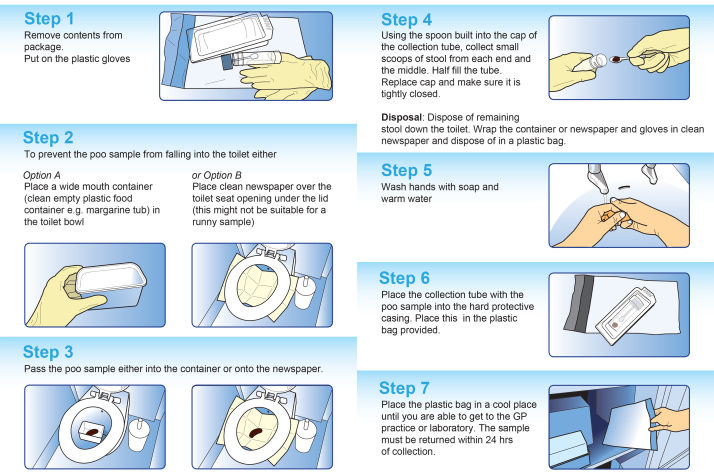
Stool specimen collection is challenging and informal feedback has indicated that participants find the process difficult. Increasing stool specimen returns would improve the investigation of outbreaks of diarrhoeal and food-borne disease.
To explore the barriers to stool sample collection and specimen return to ascertain which factors may help to improve the process.
Qualitative patient interview study in Gloucester, UK.
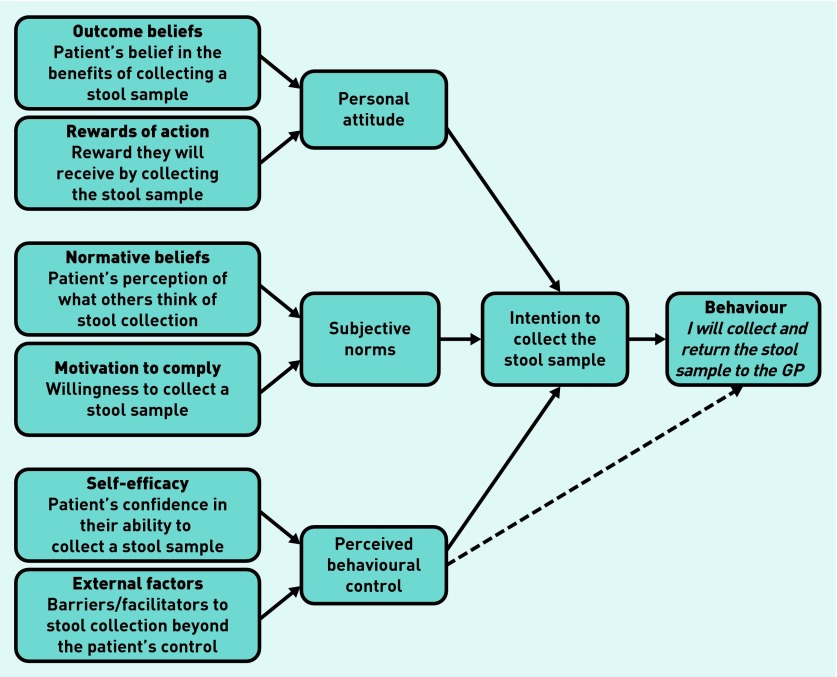
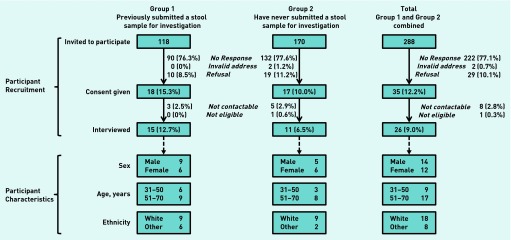
A two-stage purposive sampling process was used to identify patients who had either previous experience or no experience of collecting a stool sample. The interview schedule, based on the theory of planned behaviour, was used to facilitate interviews with 26 patients. Interview transcripts were analysed using a modified framework analysis.
Barriers to collection included embarrassment, fear of results, concerns around hygiene and contamination, discretion and privacy, and lack of information. Personal gain was identified as the main incentive to collecting and returning a stool sample. The need for an information leaflet on stool collection was emphasised by most patients.
GPs could make a number of small changes that could make a big difference for patients and potentially increase stool sample return. If they, rather than receptionists, distributed collection kits it may be easier for patients to ask any questions they had regarding collection. In addition, the provision of a stool-collection information leaflet could increase patients' confidence regarding collecting the sample, and providing drop-off boxes for specimens could help prevent patients' embarrassment regarding handing their stool over to a receptionist.
粪便样本采集具有挑战性,非正式反馈表明参与者认为该过程困难。提高粪便样本回收率将有助于改善对腹泻和食源性疾病暴发的调查。
探讨粪便样本采集和样本回收的障碍,以确定哪些因素可能有助于改进该过程。
英国格洛斯特的定性患者访谈研究。
采用两阶段目的抽样法,确定有或无粪便样本采集经验的患者。基于计划行为理论的访谈提纲用于对26名患者进行访谈。访谈记录采用改良的框架分析法进行分析。
采集障碍包括尴尬、对结果的恐惧、对卫生和污染问题的担忧、谨慎和隐私以及信息不足。个人利益被确定为采集和返还粪便样本的主要动机。大多数患者强调需要一份关于粪便采集的信息传单。
全科医生可以做出一些小的改变,这可能会给患者带来很大的不同,并有可能提高粪便样本回收率。如果由他们而不是接待员分发采集试剂盒,患者可能更容易就采集问题提出任何疑问。此外,提供一份粪便采集信息传单可以增强患者采集样本的信心,设置样本投递箱有助于避免患者因将粪便交给接待员而感到尴尬。