Vanuytsel Tim, Vanormelingen Christophe, Vanheel Hanne, Masaoka Tatsuhiro, Salim Rasoel Shadea, Tóth Joran, Houben Els, Verbeke Kristin, De Hertogh Gert, Vanden Berghe Pieter, Tack Jan, Farré Ricard
Translational Research Center for Gastrointestinal Disorders (TARGID), University of Leuven, Leuven, Belgium.
Department of Pathology, University Hospital, University of Leuven, Leuven, Belgium.
PLoS One. 2014 Oct 29;9(10):e111132. doi: 10.1371/journal.pone.0111132. eCollection 2014.
Impaired intestinal barrier function, low-grade inflammation and altered neuronal control are reported in functional gastrointestinal disorders. However, the sequence of and causal relation between these events is unclear, necessitating a spontaneous animal model. The aim of this study was to describe the natural history of intestinal permeability, mucosal and neuromuscular inflammation and nitrergic motor neuron function during the lifetime of the BioBreeding (BB) rat.
Normoglycemic BB-diabetes prone (DP) and control rats were sacrificed at different ages and jejunum was harvested to characterize intestinal permeability, inflammation and neuromuscular function.
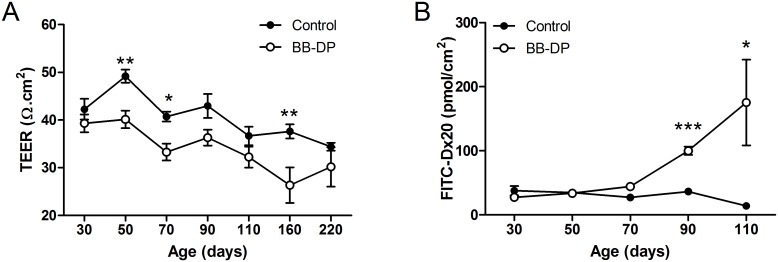
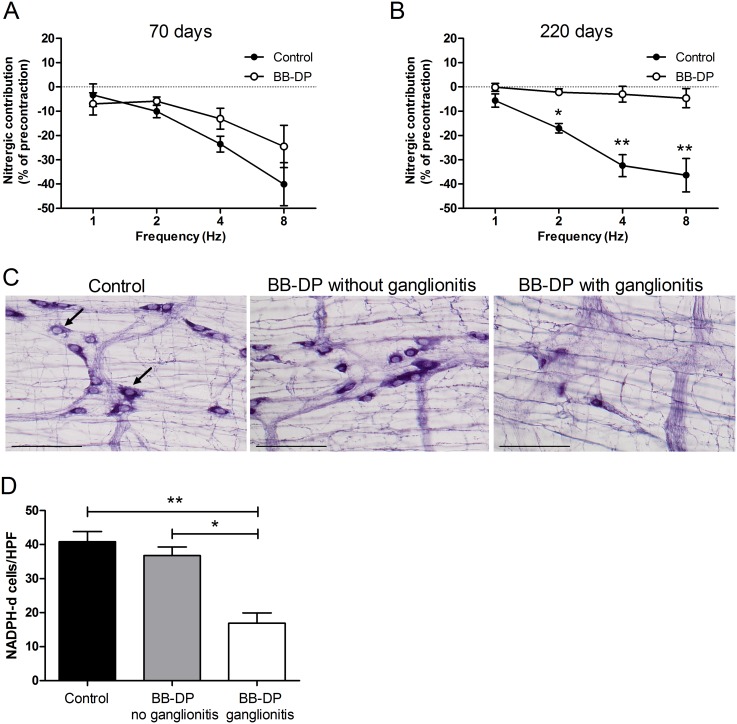
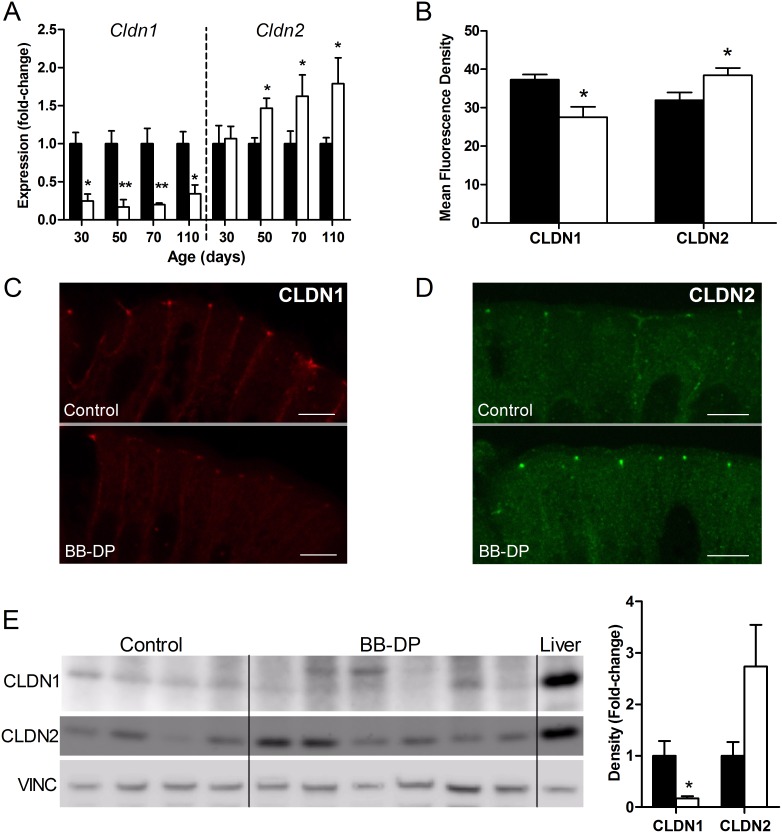
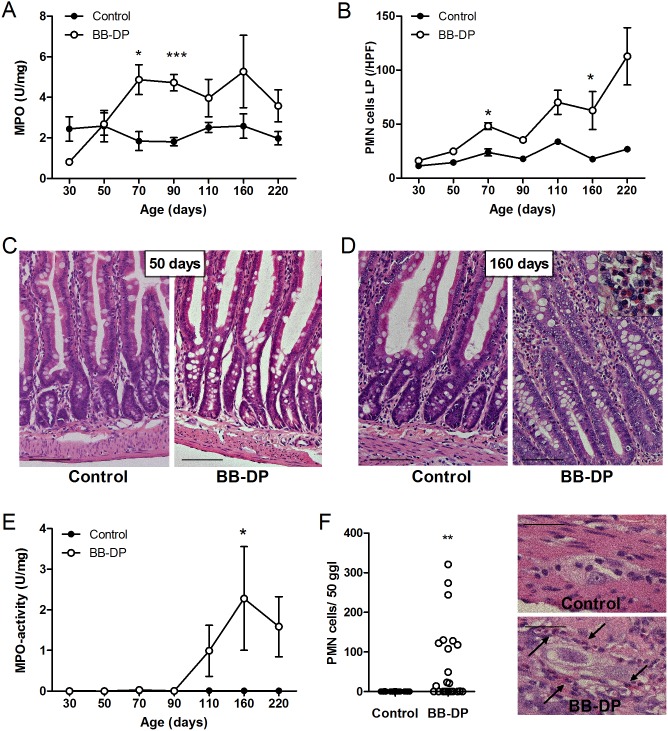
Both structural and functional evidence of increased intestinal permeability was found in young BB-DP rats from the age of 50 days. In older animals, starting in the mucosa from 70 days and in half of the animals also in the muscularis propria from 110 days, an inflammatory reaction, characterized by an influx of polymorphonuclear cells and higher myeloperoxidase activity, was observed. Finally, in animals older than 110 days, coinciding with a myenteric ganglionitis, a loss of nitrergic neurons and motor function was demonstrated.
In the BB-rat, mucosal inflammatory cell infiltration is preceded by intestinal barrier dysfunction and followed by myenteric ganglionitis and loss of nitrergic function. This sequence supports a primary role for impaired barrier function and provides an insightful model for the pathogenesis of functional gastrointestinal disorders.
功能性胃肠疾病中存在肠道屏障功能受损、低度炎症及神经控制改变的情况。然而,这些事件的先后顺序及因果关系尚不清楚,因此需要一种自发动物模型。本研究的目的是描述BioBreeding(BB)大鼠一生中肠道通透性、黏膜和神经肌肉炎症以及含氮能运动神经元功能的自然病程。
在不同年龄处死血糖正常的BB糖尿病倾向(DP)大鼠和对照大鼠,并采集空肠以表征肠道通透性、炎症和神经肌肉功能。
在50日龄的年轻BB-DP大鼠中发现了肠道通透性增加的结构和功能证据。在老年动物中,从70日龄开始在黏膜中出现炎症反应,110日龄时在半数动物的固有肌层中也出现炎症反应,其特征为多形核细胞浸润和髓过氧化物酶活性升高。最后,在110日龄以上的动物中,与肌间神经节炎同时出现,证实了含氮能神经元和运动功能的丧失。
在BB大鼠中,黏膜炎症细胞浸润之前是肠道屏障功能障碍,之后是肌间神经节炎和含氮能功能丧失。这一顺序支持了屏障功能受损的主要作用,并为功能性胃肠疾病的发病机制提供了一个有见地的模型。