Meng Huan, Harrison David J, Meehan Richard R
MRC Human Genetics Unit, Institute of Genetics and Molecular Medicine, University of Edinburgh, Edinburgh, UK; Key Laboratory of Medical Cell Biology, Ministry of Education, China Medical University, Shenyang, China.
J Cell Biochem. 2015 Mar;116(3):476-85. doi: 10.1002/jcb.25001.
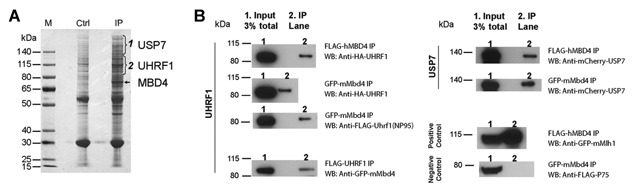
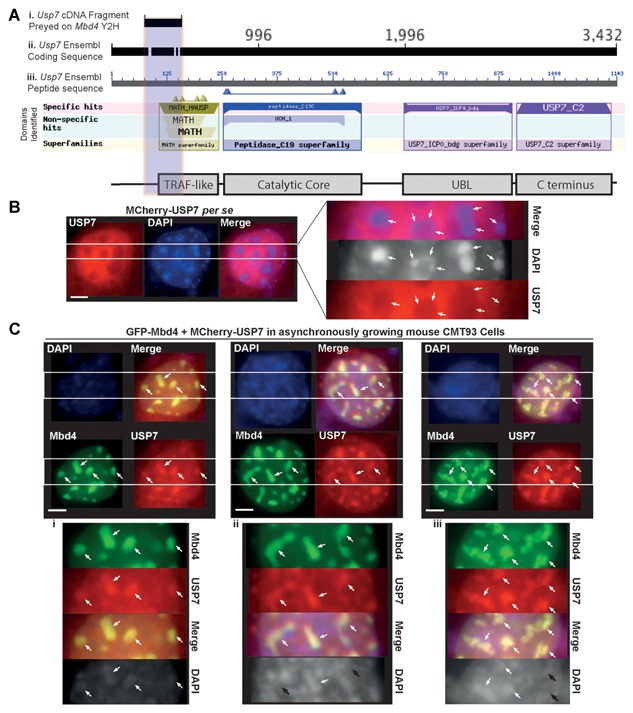
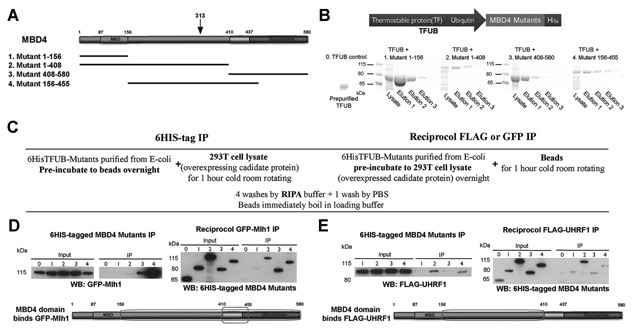
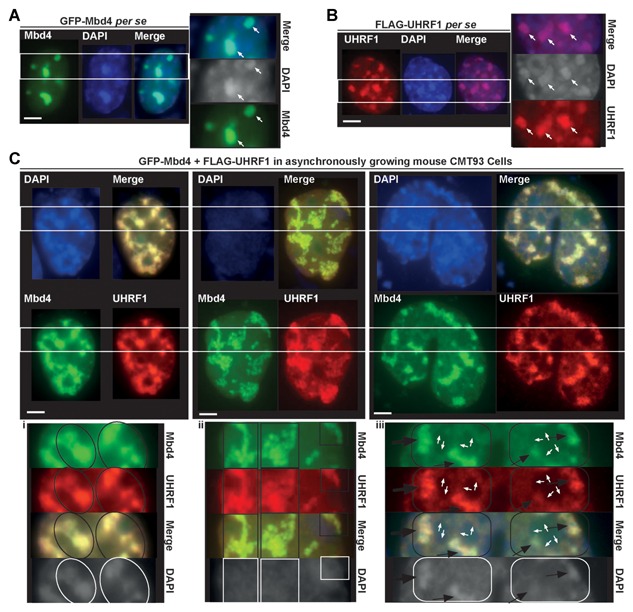
MBD4 is the only methyl-CpG binding protein that possesses a C-terminal glycosylase domain. It has been associated with a number of nuclear pathways including DNA repair, DNA damage response, the initiation of apoptosis, transcriptional repression, and DNA demethylation. However, the precise contribution of MBD4 to these processes in development and relevant diseases remains elusive. We identified UHRF1 and USP7 as two new interaction partners for MBD4. Both UHRF1, a E3 ubiquitin ligase, and USP7, a de-ubiquinating enzyme, regulate the stability of the DNA maintenance methyltransferase, Dnmt1. The ability of MBD4 to directly interact with and recruit USP7 to chromocenters implicates it as an additional factor that can potentially regulate Dnmt1 activity during cell proliferation.
MBD4是唯一具有C端糖基化酶结构域的甲基化CpG结合蛋白。它与许多核途径相关,包括DNA修复、DNA损伤反应、细胞凋亡的启动、转录抑制和DNA去甲基化。然而,MBD4在发育和相关疾病中对这些过程的确切作用仍不清楚。我们确定UHRF1和USP7是MBD4的两个新的相互作用伙伴。E3泛素连接酶UHRF1和去泛素化酶USP7都调节DNA维持甲基转移酶Dnmt1的稳定性。MBD4直接与USP7相互作用并将其招募到异染色质中心的能力表明,它是一种可能在细胞增殖过程中调节Dnmt1活性的额外因子。