Mei Jun, Guo Qizhen, Wu Yan, Li Yunfei
Department of Food Science and Technology, School of Agriculture and Biology, Shanghai Jiao Tong University, Shanghai, P.R. China.
PLoS One. 2014 Oct 31;9(10):e111648. doi: 10.1371/journal.pone.0111648. eCollection 2014.
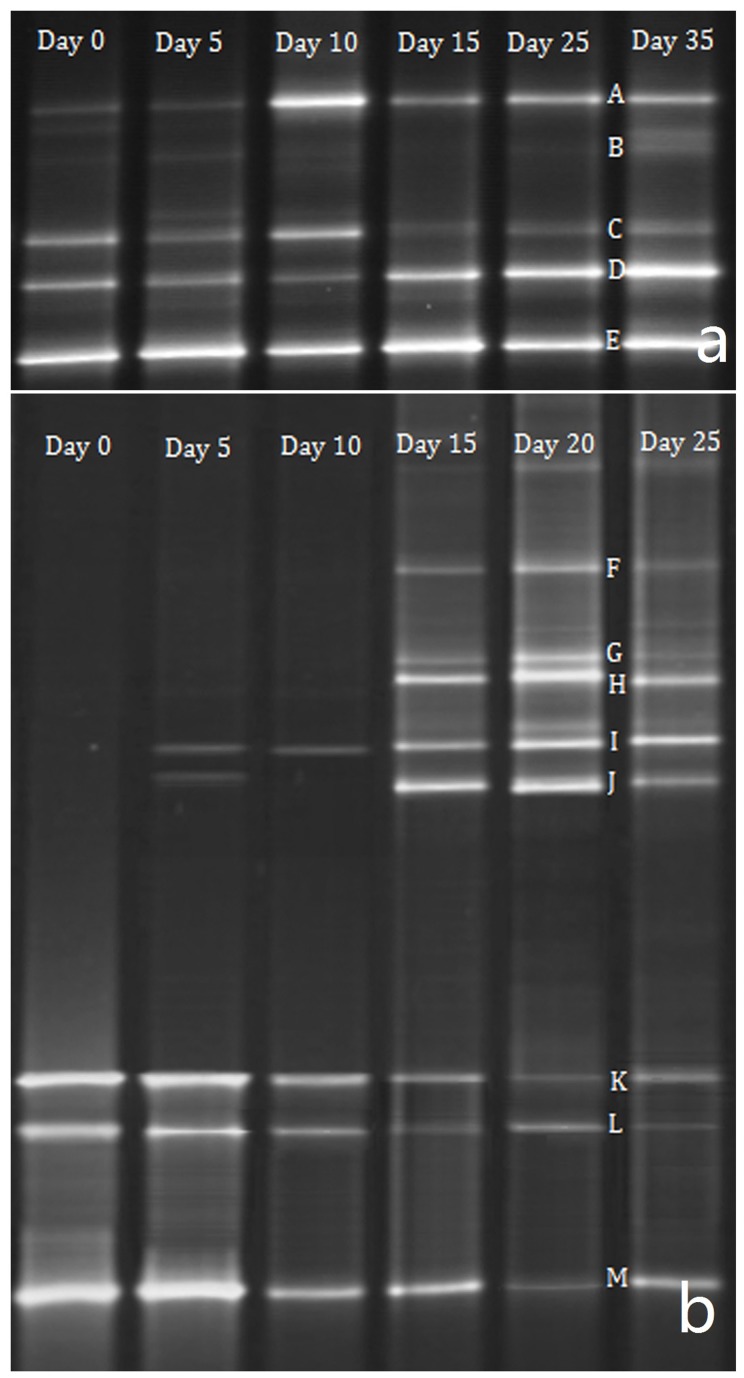
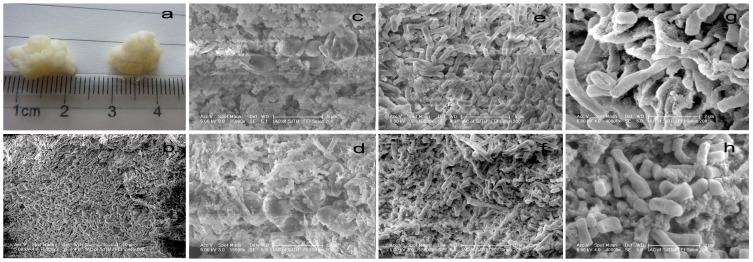
The biochemical changes occurring during cheese ripening are directly and indirectly dependent on the microbial associations of starter cultures. Freeze-dried Tibetan kefir coculture was used as a starter culture in the Camembert-type cheese production for the first time. Therefore, it's necessary to elucidate the stability, organization and identification of the dominant microbiota presented in the cheese. Bacteria and yeasts were subjected to culture-dependent on selective media and culture-independent polymerase chain reaction (PCR)-denaturing gradient gel electrophoresis (DGGE) analysis and sequencing of dominant bands to assess the microbial structure and dynamics through ripening. In further studies, kefir grains were observed using scanning electron microscopy (SEM) methods. A total of 147 bacteria and 129 yeasts were obtained from the cheese during ripening. Lactobacillus paracasei represents the most commonly identified lactic acid bacteria isolates, with 59 of a total of 147 isolates, followed by Lactococcus lactis (29 isolates). Meanwhile, Kazachstania servazzii (51 isolates) represented the mainly identified yeast isolate, followed by Saccharomyces cerevisiae (40 isolates). However, some lactic acid bacteria detected by sequence analysis of DGGE bands were not recovered by plating. The yeast S. cerevisiae and K. servazzii are described for the first time with kefir starter culture. SEM showed that the microbiota were dominated by a variety of lactobacilli (long and curved) cells growing in close association with a few yeasts in the inner portion of the grain and the short lactobacilli were observed along with yeast cells on the exterior portion. Results indicated that conventional culture method and PCR-DGGE should be combined to describe in maximal detail the microbiological composition in the cheese during ripening. The data could help in the selection of appropriate commercial starters for Camembert-type cheese.
奶酪成熟过程中发生的生化变化直接或间接地取决于发酵剂培养物的微生物组合。冻干的藏式开菲尔共培养物首次被用作卡门培尔干酪型奶酪生产的发酵剂培养物。因此,有必要阐明奶酪中优势微生物群的稳定性、组成和鉴定。通过在选择性培养基上进行依赖培养的分析以及不依赖培养的聚合酶链反应(PCR)-变性梯度凝胶电泳(DGGE)分析和优势条带测序,对细菌和酵母进行分析,以评估成熟过程中的微生物结构和动态变化。在进一步的研究中,使用扫描电子显微镜(SEM)方法观察了开菲尔粒。在奶酪成熟过程中总共获得了147株细菌和129株酵母。副干酪乳杆菌是最常鉴定出的乳酸菌分离株,在总共147株分离株中有59株,其次是乳酸乳球菌(29株分离株)。同时,塞尔瓦齐卡扎奇酵母(51株分离株)是主要鉴定出的酵母分离株,其次是酿酒酵母(40株分离株)。然而,通过DGGE条带序列分析检测到的一些乳酸菌无法通过平板培养回收。首次用开菲尔发酵剂培养物描述了酿酒酵母和塞尔瓦齐卡扎奇酵母。SEM显示,微生物群以各种乳酸杆菌(长而弯曲)细胞为主,这些细胞与少数酵母在颗粒内部紧密生长在一起,在颗粒外部观察到短乳酸杆菌与酵母细胞在一起。结果表明,应将传统培养方法和PCR-DGGE相结合,以最详细地描述奶酪成熟过程中的微生物组成。这些数据有助于为卡门培尔干酪型奶酪选择合适的商业发酵剂。