Femel Julia, Huijbers Elisabeth J M, Saupe Falk, Cedervall Jessica, Zhang Lei, Roswall Pernilla, Larsson Erik, Olofsson Helena, Pietras Kristian, Dimberg Anna, Hellman Lars, Olsson Anna-Karin
Department of Medical Biochemistry and Microbiology, Science for Life Laboratory, Uppsala University, Biomedical Center, Uppsala.
Department of Immunology, Genetics and Pathology, Uppsala University, Rudbeck Laboratory, Uppsala.
Oncotarget. 2014 Dec 15;5(23):12418-27. doi: 10.18632/oncotarget.2628.
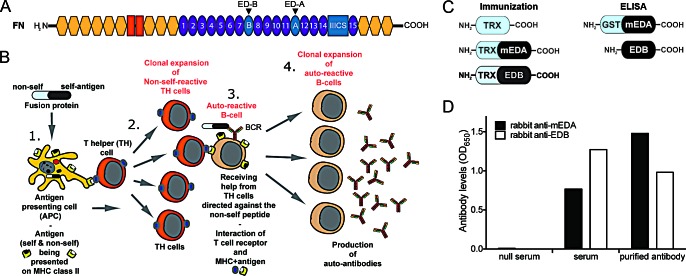
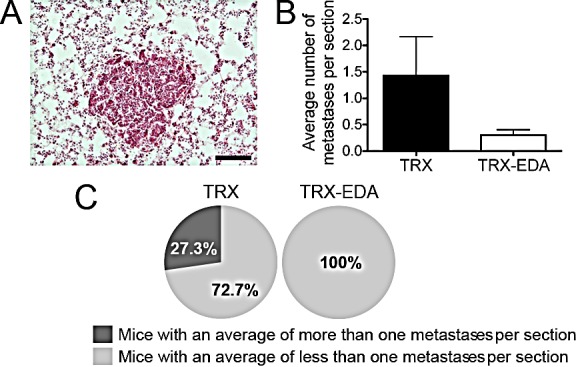
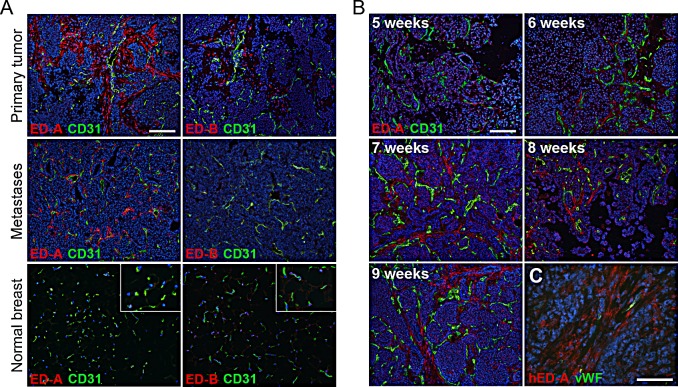
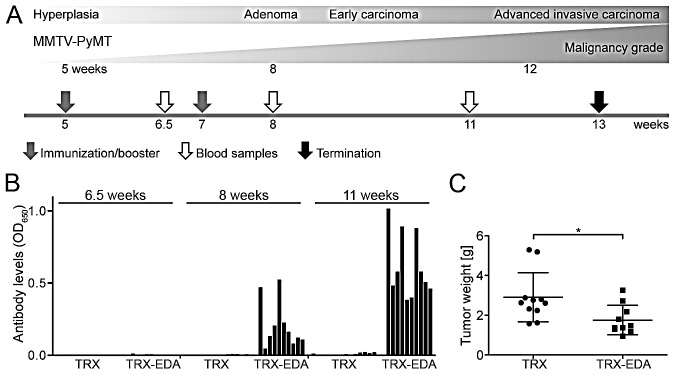
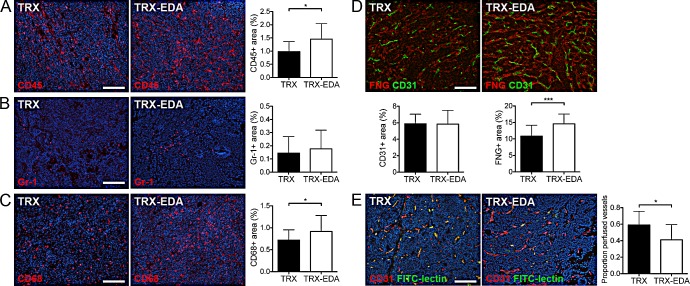
Therapeutic vaccination targeting self-molecules is an attractive alternative to monoclonal antibody-based therapies for cancer and various inflammatory diseases. However, development of cancer vaccines targeting self-molecules has proven difficult. One complicating factor is that tumor cells have developed strategies to escape recognition by the immune system. Antigens specifically expressed by the tumor vasculature can therefore provide alternative targets. The alternatively spliced extra domain-A and B (ED-A and ED-B) of fibronectin are expressed during vasculogenesis in the embryo, but essentially undetectable under normal conditions in the adult. However, these domains are re-expressed during tumor angiogenesis and matrix remodeling, which renders them highly interesting for targeted cancer therapies. Using the MMTV-PyMT transgenic model of metastatic mammary carcinoma, we show that tumor burden can be significantly decreased by immunization against ED-A in a therapeutic setting. Furthermore, we found that in mice carrying anti-ED-A antibodies the number of metastases was reduced. ED-A immunization increased infiltration of macrophages and compromised tumor blood vessel function. These findings implicate an attack of the tumor vasculature by the immune system, through a polyclonal antibody response. We conclude that tumor vascular antigens are promising candidates for development of therapeutic vaccines targeting growth of primary tumors as well as disseminated disease.
针对自身分子的治疗性疫苗接种是癌症和各种炎症性疾病基于单克隆抗体疗法的一种有吸引力的替代方法。然而,事实证明,开发针对自身分子的癌症疫苗很困难。一个复杂因素是肿瘤细胞已经形成了逃避免疫系统识别的策略。因此,肿瘤血管特异性表达的抗原可以提供替代靶点。纤连蛋白的可变剪接额外结构域A和B(ED-A和ED-B)在胚胎血管生成过程中表达,但在成人正常情况下基本检测不到。然而,这些结构域在肿瘤血管生成和基质重塑过程中重新表达,这使其在靶向癌症治疗中极具吸引力。使用转移性乳腺癌的MMTV-PyMT转基因模型,我们表明在治疗环境中通过针对ED-A的免疫接种可以显著降低肿瘤负荷。此外,我们发现携带抗ED-A抗体的小鼠转移灶数量减少。ED-A免疫接种增加了巨噬细胞的浸润并损害了肿瘤血管功能。这些发现表明免疫系统通过多克隆抗体反应攻击肿瘤血管。我们得出结论,肿瘤血管抗原是开发针对原发性肿瘤生长以及播散性疾病的治疗性疫苗的有希望的候选者。