Vaiglova Petra, Snoeck Christophe, Nitsch Erika, Bogaard Amy, Lee-Thorp Julia
Research Laboratory for Archaeology and the History of Art, University of Oxford, Dyson Perrins Building, South Parks Road, Oxford, OX1 3QY, UK.
Rapid Commun Mass Spectrom. 2014 Dec 15;28(23):2497-510. doi: 10.1002/rcm.7044.
Stable isotope analysis of archaeological charred plants has become a useful tool for interpreting past agricultural practices and refining ancient dietary reconstruction. Charred material that lay buried in soil for millennia, however, is susceptible to various kinds of contamination, whose impact on the grain/seed isotopic composition is poorly understood. Pre-treatment protocols have been adapted in distinct forms from radiocarbon dating, but insufficient research has been carried out on evaluating their effectiveness and necessity for stable carbon and nitrogen isotope analysis.
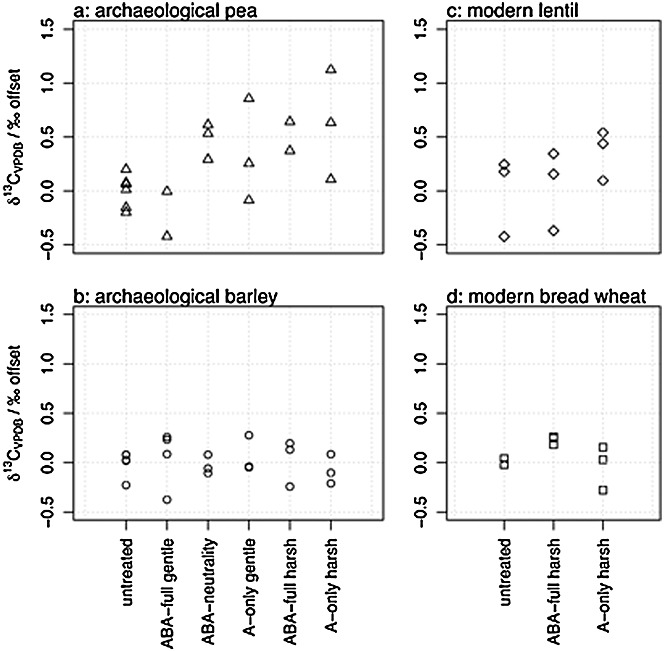
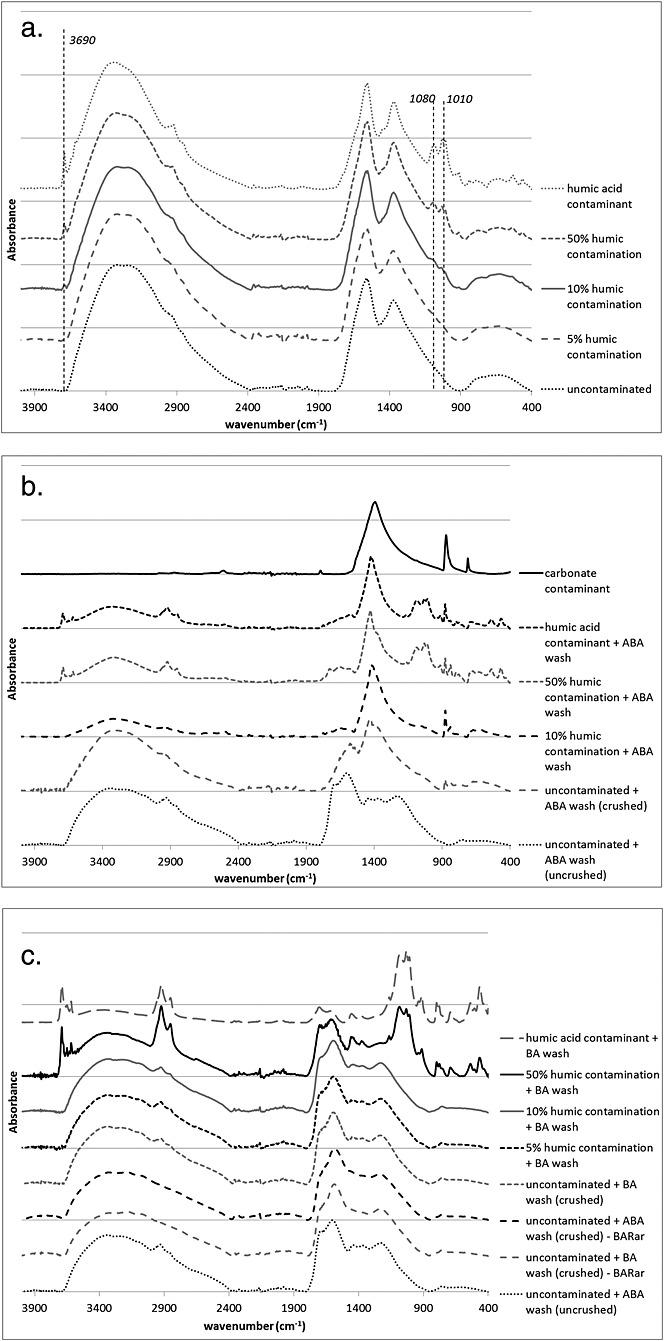
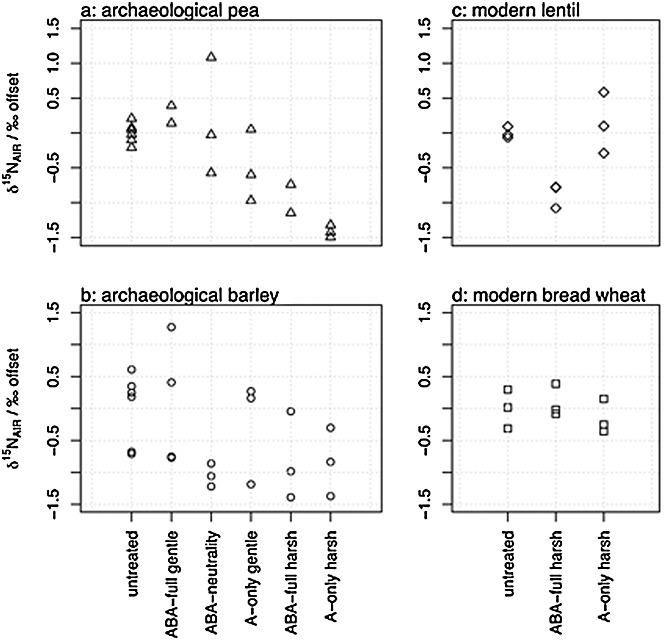
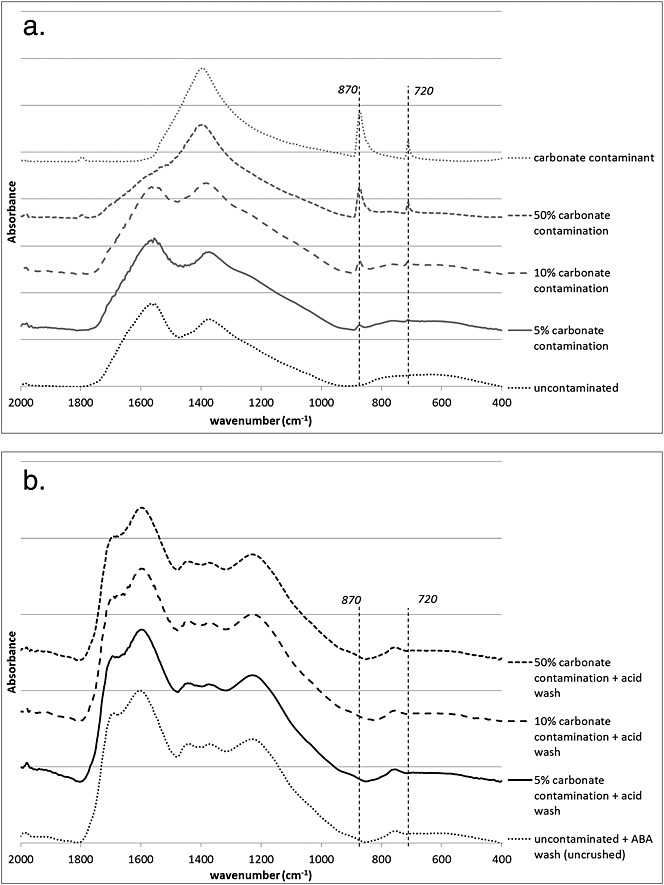
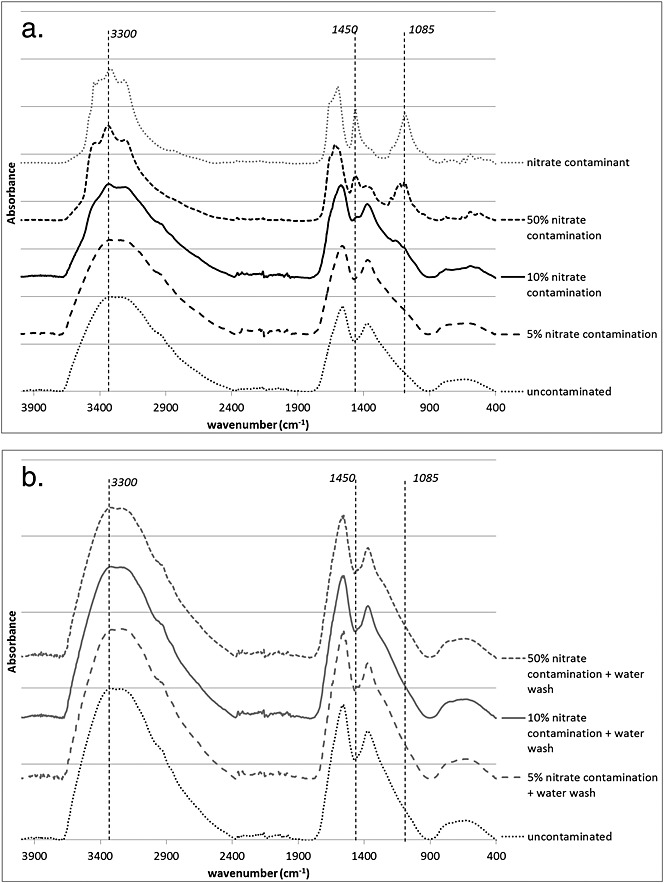
The effects of previously used pre-treatment protocols on the isotopic composition of archaeological and modern sets of samples were investigated. An archaeological sample was also artificially contaminated with carbonates, nitrates and humic acid and subjected to treatment aimed at removing the introduced contamination. The presence and removal of the contamination were investigated using Fourier transform infrared spectroscopy (FTIR) and δ(13)C and δ(15)N values.
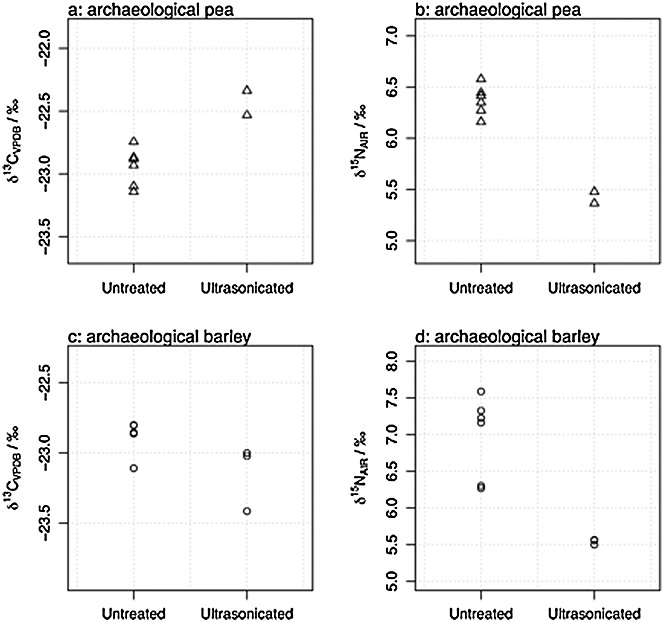
The results show a ca 1‰ decrease in the δ(15)N values of archaeological charred plant material caused by harsh acid treatments and ultra-sonication. This change is interpreted as being caused by mechanical distortion of the grains/seeds rather than by the removal of contamination. Furthermore, specific infrared peaks have been identified that can be used to detect the three types of contaminants studied. We argue that it is not necessary to try to remove humic acid contamination for stable isotope analysis. The advantages and disadvantages of crushing the grains/seeds before pre-treatment are discussed.
We recommend the use of an acid-only procedure (0.5 M HCl for 30 min at 80 °C followed by three rinses in distilled water) for cleaning charred plant remains. This study fills an important gap in plant stable isotope research that will enable future researchers to evaluate potential sources of isotopic change and pre-treat their samples with methods that have been demonstrated to be effective.
对考古烧焦植物进行稳定同位素分析已成为解读过去农业实践和完善古代饮食重建的有用工具。然而,埋于土壤中数千年的烧焦物质易受各种污染,而其对谷物/种子同位素组成的影响却鲜为人知。预处理方案已根据放射性碳测年法进行了不同形式的调整,但在评估其对稳定碳氮同位素分析的有效性和必要性方面,尚未开展充分研究。
研究了先前使用的预处理方案对考古和现代样本集同位素组成的影响。还对一个考古样本进行了人工碳酸盐、硝酸盐和腐殖酸污染,并进行旨在去除引入污染的处理。使用傅里叶变换红外光谱(FTIR)以及δ(13)C和δ(15)N值研究污染的存在和去除情况。
结果表明,强酸处理和超声处理导致考古烧焦植物材料的δ(15)N值下降约1‰。这种变化被解释为是由谷物/种子的机械变形而非污染去除所致。此外,已识别出可用于检测所研究的三种污染物类型的特定红外峰。我们认为,对于稳定同位素分析而言,无需试图去除腐殖酸污染。讨论了预处理前碾碎谷物/种子的优缺点。
我们建议使用仅加酸的程序(0.5 M盐酸在80°C下处理30分钟,随后用蒸馏水冲洗三次)来清洁烧焦的植物残骸。本研究填补了植物稳定同位素研究中的一个重要空白,这将使未来的研究人员能够评估同位素变化的潜在来源,并采用已证明有效的方法对其样本进行预处理。