Jarzabek M A, Amberger-Murphy V, Callanan J J, Gao C, Zagozdzon A M, Shiels L, Wang J, Ligon K L, Rich B E, Dicker P, Gallagher W M, Prehn J H M, Byrne A T
Department of Physiology and Medical Physics and Centre for Systems Medicine, Royal College of Surgeons in Ireland, Dublin 2, Ireland.
1] Molecular Therapeutics for Cancer Ireland, Dublin City University, Dublin 9, Ireland [2] All Ireland Cooperative Oncology Research Group, Dublin 2, Ireland.
Br J Cancer. 2014 Dec 9;111(12):2275-86. doi: 10.1038/bjc.2014.529. Epub 2014 Nov 6.
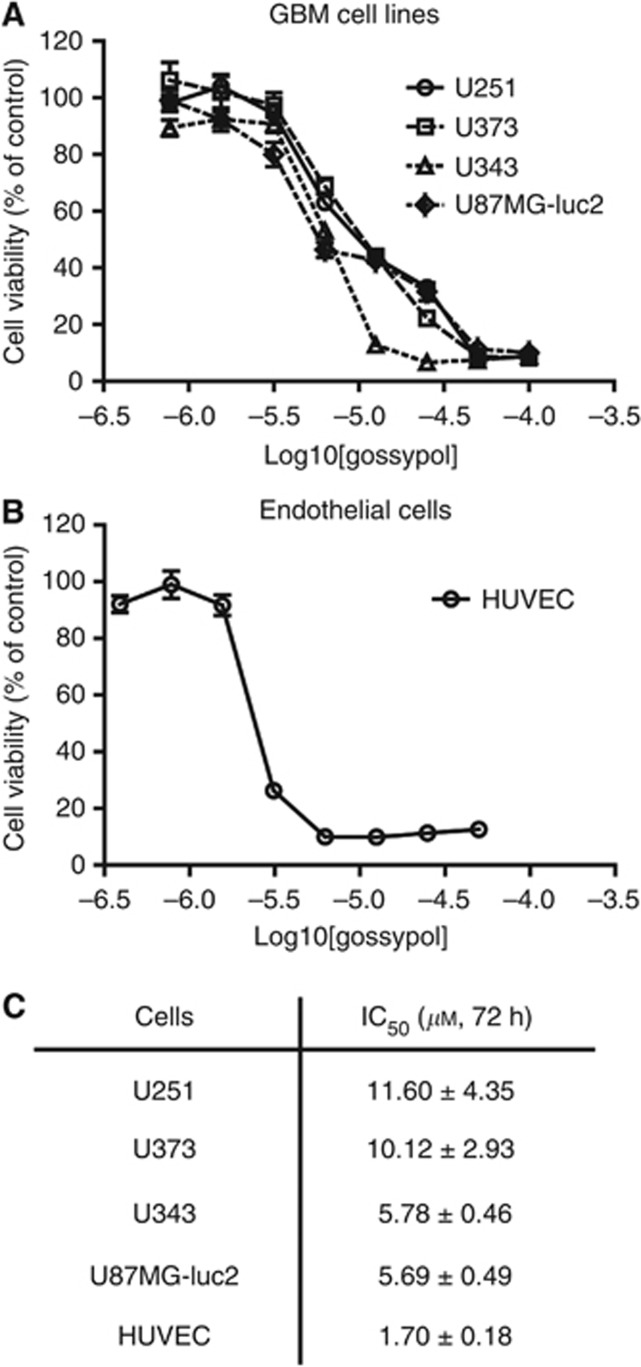
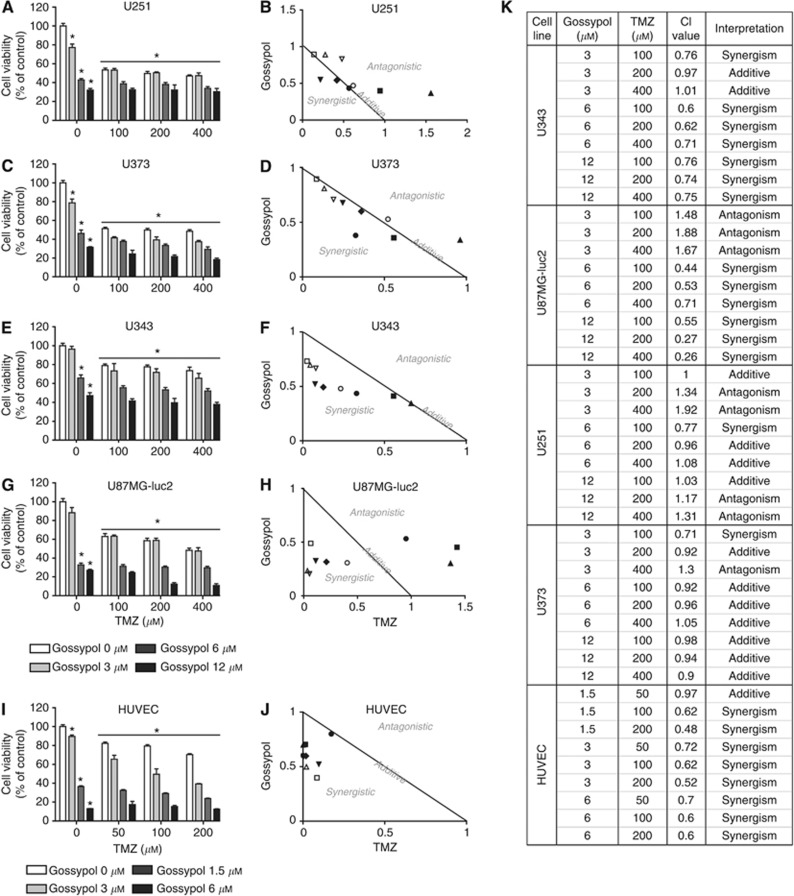
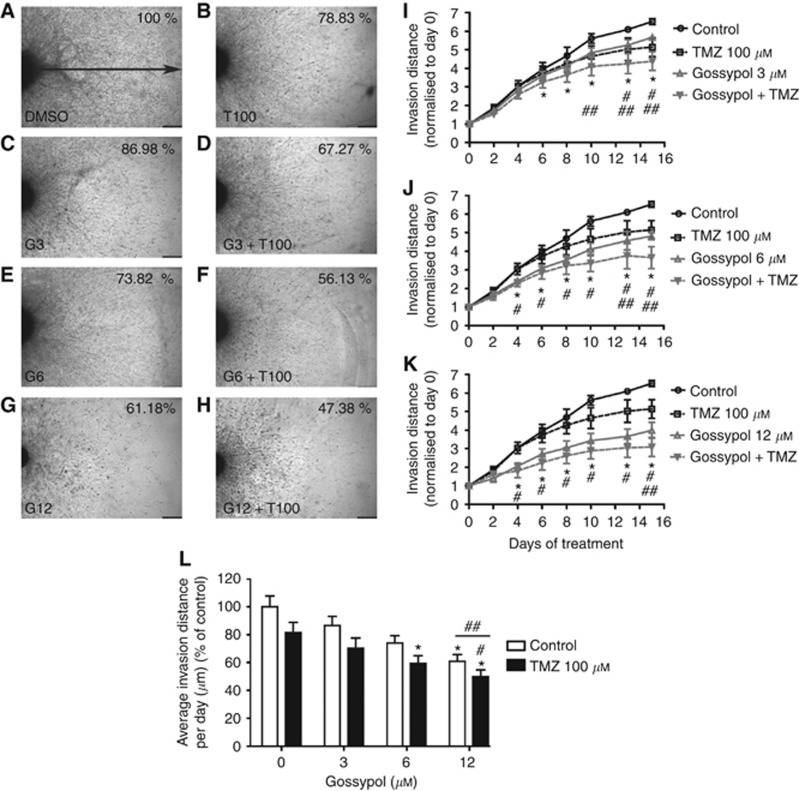
Glioblastoma (GBM), being a highly vascularised and locally invasive tumour, is an attractive target for anti-angiogenic and anti-invasive therapies. The GBM/endothelial cell response to gossypol/temozolomide (TMZ) treatment was investigated with a particular aim to assess treatment effects on cancer hallmarks.
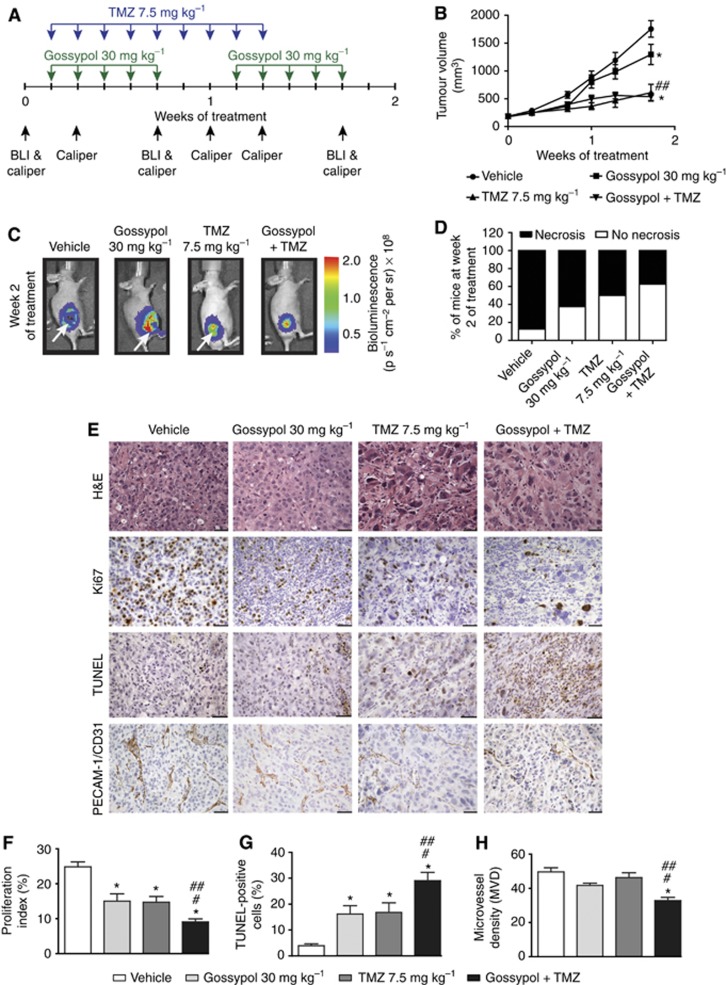
Cell viability, endothelial tube formation and GBM tumour cell invasion were variously assessed following combined treatment in vitro. The U87MG-luc2 subcutaneous xenograft model was used to investigate therapeutic response in vivo. Viable tumour response to treatment was interrogated using immunohistochemistry. Combined treatment protocols were also tested in primary GBM patient-derived cultures.
An endothelial/GBM cell viability inhibitory effect, as well as an anti-angiogenic and anti-invasive response, to combined treatment have been demonstrated in vitro. A significantly greater anti-proliferative (P=0.020, P=0.030), anti-angiogenic (P=0.040, P<0.0001) and pro-apoptotic (P=0.0083, P=0.0149) response was observed when combined treatment was compared with single gossypol/TMZ treatment response, respectively. GBM cell line and patient-specific response to gossypol/TMZ treatment was observed.
Our results indicate that response to a combined gossypol/TMZ treatment is related to inhibition of tumour-associated angiogenesis, invasion and proliferation and warrants further investigation as a novel targeted GBM treatment strategy.
胶质母细胞瘤(GBM)是一种血管高度丰富且具有局部侵袭性的肿瘤,是抗血管生成和抗侵袭治疗的一个有吸引力的靶点。研究了GBM/内皮细胞对棉酚/替莫唑胺(TMZ)治疗的反应,特别旨在评估对癌症特征的治疗效果。
在体外联合治疗后,分别评估细胞活力、内皮管形成和GBM肿瘤细胞侵袭。使用U87MG-luc2皮下异种移植模型研究体内治疗反应。使用免疫组织化学询问对治疗的存活肿瘤反应。联合治疗方案也在原发性GBM患者来源的培养物中进行了测试。
在体外已证明联合治疗具有内皮/GBM细胞活力抑制作用以及抗血管生成和抗侵袭反应。与单独的棉酚/TMZ治疗反应相比,联合治疗分别观察到显著更大的抗增殖(P=0.020,P=0.030)、抗血管生成(P=0.040,P<0.0001)和促凋亡(P=0.0083,P=0.0149)反应。观察到GBM细胞系和患者对棉酚/TMZ治疗的特异性反应。
我们的结果表明,对棉酚/TMZ联合治疗的反应与抑制肿瘤相关的血管生成、侵袭和增殖有关,作为一种新的靶向GBM治疗策略值得进一步研究。