Seebah Shalin, Fairfield Caitlin, Ullrich Matthias S, Passow Uta
Molecular Life Science Research Center, Jacobs University Bremen, Bremen, Germany.
Marine Science Institute, University of California Santa Barbara, Santa Barbara, California, United States of America.
PLoS One. 2014 Nov 6;9(11):e112379. doi: 10.1371/journal.pone.0112379. eCollection 2014.
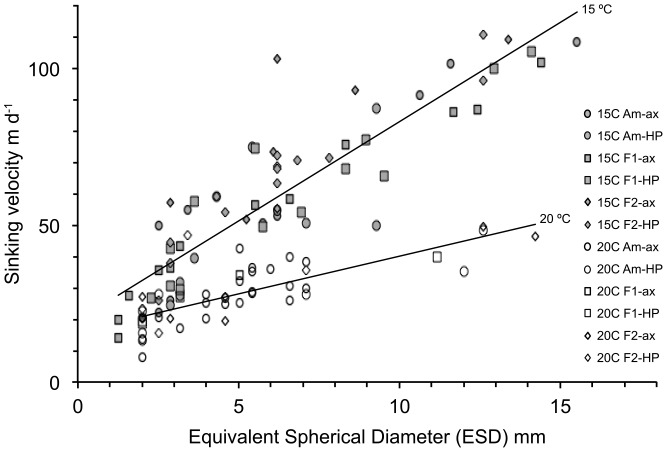
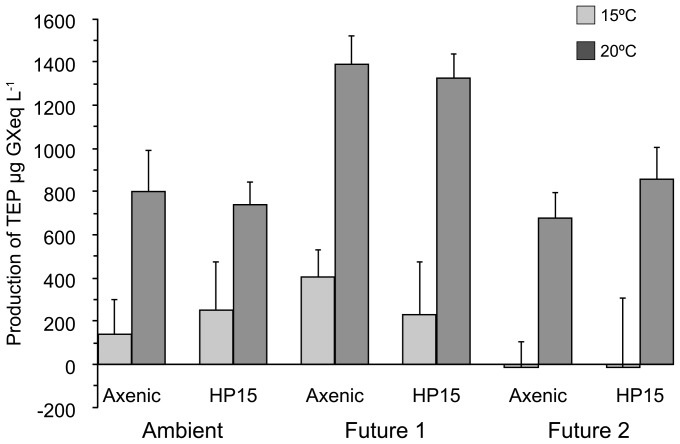
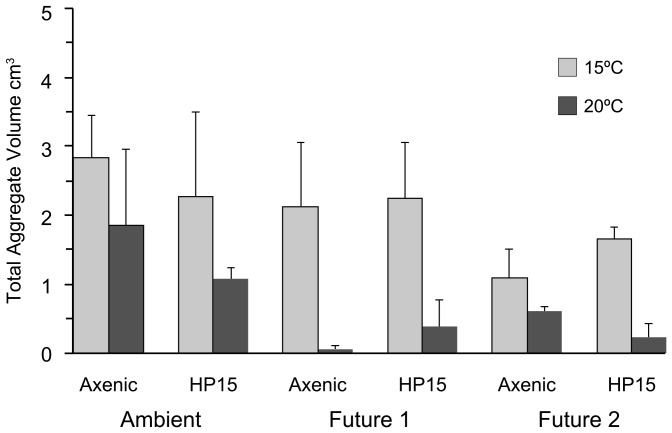
Increasing Transparent Exopolymer Particle (TEP) formation during diatom blooms as a result of elevated temperature and pCO2 have been suggested to result in enhanced aggregation and carbon flux, therewith potentially increasing the sequestration of carbon by the ocean. We present experimental results on TEP and aggregate formation by Thalassiosira weissflogii (diatom) in the presence or absence of bacteria under two temperature and three pCO2 scenarios. During the aggregation phase of the experiment TEP formation was elevated at the higher temperature (20°C vs. 15°C), as predicted. However, in contrast to expectations based on the established relationship between TEP and aggregation, aggregation rates and sinking velocity of aggregates were depressed in warmer treatments, especially under ocean acidification conditions. If our experimental findings can be extrapolated to natural conditions, they would imply a reduction in carbon flux and potentially reduced carbon sequestration after diatom blooms in the future ocean.
温度升高和pCO₂增加导致硅藻大量繁殖期间透明胞外聚合物颗粒(TEP)形成增加,这被认为会导致聚集和碳通量增强,从而有可能增加海洋对碳的封存。我们展示了在两种温度和三种pCO₂情景下,在有或没有细菌存在的情况下,威氏海链藻(硅藻)形成TEP和聚集体的实验结果。正如预测的那样,在实验的聚集阶段,较高温度(20°C与15°C)下TEP的形成有所增加。然而,与基于TEP和聚集之间既定关系的预期相反,在较温暖的处理中,聚集体的聚集速率和下沉速度受到抑制,特别是在海洋酸化条件下。如果我们的实验结果能够外推到自然条件,这将意味着未来海洋中硅藻大量繁殖后碳通量的减少以及潜在的碳封存减少。