Hu Xiaoming, Leak Rehana K, Shi Yejie, Suenaga Jun, Gao Yanqin, Zheng Ping, Chen Jun
Centre of Cerebrovascular Disease Research, University of Pittsburgh School of Medicine, 200 Lothrop Street, Pittsburgh, PA 15213, USA.
State Key Laboratory of Medical Neurobiology and Institute of Brain Sciences, 220 Handan Road, Fudan University, Shanghai 200032, China.
Nat Rev Neurol. 2015 Jan;11(1):56-64. doi: 10.1038/nrneurol.2014.207. Epub 2014 Nov 11.
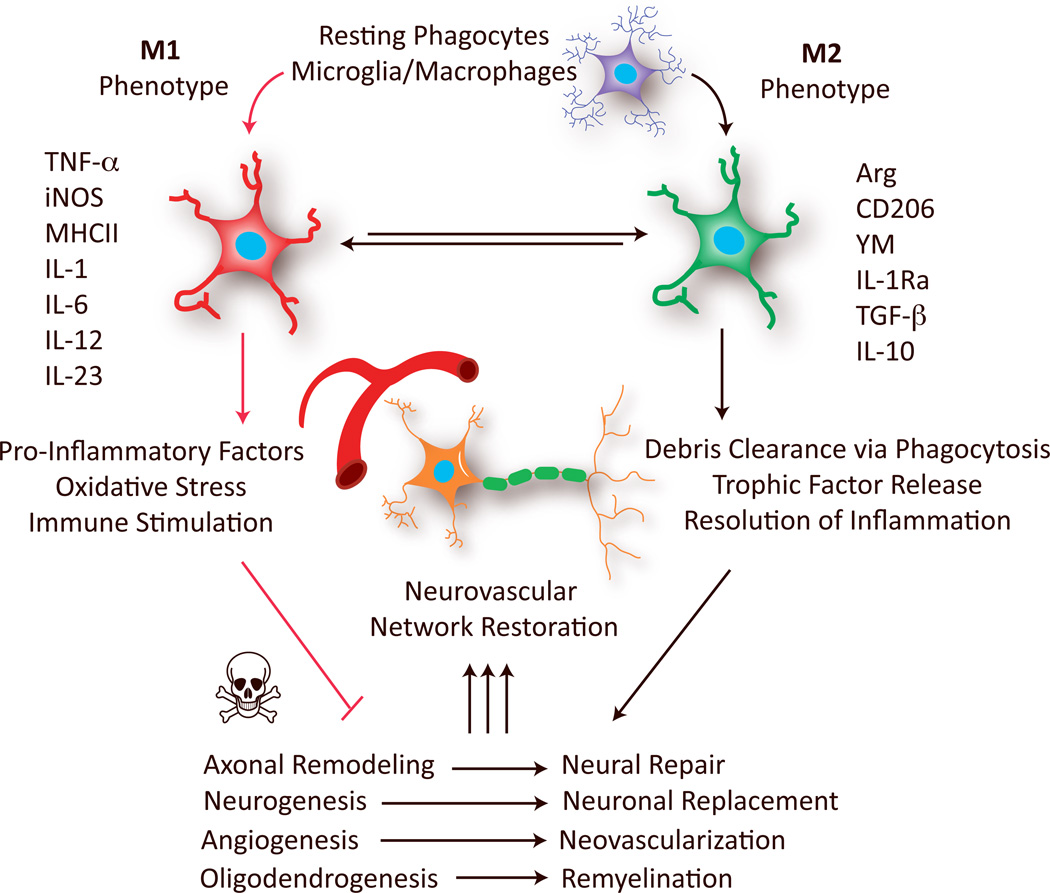
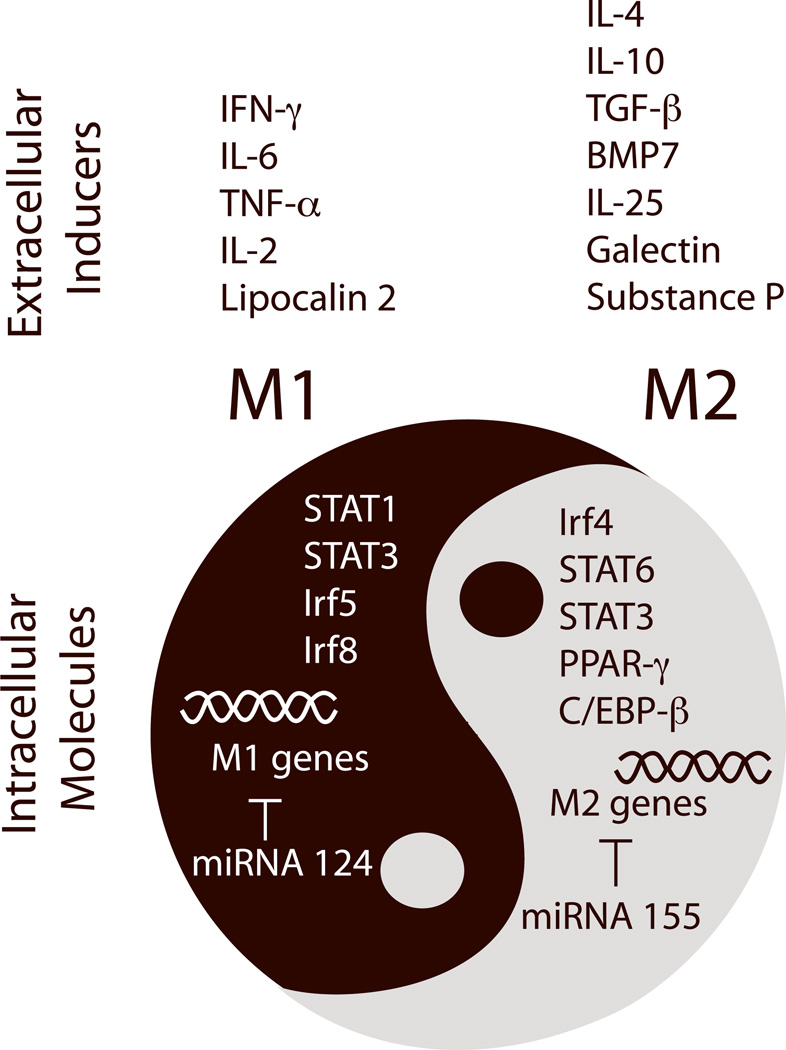
The traditional view of the adult brain as a static organ has changed in the past three decades, with the emergence of evidence that it remains plastic and has some regenerative capacity after injury. In the injured brain, microglia and macrophages clear cellular debris and orchestrate neuronal restorative processes. However, activation of these cells can also hinder CNS repair and expand tissue damage. Polarization of macrophage populations toward different phenotypes at different stages of injury might account for this dual role. This Perspectives article highlights the specific roles of polarized microglial and macrophage populations in CNS repair after acute injury, and argues that therapeutic approaches targeting cerebral inflammation should shift from broad suppression of microglia and macrophages towards subtle adjustment of the balance between their phenotypes. Breakthroughs in the identification of regulatory molecules that control these phenotypic shifts could ultimately accelerate research towards curing brain disorders.
在过去三十年里,传统观点认为成人大脑是一个静态器官的看法发生了改变,有证据表明大脑依然具有可塑性,并且在受伤后具备一定的再生能力。在受损大脑中,小胶质细胞和巨噬细胞清除细胞碎片并协调神经元修复过程。然而,这些细胞的激活也可能阻碍中枢神经系统修复并扩大组织损伤。巨噬细胞群体在损伤不同阶段向不同表型的极化可能解释了这种双重作用。这篇观点文章强调了极化的小胶质细胞和巨噬细胞群体在急性损伤后中枢神经系统修复中的特定作用,并认为针对脑炎症的治疗方法应从广泛抑制小胶质细胞和巨噬细胞转向微调它们表型之间的平衡。在识别控制这些表型转变的调节分子方面取得的突破最终可能会加速治愈脑部疾病的研究。