Tsai Becky Pinjou, Jimenez Judith, Lim Sharon, Fitzgerald Kerry D, Zhang Min, Chuah Charles T H, Axelrod Haley, Wilson Luke, Ong S Tiong, Semler Bert L, Waterman Marian L
Department of Microbiology and Molecular Genetics, School of Medicine, University of California, Irvine, CA, USA.
Cancer and Stem Cell Biology Signature Research Program, Duke-NUS Graduate Medical School, Singapore Department of Haematology, Singapore General Hospital, Singapore.
Open Biol. 2014 Nov;4(11):140180. doi: 10.1098/rsob.140180.
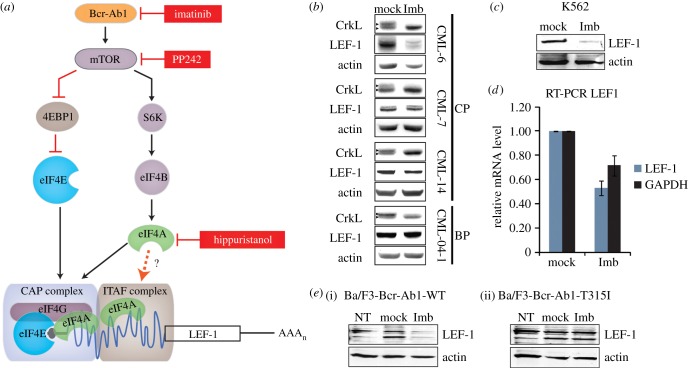
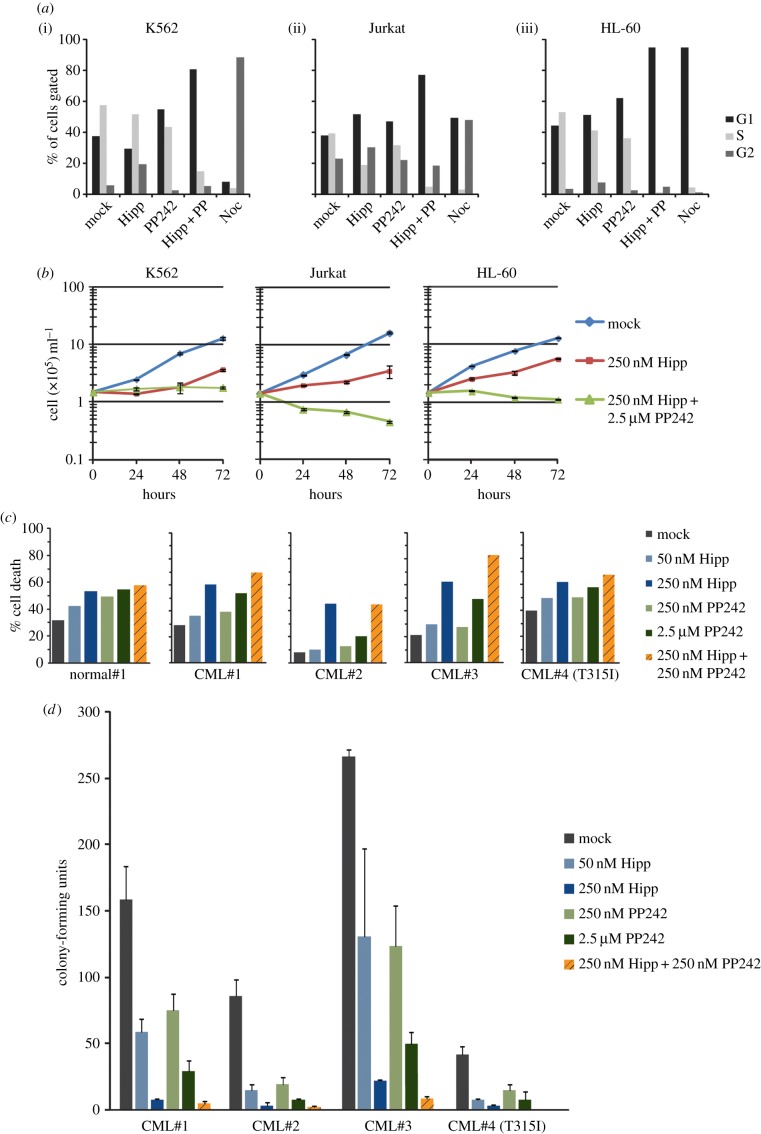
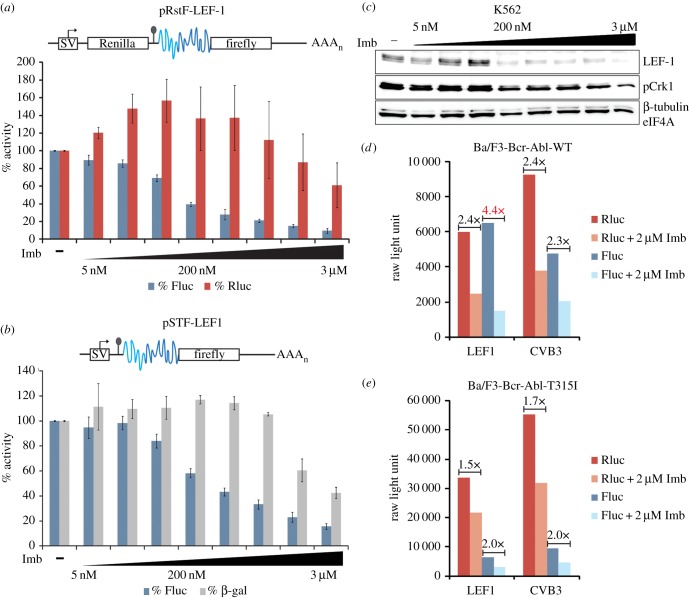
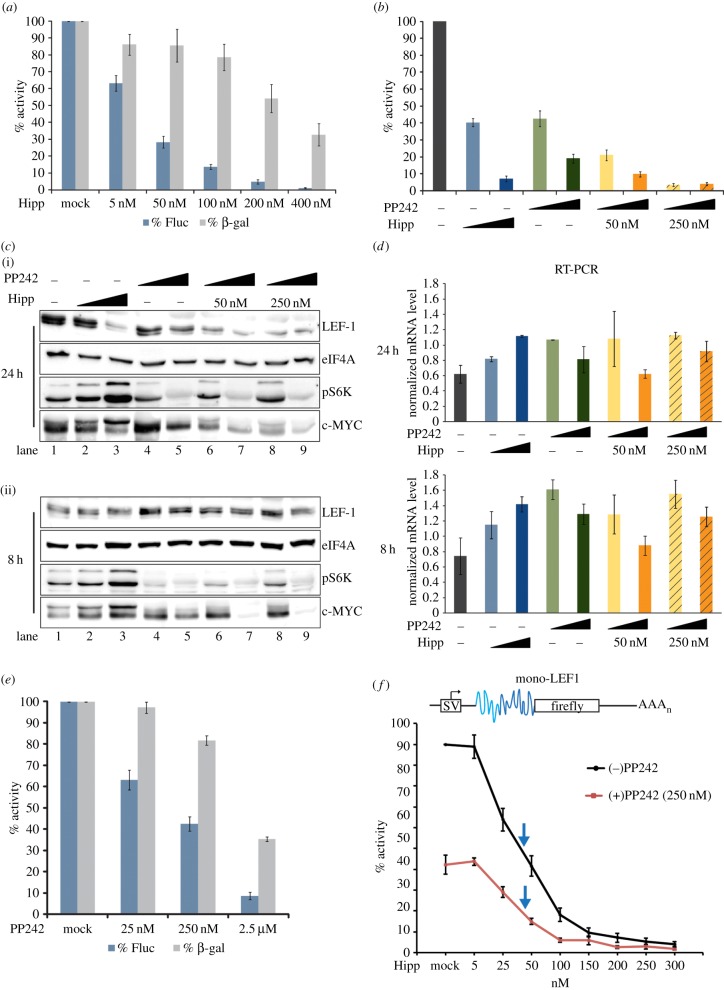
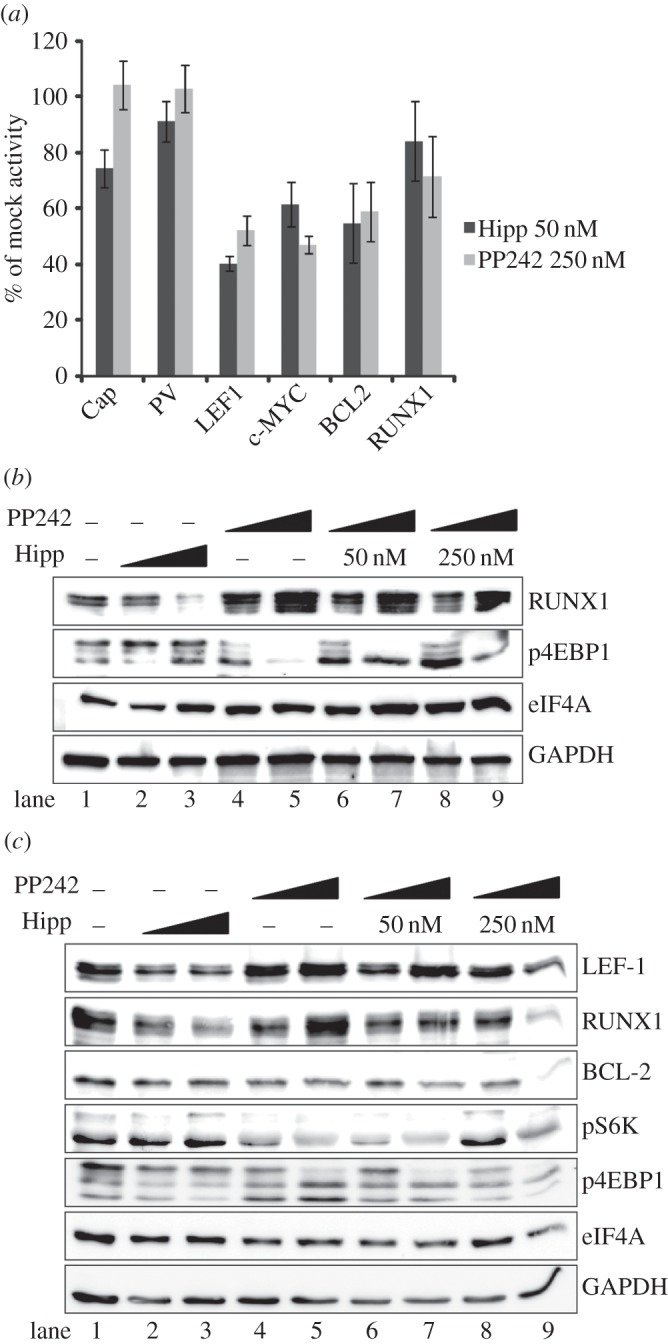
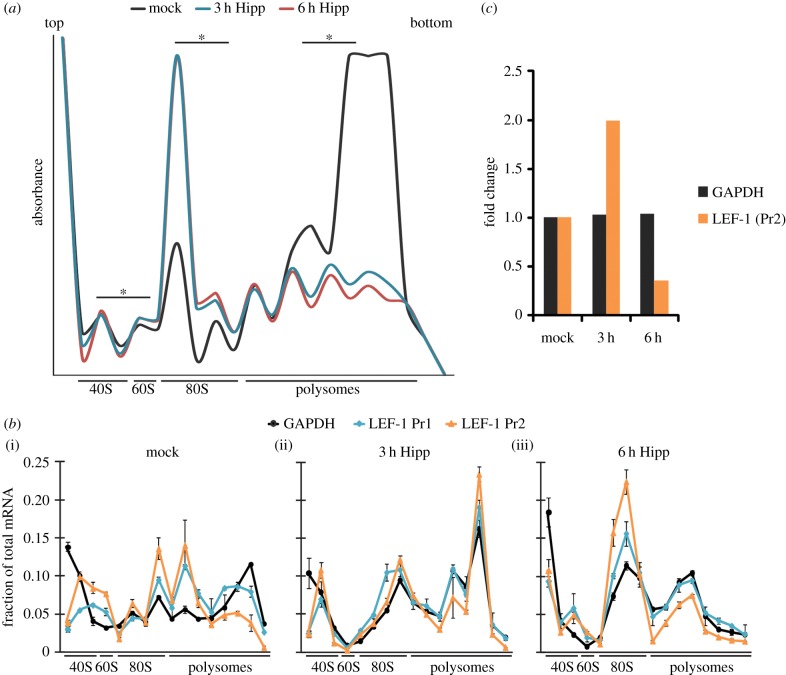
Internal ribosome entry sites (IRESs) in cellular mRNAs direct expression of growth-promoting factors through an alternative translation mechanism that has yet to be fully defined. Lymphoid enhancer factor-1 (LEF-1), a Wnt-mediating transcription factor important for cell survival and metastasis in cancer, is produced via IRES-directed translation, and its mRNA is frequently upregulated in malignancies, including chronic myeloid leukaemia (CML). In this study, we determined that LEF1 expression is regulated by Bcr-Abl, the oncogenic protein that drives haematopoietic cell transformation to CML. We have previously shown that the LEF1 5' untranslated region recruits a complex of proteins to its IRES, including the translation initiation factor eIF4A. In this report, we use two small molecule inhibitors, PP242 (dual mTOR (mammalian target of rapamycin) kinase inhibitor) and hippuristanol (eIF4A inhibitor), to define IRES regulation via a Bcr-Abl-mTOR-eIF4A axis in CML cell lines and primary patient leukaemias. We found that LEF1 and other IRESs are uniquely sensitive to the activities of Bcr-Abl/mTOR. Most notably, we discovered that eIF4A, an RNA helicase, elicits potent non-canonical effects on the LEF1 IRES. Hippuristanol inhibition of eIF4A stalls translation of IRES mRNA and triggers dissociation from polyribosomes. We propose that a combination drug strategy which targets mTOR and IRES-driven translation disrupts key factors that contribute to growth and proliferation in CML.
细胞信使核糖核酸(mRNA)中的内部核糖体进入位点(IRESs)通过一种尚未完全明确的替代翻译机制来指导生长促进因子的表达。淋巴样增强因子-1(LEF-1)是一种介导Wnt信号的转录因子,对癌症中的细胞存活和转移至关重要,它通过IRES指导的翻译产生,其mRNA在包括慢性粒细胞白血病(CML)在内的多种恶性肿瘤中经常上调。在本研究中,我们确定LEF1的表达受Bcr-Abl调控,Bcr-Abl是驱动造血细胞转化为CML的致癌蛋白。我们之前已经表明,LEF1的5'非翻译区会将一组蛋白质复合物招募到其IRES,其中包括翻译起始因子eIF4A。在本报告中,我们使用两种小分子抑制剂PP242(双重哺乳动物雷帕霉素靶蛋白(mTOR)激酶抑制剂)和马桑毒素(eIF4A抑制剂),来确定在CML细胞系和原发性患者白血病中通过Bcr-Abl-mTOR-eIF4A轴对IRES的调控。我们发现LEF1和其他IRES对Bcr-Abl/mTOR的活性具有独特的敏感性。最值得注意的是,我们发现RNA解旋酶eIF4A对LEF1 IRES产生强大的非经典效应。马桑毒素对eIF4A的抑制作用会使IRES mRNA的翻译停滞,并触发从多核糖体上解离。我们提出,一种靶向mTOR和IRES驱动翻译的联合药物策略可以破坏导致CML生长和增殖的关键因子。