Stilling Roman M, Bordenstein Seth R, Dinan Timothy G, Cryan John F
Alimentary Pharmabiotic Centre, University College Cork Cork, Ireland ; Department Anatomy and Neuroscience, University College Cork Cork, Ireland.
Departments of Biological Sciences and Pathology, Microbiology, and Immunology, Vanderbilt University Nashville, TN, USA.
Front Cell Infect Microbiol. 2014 Oct 29;4:147. doi: 10.3389/fcimb.2014.00147. eCollection 2014.
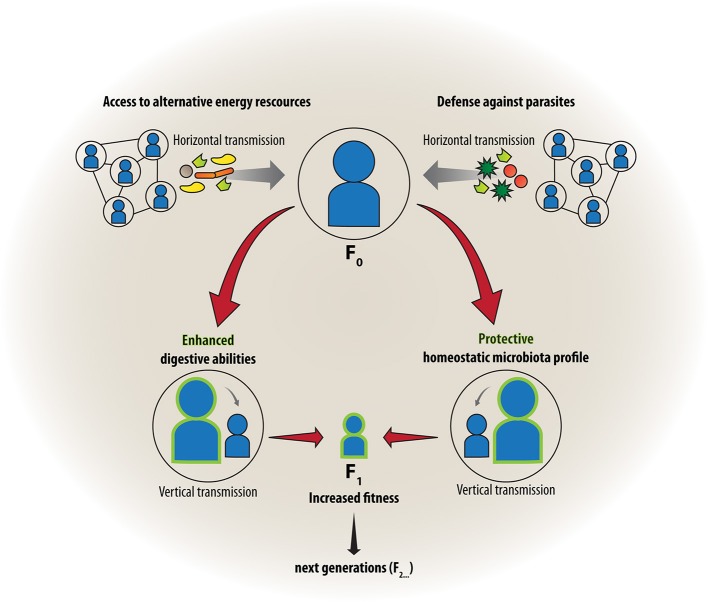
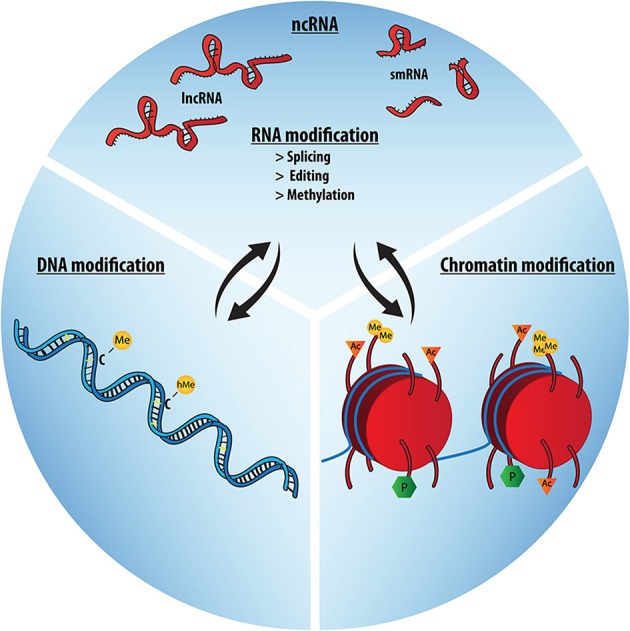
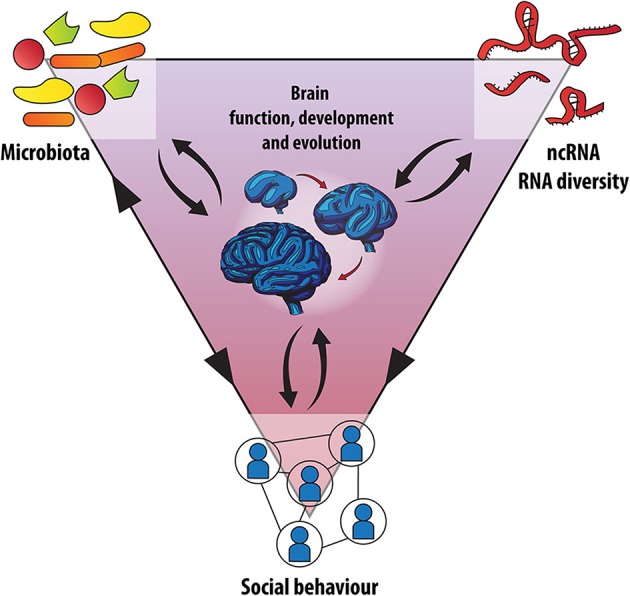
The tight association of the human body with trillions of colonizing microbes that we observe today is the result of a long evolutionary history. Only very recently have we started to understand how this symbiosis also affects brain function and behavior. In this hypothesis and theory article, we propose how host-microbe associations potentially influenced mammalian brain evolution and development. In particular, we explore the integration of human brain development with evolution, symbiosis, and RNA biology, which together represent a "social triangle" that drives human social behavior and cognition. We argue that, in order to understand how inter-kingdom communication can affect brain adaptation and plasticity, it is inevitable to consider epigenetic mechanisms as important mediators of genome-microbiome interactions on an individual as well as a transgenerational time scale. Finally, we unite these interpretations with the hologenome theory of evolution. Taken together, we propose a tighter integration of neuroscience fields with host-associated microbiology by taking an evolutionary perspective.
我们如今观察到的人体与数万亿定殖微生物的紧密关联是漫长进化史的结果。直到最近,我们才开始了解这种共生关系如何影响大脑功能和行为。在这篇假说与理论文章中,我们提出宿主 - 微生物关联可能如何影响哺乳动物大脑的进化与发育。特别地,我们探讨了人类大脑发育与进化、共生及RNA生物学的整合,它们共同构成了一个驱动人类社会行为和认知的“社会三角”。我们认为,为了理解跨界交流如何影响大脑适应和可塑性,不可避免地要将表观遗传机制视为个体及跨代时间尺度上基因组 - 微生物组相互作用的重要介导因素。最后,我们将这些解释与进化的全息基因组理论相结合。总体而言,我们通过采取进化视角,提出神经科学领域与宿主相关微生物学更紧密的整合。