
肠道病毒71型可诱导线粒体活性氧的产生,而这是高效复制所必需的。
Enterovirus 71 induces mitochondrial reactive oxygen species generation that is required for efficient replication.
作者信息
Cheng Mei-Ling, Weng Shiue-Fen, Kuo Chih-Hao, Ho Hung-Yao
机构信息
Department of Biomedical Sciences, College of Medicine, Chang Gung University, Tao-Yuan, Taiwan; Healthy Aging Research Center, Chang Gung University, Tao-Yuan, Taiwan; Metabolomics Core Laboratory, Chang Gung University, Tao-Yuan, Taiwan.
Department of Medical Biotechnology and Laboratory Science, College of Medicine, Chang Gung University, Tao-Yuan, Taiwan.
出版信息
PLoS One. 2014 Nov 17;9(11):e113234. doi: 10.1371/journal.pone.0113234. eCollection 2014.
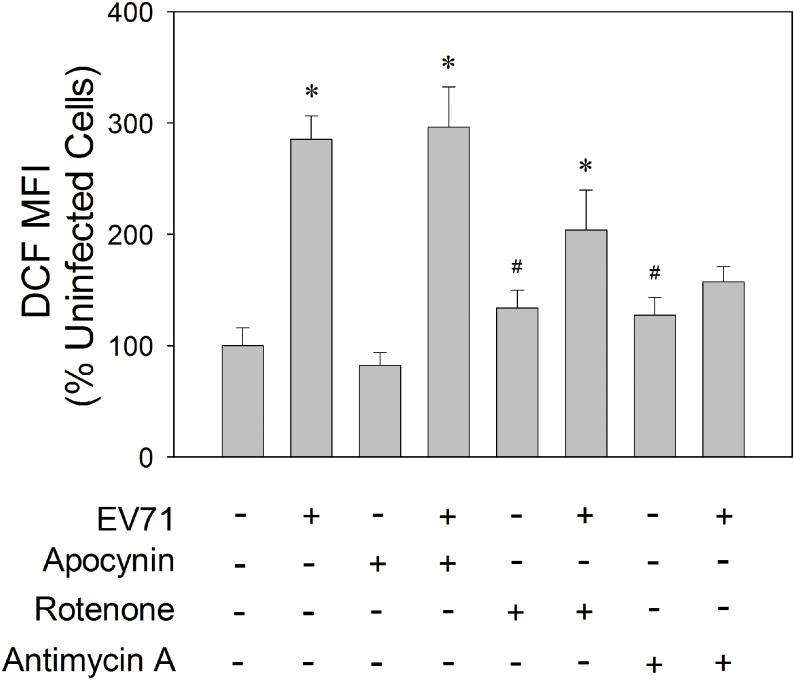
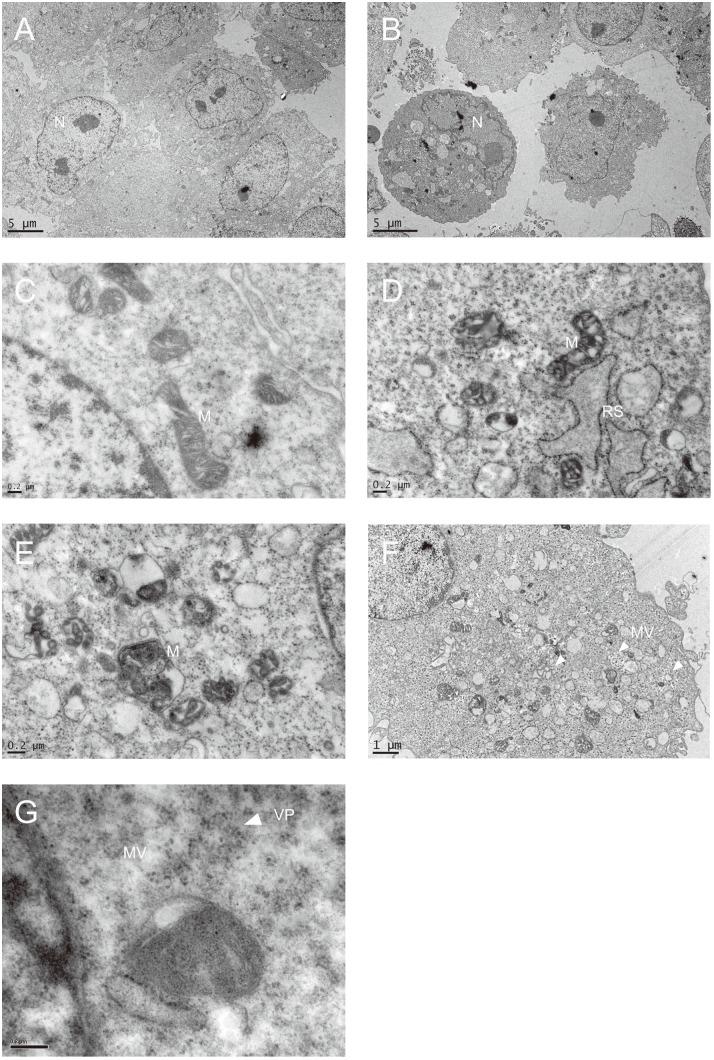
Redox homeostasis is an important host factor determining the outcome of infectious disease. Enterovirus 71 (EV71) infection has become an important endemic disease in Southeast Asia and China. We have previously shown that oxidative stress promotes viral replication, and progeny virus induces oxidative stress in host cells. The detailed mechanism for reactive oxygen species (ROS) generation in infected cells remains elusive. In the current study, we demonstrate that mitochondria were a major ROS source in EV71-infected cells. Mitochondria in productively infected cells underwent morphologic changes and exhibited functional anomalies, such as a decrease in mitochondrial electrochemical potential ΔΨ(m) and an increase in oligomycin-insensitive oxygen consumption. Respiratory control ratio of mitochondria from infected cells was significantly lower than that of normal cells. The total adenine nucleotide pool and ATP content of EV71-infected cells significantly diminished. However, there appeared to be a compensatory increase in mitochondrial mass. Treatment with mito-TEMPO reduced eIF2α phosphorylation and viral replication, suggesting that mitochondrial ROS act to promote viral replication. It is plausible that EV71 infection induces mitochondrial ROS generation, which is essential to viral replication, at the sacrifice of efficient energy production, and that infected cells up-regulate biogenesis of mitochondria to compensate for their functional defect.
氧化还原稳态是决定传染病结局的一个重要宿主因素。肠道病毒71型(EV71)感染已成为东南亚和中国的一种重要地方病。我们之前已经表明,氧化应激促进病毒复制,而后代病毒在宿主细胞中诱导氧化应激。感染细胞中活性氧(ROS)产生的详细机制仍不清楚。在当前研究中,我们证明线粒体是EV71感染细胞中的主要ROS来源。高效感染细胞中的线粒体发生形态变化并表现出功能异常,如线粒体电化学电位ΔΨ(m)降低和寡霉素不敏感的耗氧量增加。感染细胞中线粒体的呼吸控制率明显低于正常细胞。EV71感染细胞的总腺嘌呤核苷酸池和ATP含量显著减少。然而,线粒体质量似乎有代偿性增加。用线粒体靶向抗氧化剂mito-TEMPO处理可降低eIF2α磷酸化和病毒复制,这表明线粒体ROS起到促进病毒复制的作用。EV71感染诱导线粒体ROS产生,这对病毒复制至关重要,是以高效能量产生为代价的,并且感染细胞上调线粒体生物发生以补偿其功能缺陷,这似乎是合理的。




 Zotero 插件