Bork-Jensen Jette, Scheele Camilla, Christophersen Daniel V, Nilsson Emma, Friedrichsen Martin, Fernandez-Twinn Denise S, Grunnet Louise G, Litman Thomas, Holmstrøm Kim, Vind Birgitte, Højlund Kurt, Beck-Nielsen Henning, Wojtaszewski Jørgen, Ozanne Susan E, Pedersen Bente K, Poulsen Pernille, Vaag Allan
Steno Diabetes Center, Gentofte, Denmark,
Diabetologia. 2015 Feb;58(2):363-73. doi: 10.1007/s00125-014-3434-2. Epub 2014 Nov 19.
AIMS/HYPOTHESIS: We aimed to identify microRNAs (miRNAs) associated with type 2 diabetes and risk of developing the disease in skeletal muscle biopsies from phenotypically well-characterised twins.
We measured muscle miRNA levels in monozygotic (MZ) twins discordant for type 2 diabetes using arrays. Further investigations of selected miRNAs included target prediction, pathway analysis, silencing in cells and association analyses in a separate cohort of 164 non-diabetic MZ and dizygotic twins. The effects of elevated glucose and insulin levels on miRNA expression were examined, and the effect of low birthweight (LBW) was studied in rats.
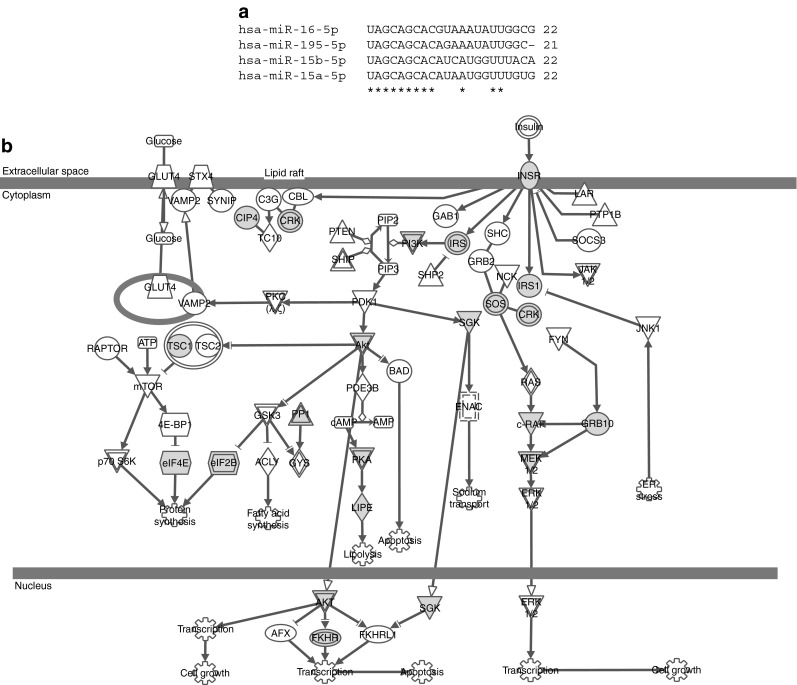
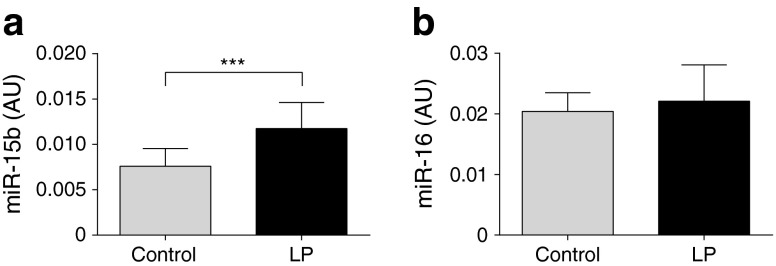
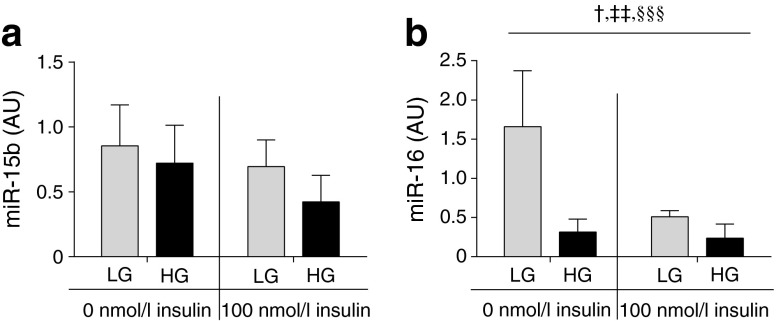
We identified 20 miRNAs that were downregulated in MZ twins with diabetes compared with their non-diabetic co-twins. Differences for members of the miR-15 family (miR-15b and miR-16) were the most statistically significant, and these miRNAs were predicted to influence insulin signalling. Indeed, miR-15b and miR-16 levels were associated with levels of key insulin signalling proteins, miR-15b was associated with the insulin receptor in non-diabetic twins and knockdown of miR-15b/miR-16 in myocytes changed the levels of insulin signalling proteins. LBW in twins and undernutrition during pregnancy in rats were, in contrast to overt type 2 diabetes, associated with increased expression of miR-15b and/or miR-16. Elevated glucose and insulin suppressed miR-16 expression in vitro.
Type 2 diabetes is associated with non-genetic downregulation of several miRNAs in skeletal muscle including miR-15b and miR-16, potentially targeting insulin signalling. The paradoxical findings in twins with overt diabetes and twins at increased risk of the disease underscore the complexity of the regulation of muscle insulin signalling in glucose homeostasis.
目的/假设:我们旨在从表型特征明确的双胞胎的骨骼肌活检样本中,鉴定与2型糖尿病及其发病风险相关的微小RNA(miRNA)。
我们使用基因芯片测量了患2型糖尿病的单卵双胞胎(MZ)中肌肉miRNA的水平。对选定miRNA的进一步研究包括靶标预测、通路分析、细胞沉默以及在另一组164名非糖尿病MZ和双卵双胞胎中的关联分析。研究了葡萄糖和胰岛素水平升高对miRNA表达的影响,并在大鼠中研究了低出生体重(LBW)的影响。
我们鉴定出20种miRNA,与未患糖尿病的同卵双胞胎相比,患糖尿病的MZ双胞胎中这些miRNA表达下调。miR-15家族成员(miR-15b和miR-16)的差异在统计学上最为显著,预计这些miRNA会影响胰岛素信号传导。事实上,miR-15b和miR-16的水平与关键胰岛素信号蛋白的水平相关,在非糖尿病双胞胎中miR-15b与胰岛素受体相关,在心肌细胞中敲低miR-15b/miR-16会改变胰岛素信号蛋白的水平。与明显的2型糖尿病相反,双胞胎中的低出生体重和大鼠孕期的营养不良与miR-15b和/或miR-16表达增加有关。体外实验中,葡萄糖和胰岛素水平升高会抑制miR-16的表达。
2型糖尿病与骨骼肌中包括miR-15b和miR-16在内的多种miRNA的非遗传下调有关,这些miRNA可能靶向胰岛素信号传导。患明显糖尿病的双胞胎和患病风险增加的双胞胎中的矛盾发现,凸显了葡萄糖稳态中肌肉胰岛素信号传导调节的复杂性。