Li Yue, Zhang Zhaolei
1] Department of Computer Science, University of Toronto, Toronto, Ontario M5S 3G4, Canada [2] The Donnelly Centre, University of Toronto, Toronto, Ontario M5S 3E1, Canada.
1] Department of Computer Science, University of Toronto, Toronto, Ontario M5S 3G4, Canada [2] The Donnelly Centre, University of Toronto, Toronto, Ontario M5S 3E1, Canada [3] Department of Molecular Genetics, University of Toronto, Toronto, Ontario M5S 1A8, Canada [4] Banting and Best Department of Medical Research, University of Toronto, Toronto, Ontario M5S 3E1, Canada.
Sci Rep. 2014 Nov 18;4:7097. doi: 10.1038/srep07097.
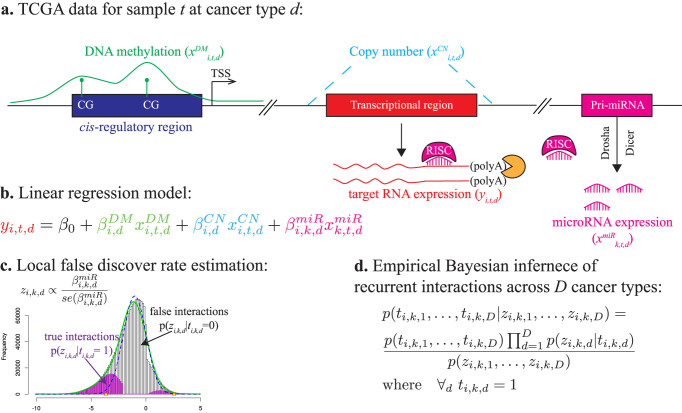
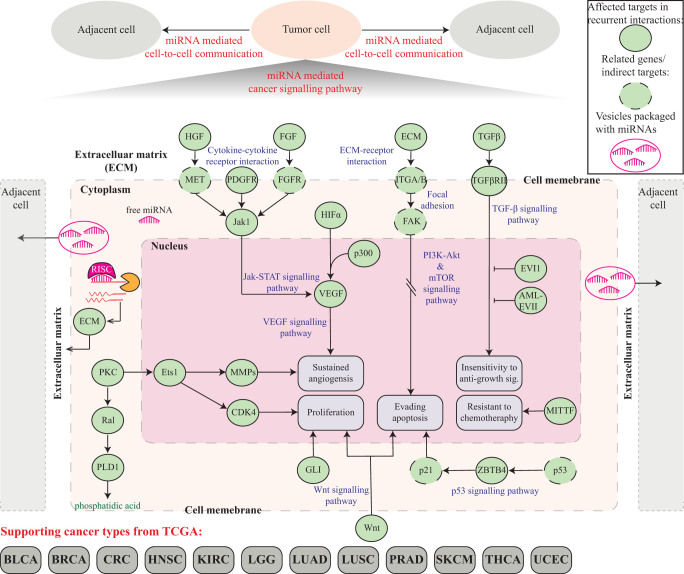
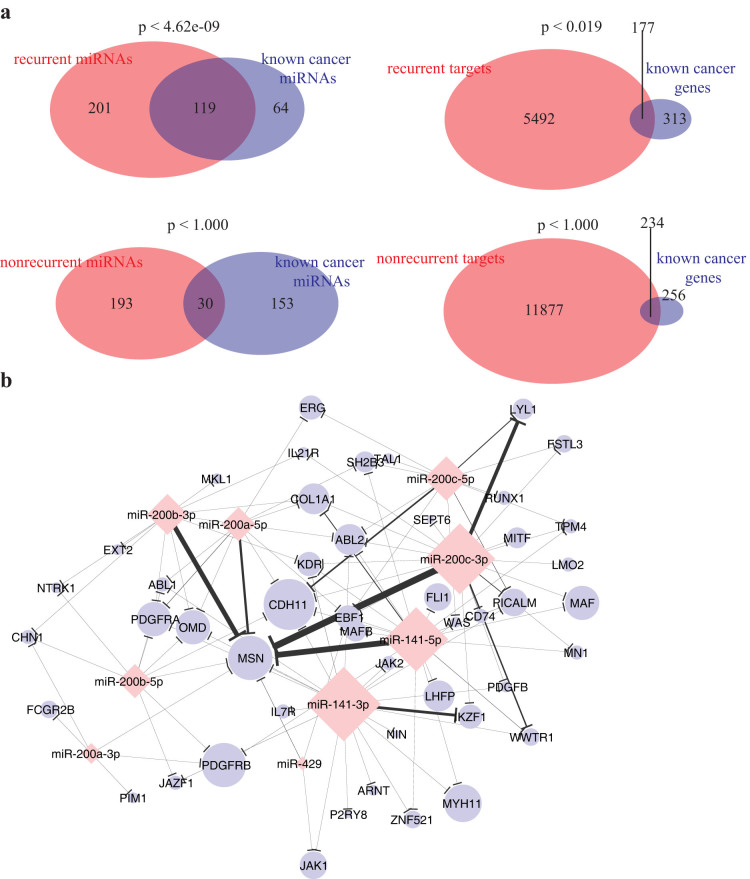
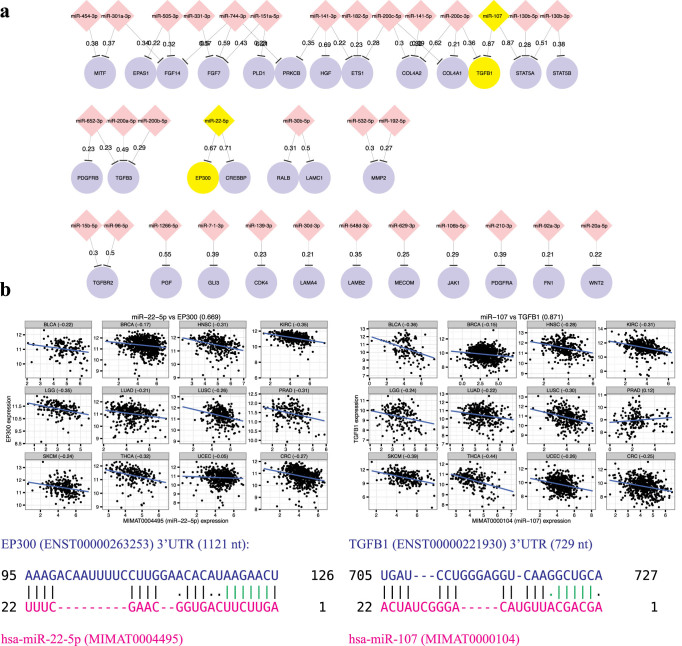
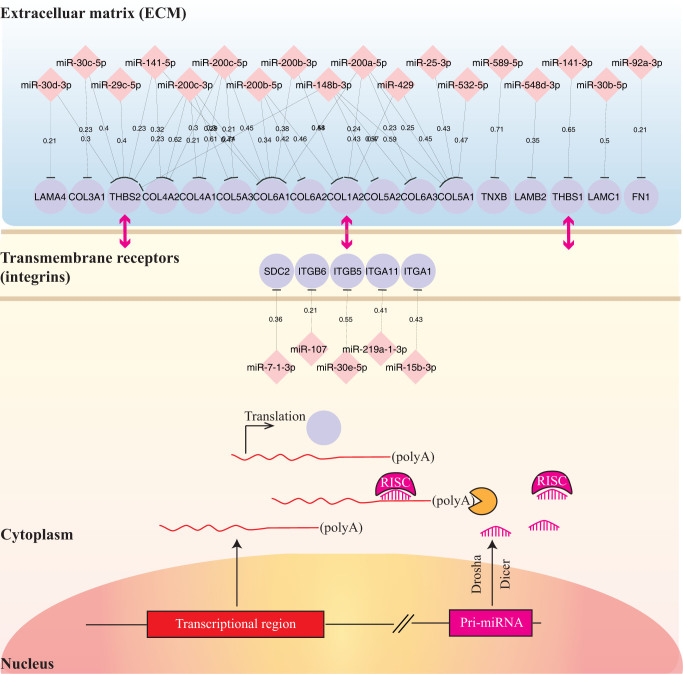
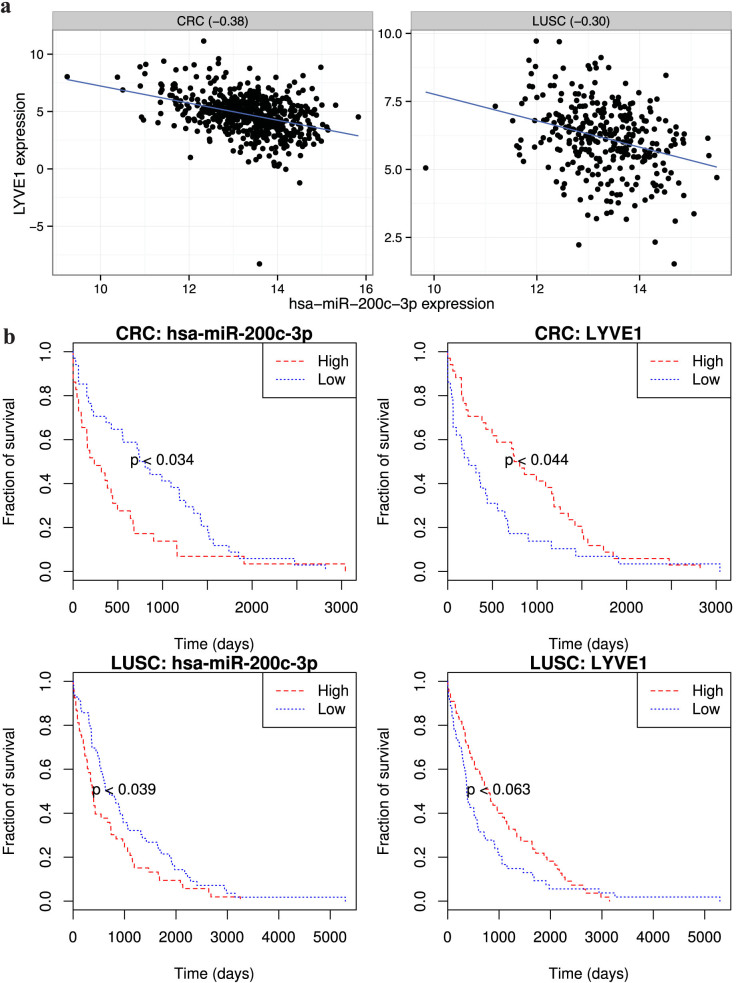
Carcinogenesis consists of oncogenesis and metastasis, and intriguingly microRNAs (miRNAs) are involved in both processes. Although aberrant miRNA activities are prevalent in diverse tumor types, the exact mechanisms for how they regulate cancerous processes are not always clear. To this end, we performed a large-scale pan-cancer analysis via a novel probabilistic approach to infer recurrent miRNA-target interactions implicated in 12 cancer types using data from The Cancer Genome Atlas. We discovered ~20,000 recurrent miRNA regulations, which are enriched for cancer-related miRNAs/genes. Notably, miRNA 200 family (miR-200/141/429) is among the most prominent miRNA regulators, which is known to be involved in metastasis. Importantly, the recurrent miRNA regulatory network is not only enriched for cancer pathways but also for extracellular matrix (ECM) organization and ECM-receptor interactions. The results suggest an intriguing cancer mechanism involving miRNA-mediated cell-to-cell communication, which possibly involves delivery of tumorigenic miRNA messengers to adjacent cells via exosomes. Finally, survival analysis revealed 414 recurrent-prognostic associations, where both gene and miRNA involved in each interaction conferred significant prognostic power in one or more cancer types. Together, our comprehensive pan-cancer analysis provided not only biological insights into metastasis but also brought to bear the clinical relevance of the proposed recurrent miRNA-gene associations.
癌症发生包括肿瘤发生和转移,有趣的是,微小RNA(miRNA)参与了这两个过程。尽管异常的miRNA活性在多种肿瘤类型中普遍存在,但它们调节癌症过程的确切机制并不总是清楚。为此,我们通过一种新的概率方法进行了大规模的泛癌分析,利用来自癌症基因组图谱的数据推断出涉及12种癌症类型的复发性miRNA-靶标相互作用。我们发现了约20,000个复发性miRNA调控,这些调控在与癌症相关的miRNA/基因中富集。值得注意的是,miRNA 200家族(miR-200/141/429)是最突出的miRNA调控因子之一,已知其参与转移。重要的是,复发性miRNA调控网络不仅在癌症通路中富集,而且在细胞外基质(ECM)组织和ECM-受体相互作用中也富集。结果提示了一种有趣的癌症机制,涉及miRNA介导的细胞间通讯,这可能涉及通过外泌体将致癌性miRNA信使传递给相邻细胞。最后,生存分析揭示了414个复发性预后关联,其中每个相互作用中涉及的基因和miRNA在一种或多种癌症类型中都具有显著的预后能力。总之,我们全面的泛癌分析不仅提供了对转移的生物学见解,还揭示了所提出的复发性miRNA-基因关联的临床相关性。