Qin Xike, Warguchuk Richard, Arnal Nadège, Gaborieau Lydiane, Mireau Hakim, Brown Gregory G
BMC Plant Biol. 2014 Nov 18;14:313. doi: 10.1186/s12870-014-0313-4.
Nuclear restorers of cytoplasmic male fertility (CMS) act to suppress the male sterile phenotype by down-regulating the expression of novel CMS-specifying mitochondrial genes. One such restorer gene is Rfo, which restores fertility to the radish Ogura or ogu CMS. Rfo, like most characterized restorers, encodes a pentatricopeptide repeat (PPR) protein, a family of eukaryotic proteins characterized by tandem repeats of a 35 amino acid motif. While over 400 PPR genes are found in characterized plant genomes and the importance of this gene family in organelle gene expression is widely recognized, few detailed in vivo assessments of primary structure-function relationships in this protein family have been conducted.
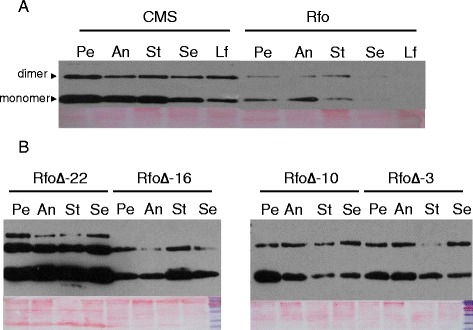
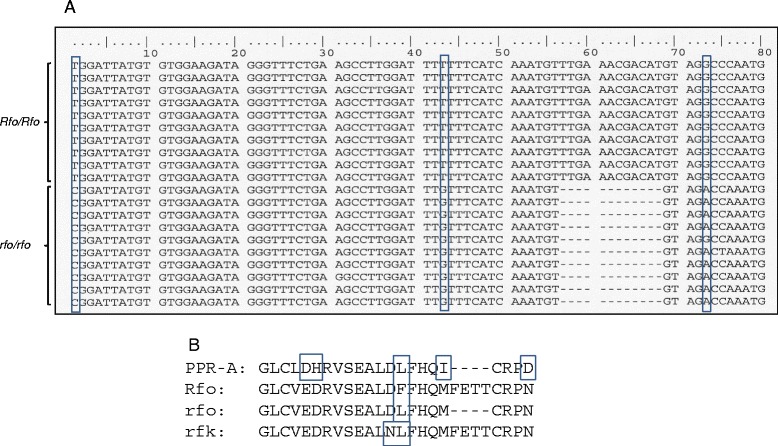
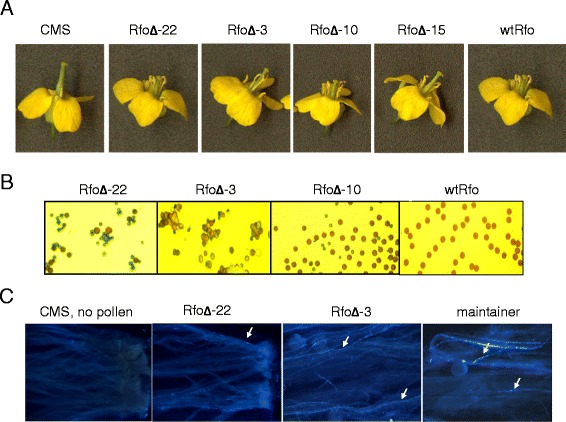
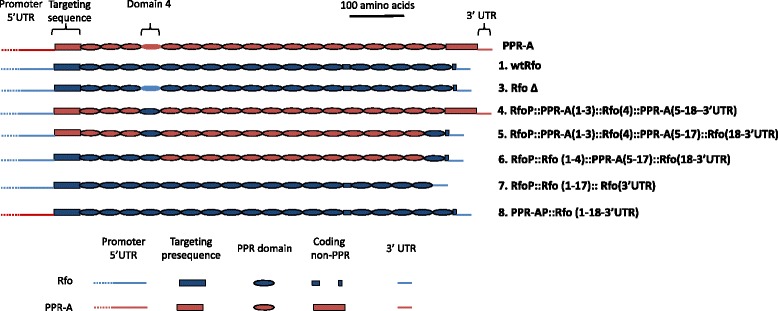
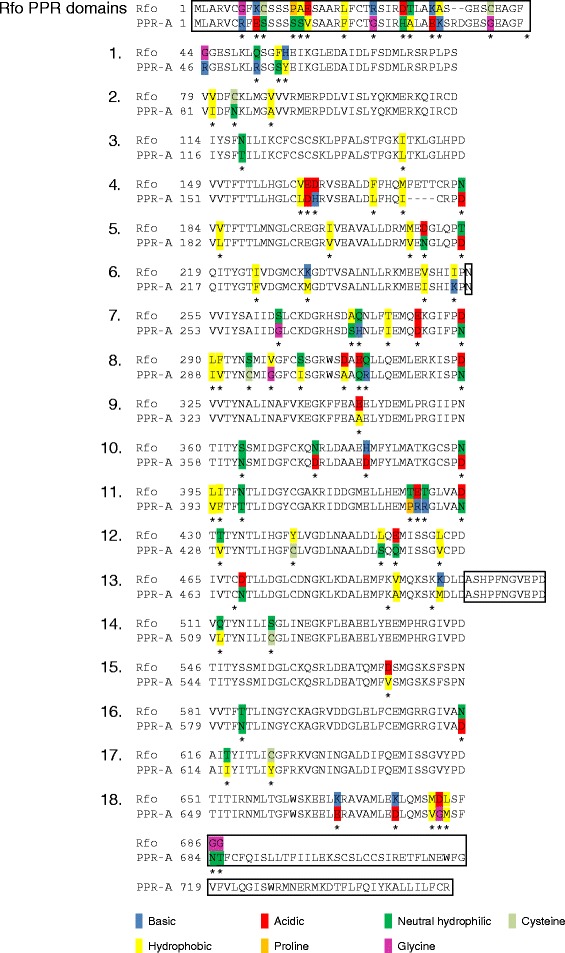
In contrast to earlier studies, which identified 16 or 17 PPR domains in the Rfo protein, we now find, using a more recently developed predictive tool, that Rfo has 18 repeat domains with the additional domain N-terminal to the others. Comparison of transcript sequences from pooled rfo/rfo plants with pooled Rfo/Rfo plants of a mapping population led to the identification of a non-restoring rfo allele with a 12 bp deletion in the fourth domain. Introduction into ogu CMS plants of a genetic construct in which this deletion had been introduced into Rfo led to a partial loss in the capacity to produce viable pollen, as assessed by vital staining, pollen germination and the capacity for seed production following pollination of CMS plants. The degree of viable pollen production among different transgenic plants roughly correlated with the copy number of the introduced gene and with the reduction of the levels of the ORF138 CMS-associated protein. All other constructs tested, including one in which only the C-terminal PPR repeat was deleted and another in which this repeat was replaced by the corresponding domain of the related, non-restoring gene, PPR-A, failed to result in any measure of fertility restoration.
The identification of the additional PPR domain in Rfo indicates that the protein, apart from its N-terminal mitochondrial targeting presequence, consists almost entirely of PPR repeats. The newly identified rfo allele carries the same 4 amino acid deletion as that found in the neighboring, related, non-restoring PPR gene, PPR-A. Introduction of this four amino acid deletion into a central domain the Rfo protein, however, only partially reduces its restoration capacity, even though this alteration might be expected to alter the spacing between the adjoining repeats. All other tested alterations, generated by deleting specific PPR repeats or exchanging repeats with corresponding domains of PPR-A, led to a complete loss of restorer function. Overall we demonstrate that introduction of targeted alterations of Rfo into ogu CMS plants provides a sensitive in vivo readout for analysis of the relationship between primary structure and biological function in this important family of plant proteins.
细胞质雄性不育(CMS)的核恢复基因通过下调新的CMS特异性线粒体基因的表达来抑制雄性不育表型。其中一个这样的恢复基因是Rfo,它可恢复萝卜小仓或ogu CMS的育性。Rfo与大多数已鉴定的恢复基因一样,编码一个五肽重复序列(PPR)蛋白,这是一类真核蛋白,其特征是35个氨基酸基序的串联重复。虽然在已鉴定的植物基因组中发现了400多个PPR基因,并且该基因家族在细胞器基因表达中的重要性已得到广泛认可,但对该蛋白家族一级结构-功能关系的详细体内评估却很少。
与早期研究不同,早期研究在Rfo蛋白中鉴定出16或17个PPR结构域,而我们现在使用一种最新开发的预测工具发现,Rfo有18个重复结构域,其中一个额外的结构域位于其他结构域的N端。将定位群体中rfo/rfo植株池与Rfo/Rfo植株池的转录本序列进行比较,鉴定出一个非恢复性的rfo等位基因,其在第四个结构域中有12 bp的缺失。将该缺失引入Rfo的遗传构建体导入ogu CMS植物中,通过活体染色、花粉萌发以及CMS植物授粉后的种子生产能力评估,发现产生可育花粉的能力部分丧失。不同转基因植物中可育花粉的产生程度大致与导入基因的拷贝数以及与ORF138 CMS相关蛋白水平的降低相关。所有其他测试的构建体,包括一个仅缺失C端PPR重复序列的构建体和另一个用相关的非恢复基因PPR - A的相应结构域替换该重复序列的构建体,均未能导致任何育性恢复的指标。
在Rfo中鉴定出额外的PPR结构域表明,该蛋白除了其N端线粒体靶向前序列外,几乎完全由PPR重复序列组成。新鉴定的rfo等位基因与相邻的相关非恢复性PPR基因PPR - A中发现的相同4个氨基酸缺失。然而,将这种4个氨基酸的缺失引入Rfo蛋白的中央结构域,即使这种改变可能会改变相邻重复序列之间的间距,也只会部分降低其恢复能力。所有其他通过删除特定PPR重复序列或与PPR - A的相应结构域交换重复序列产生的测试改变均导致恢复功能完全丧失。总体而言,我们证明将Rfo的靶向改变引入ogu CMS植物中为分析这个重要的植物蛋白家族的一级结构与生物学功能之间的关系提供了一个灵敏的体内读数。