Hacker D L, Fluck M M
Department of Microbiology, Michigan State University, East Lansing 48824-1101.
Mol Cell Biol. 1989 Feb;9(2):648-58. doi: 10.1128/mcb.9.2.648-658.1989.
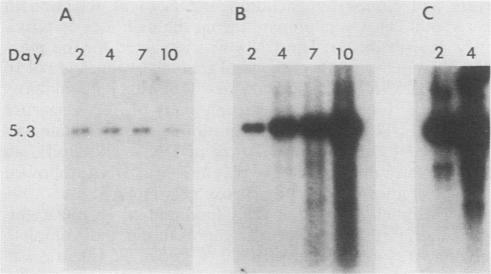
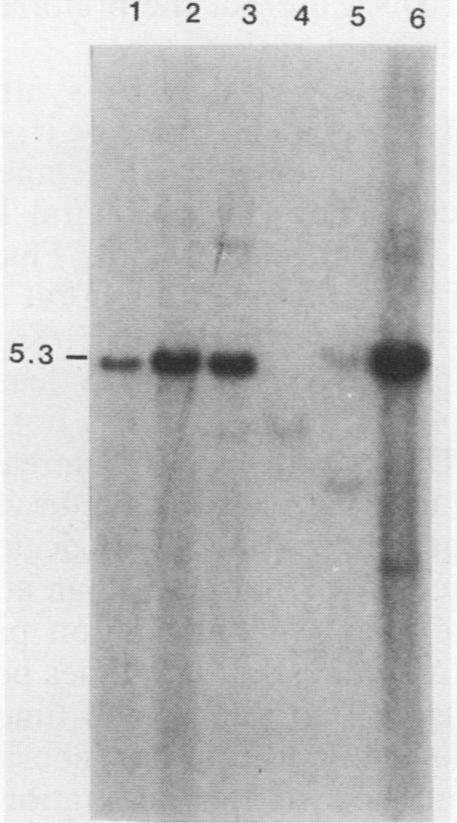
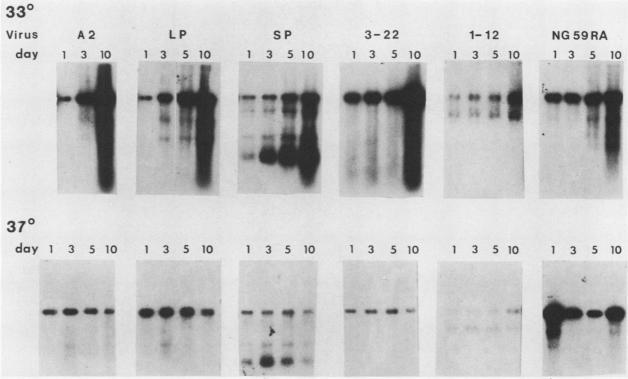
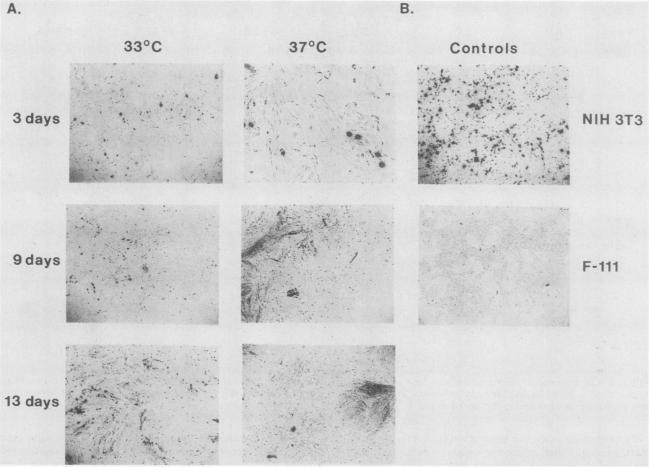
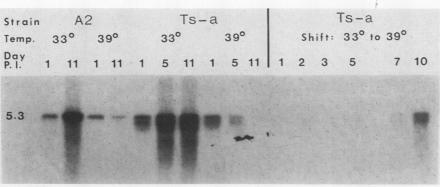
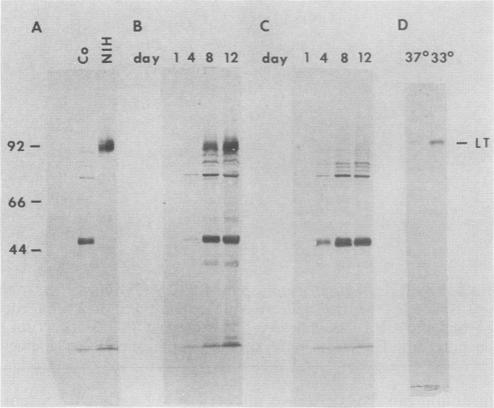
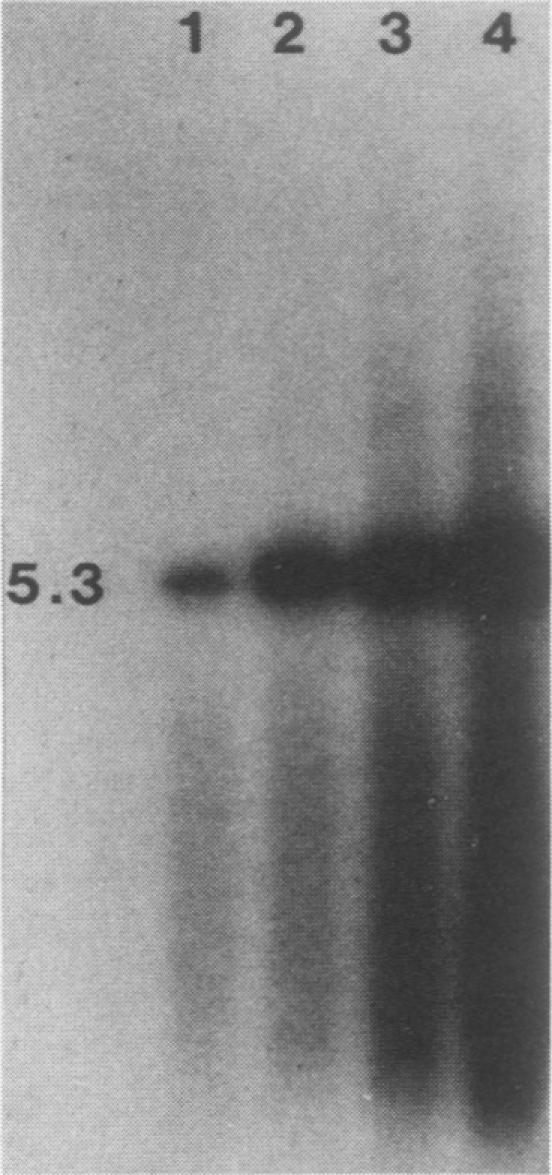
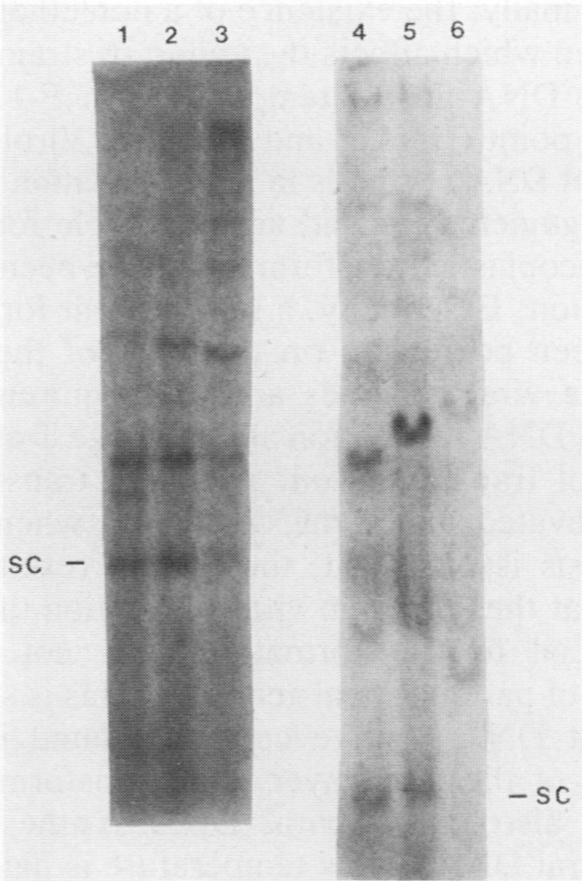
We have investigated the occurrence and role of polyomavirus DNA synthesis in neoplastic transformation by this virus. We show that after infection of Fischer rat F-111 cells at 37 degrees C, there is two- to threefold increase in the level of viral DNA as compared with the input signal, with a peak observed between 5 and 7 days postinfection. Viral DNA synthesis is about 10 times higher at 33 degrees C and increases up to 15 days postinfection. Most of the viral DNA produced is supercoiled (form I DNA). On the basis of in situ hybridization, it appears that viral replication is restricted to a small fraction of the population. At the lower temperature, more cells are permissive for viral DNA synthesis and the level of synthesis per permissive cell is higher. The DNA synthesis observed is large T-antigen dependent, and the increase in viral DNA synthesis at 33 degrees C is paralleled by an increase in the expression of this viral protein. When large T antigen is inactivated, the half-life of de novo-synthesized viral DNA is less than 12 h, suggesting that large T antigen may be responsible for the stability of the viral genomes as well as their synthesis. Surprisingly, at early times postinfection (0 to 48 h), when the essential function of large T antigen in transformation is expressed (as demonstrated in shift-up experiments with tsa mutants), the level of large T antigen is below the detection level and is at least 10-fold lower than the levels observed in permissive infections at the start of viral DNA synthesis. The difference in viral DNA at 37 and 33 degrees C allowed us to study its effect on transformation. Although an increase in transformation frequency is observed in wild-type A2 infections carried at 33 degrees C (frequencies two to three times higher than at 37 degrees C), this increase appears to be unrelated to the increase in viral DNA synthesis. Furthermore, the overall level of viral DNA and large T antigen in F-111 cells may not affect the integration of the viral genome, since the patterns of integration in cells transformed by wild-type A2 at 33 and 37 degrees C appear similar. The results are compatible with a role for large T antigen in integration-transformation which is not simply to amplify the viral genome to enhance the probability of its integration.
我们研究了多瘤病毒DNA合成在该病毒致瘤性转化中的发生情况及作用。我们发现,在37℃感染Fischer大鼠F-111细胞后,病毒DNA水平相较于输入信号增加了两到三倍,在感染后5至7天达到峰值。在33℃时,病毒DNA合成量约高10倍,且在感染后15天内持续增加。产生的大多数病毒DNA是超螺旋的(I型DNA)。基于原位杂交结果,似乎病毒复制仅限于一小部分细胞群体。在较低温度下,更多细胞允许病毒DNA合成,且每个允许合成的细胞的合成水平更高。观察到的DNA合成依赖于大T抗原,并且在33℃时病毒DNA合成的增加与该病毒蛋白表达的增加平行。当大T抗原失活时,新合成的病毒DNA的半衰期小于12小时,这表明大T抗原可能负责病毒基因组的稳定性及其合成。令人惊讶的是,在感染后的早期(0至48小时),当大T抗原在转化中的基本功能得以表达时(如在tsa突变体的温度上调实验中所示),大T抗原的水平低于检测水平,并且至少比病毒DNA合成开始时在允许感染中观察到的水平低10倍。37℃和33℃时病毒DNA的差异使我们能够研究其对转化的影响。尽管在33℃进行的野生型A2感染中观察到转化频率增加(频率比37℃时高两到三倍),但这种增加似乎与病毒DNA合成的增加无关。此外,F-111细胞中病毒DNA和大T抗原的总体水平可能不会影响病毒基因组的整合,因为在33℃和37℃由野生型A2转化的细胞中的整合模式看起来相似。这些结果与大T抗原在整合-转化中的作用相符,即其作用不仅仅是扩增病毒基因组以提高其整合的概率。