Ianni Geena R, Cardillo Eileen R, McQuire Marguerite, Chatterjee Anjan
Section on Neurocircuitry, Laboratory of Brain and Cognition, National Institute of Mental Health, National Institutes of Health Bethesda, MD, USA.
Department of Neurology, Center for Cognitive Neuroscience, University of Pennsylvania Philadelphia, PA, USA.
Front Hum Neurosci. 2014 Nov 3;8:871. doi: 10.3389/fnhum.2014.00871. eCollection 2014.
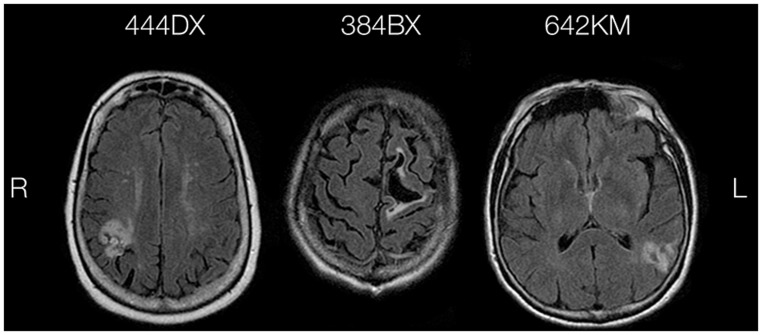
Despite the prevalent and natural use of metaphor in everyday language, the neural basis of this powerful communication device remains poorly understood. Early studies of brain-injured patients suggested the right hemisphere plays a critical role in metaphor comprehension, but more recent patient and neuroimaging studies do not consistently support this hypothesis. One explanation for this discrepancy is the challenge in designing optimal tasks for brain-injured populations. As traditional aphasia assessments do not assess figurative language comprehension, we designed a new metaphor comprehension task to consider whether impaired metaphor processing is missed by standard clinical assessments. Stimuli consisted of 60 pairs of moderately familiar metaphors and closely matched literal sentences. Sentences were presented visually in a randomized order, followed by four adjective-noun answer choices (target + three foil types). Participants were instructed to select the phrase that best matched the meaning of the sentence. We report the performance of three focal lesion patients and a group of 12 healthy, older controls. Controls performed near ceiling in both conditions, with slightly more accurate performance on literal than metaphoric sentences. While the Western Aphasia Battery (Kertesz, 1982) and the objects and actions naming battery (Druks and Masterson, 2000) indicated minimal to no language difficulty, our metaphor comprehension task indicated three different profiles of metaphor comprehension impairment in the patients' performance. Single case statistics revealed comparable impairment on metaphoric and literal sentences, disproportionately greater impairment on metaphors than literal sentences, and selective impairment on metaphors. We conclude our task reveals that patients can have selective metaphor comprehension deficits. These deficits are not captured by traditional neuropsychological language assessments, suggesting overlooked communication difficulties.
尽管隐喻在日常语言中普遍且自然地被使用,但这种强大的交流工具的神经基础仍未得到充分理解。对脑损伤患者的早期研究表明,右半球在隐喻理解中起关键作用,但最近的患者和神经影像学研究并不一致支持这一假设。这种差异的一种解释是为脑损伤人群设计最佳任务存在挑战。由于传统失语症评估不评估比喻性语言理解,我们设计了一项新的隐喻理解任务,以考虑标准临床评估是否遗漏了受损的隐喻处理。刺激材料由60对中等熟悉度的隐喻和紧密匹配的字面句子组成。句子以随机顺序视觉呈现,随后是四个形容词 - 名词答案选项(目标 + 三种干扰项类型)。参与者被指示选择最符合句子含义的短语。我们报告了三名局灶性病变患者和一组12名健康老年对照者的表现。对照者在两种情况下的表现都接近满分,在字面句子上的表现略比隐喻句子更准确。虽然西方失语症成套测验(Kertesz,1982)和物体与动作命名成套测验(Druks和Masterson,2000)表明语言困难极小或没有,但我们的隐喻理解任务在患者表现中显示出三种不同的隐喻理解损伤模式。单病例统计显示在隐喻句子和字面句子上有相当的损伤、在隐喻上的损伤比字面句子大得多以及对隐喻的选择性损伤。我们得出结论,我们的任务表明患者可能有选择性的隐喻理解缺陷。这些缺陷未被传统神经心理学语言评估所发现,表明存在被忽视的交流困难。