Chen Yong-Xi, Zhang Wen, Wang Wei-Ming, Yu Xia-Lian, Wang Yi-Mei, Zhang Min-Jun, Chen Nan
Department of nephrology, Ruijin Hospital, Shanghai Jiaotong University, school of medicine, Shanghai, PR China.
Animal Experiment and Research Center, Ruijin Hospital, Shanghai Jiaotong University, school of medicine, Shanghai, PR China.
PLoS One. 2014 Nov 18;9(11):e112936. doi: 10.1371/journal.pone.0112936. eCollection 2014.
Renal fibrosis is the final common pathway of chronic kidney disease (CKD). Moesin is a member of Ezrin/Radixin/Moesin (ERM) protein family but its role in renal fibrosis is not clear.
Human proximal tubular cells (HK-2) were stimulated with or without TGF-β1. Moesin and downstream target genes were examined by real-time PCR and western blot. Phosphorylation of moesin and related signaling pathway was investigated as well. Rat model of unilateral ureteral obstruction (UUO) was established and renal moesin was examined by immunohistochemistry. Moesin in HK-2 cells were knocked down by siRNA and change of downstream genes in transfected HK-2 cells was studied. All animal experiments were reviewed and approved by the Ethics Committee for animal care of Ruijin Hospital.
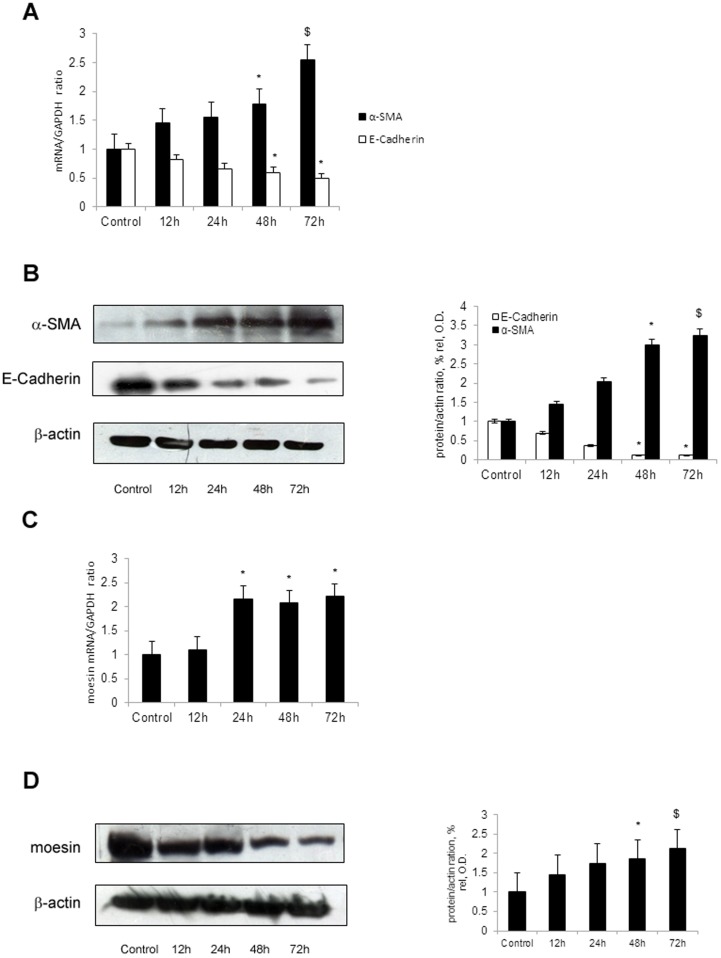
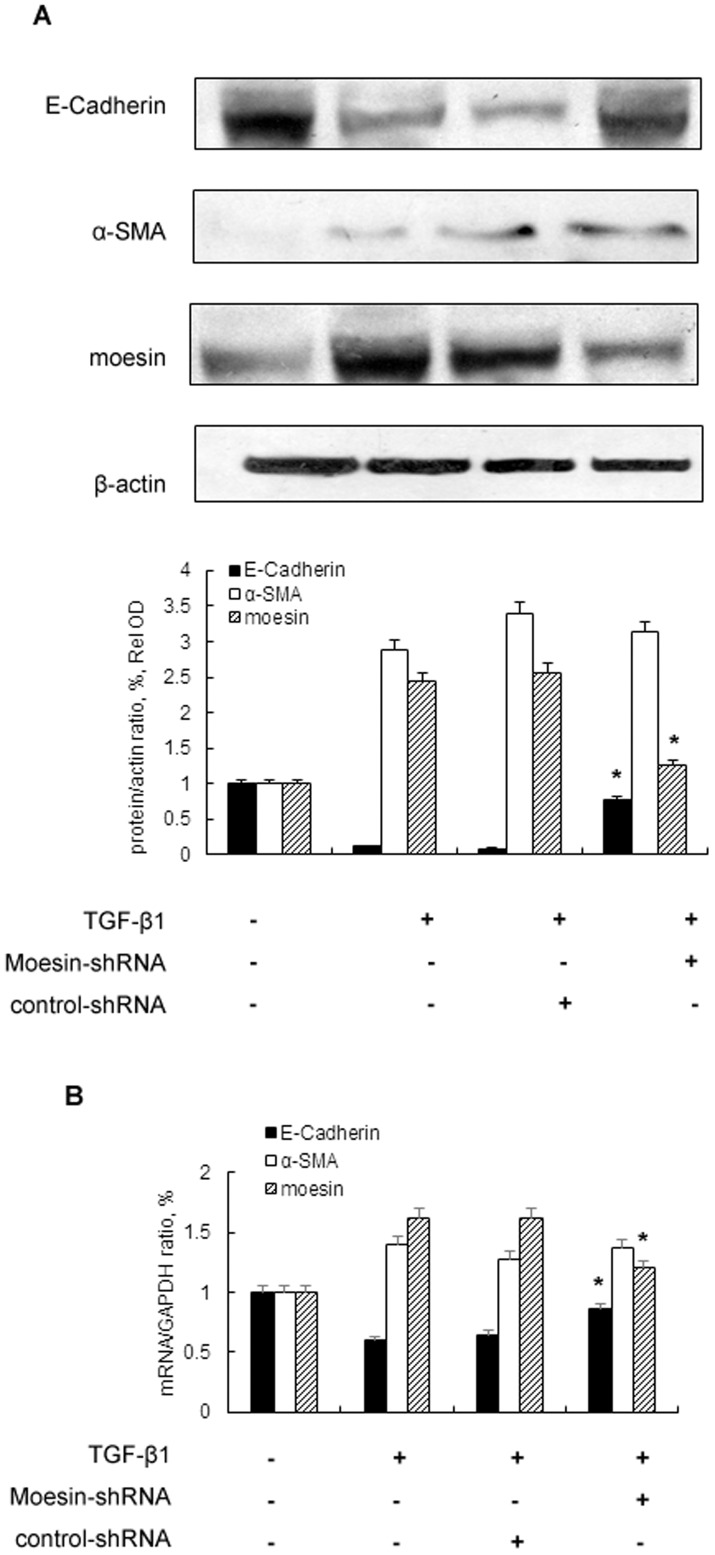
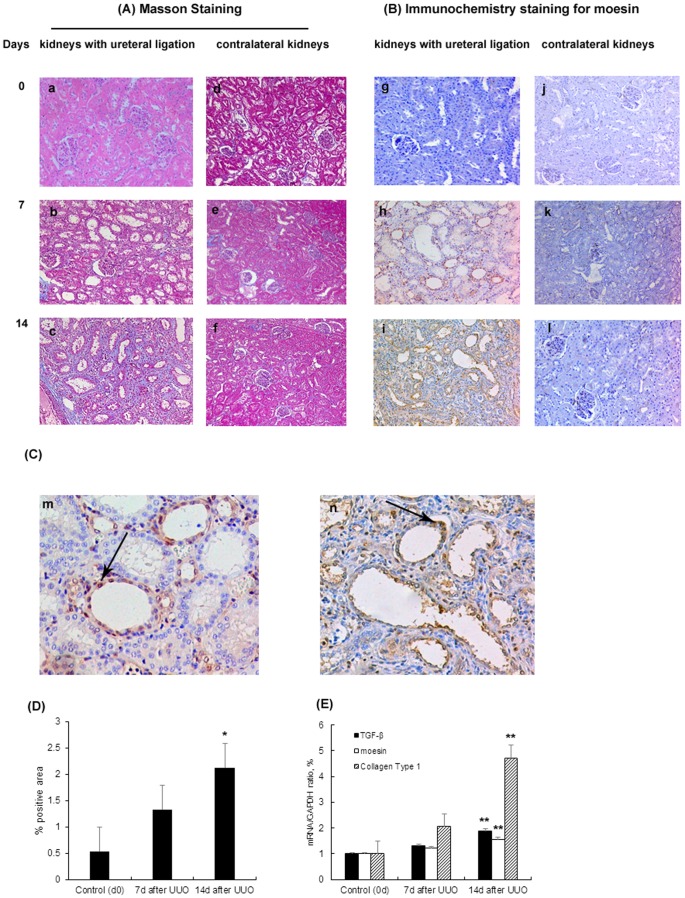
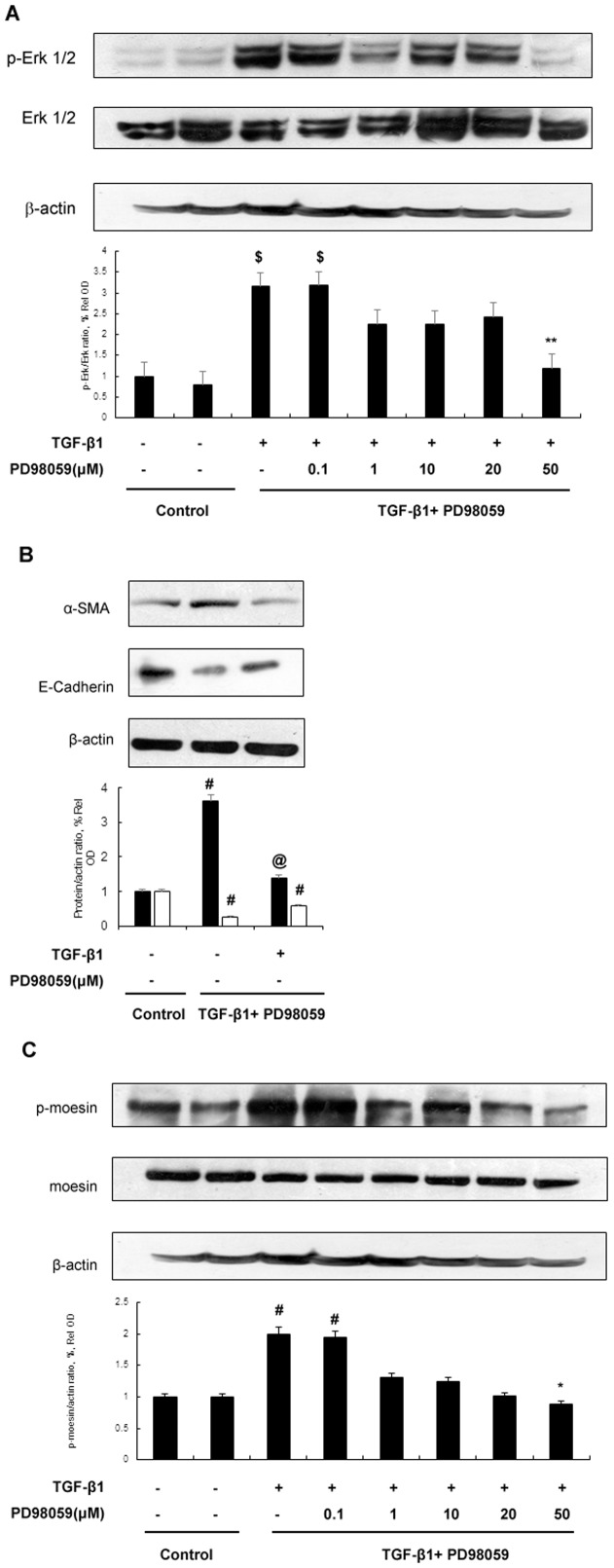
HK-2 cells stimulated with TGF-β1 showed up-regulated level of α-SMA and down-regulated level of E-Cadherin as well as elevated mRNA and protein level of moesin. In rat model of UUO, renal moesin expression increased in accordance with severity of tubulointerestital fibrosis in the kidneys with ureteral ligation while the contralateral kidneys were normal. Further study showed that TGF-β1 could induce phosphorylation of moesin which depended on Erk signaling pathway and Erk inhibitor PD98059 could block moesin phosphorylation. Effects of TGF-β1 on moesin phosphorylation was prior to its activation to total moesin. RNA silencing studies showed that knocking down of moesin could attenuate decrease of E-Cadherin induced by TGF-β1.
We find that moesin might be involved in renal fibrosis and its effects could be related to interacting with E-Cadherin.
肾纤维化是慢性肾脏病(CKD)的最终共同途径。埃兹蛋白(Moesin)是埃兹蛋白/根蛋白/埃兹蛋白(ERM)蛋白家族的成员,但其在肾纤维化中的作用尚不清楚。
用或不用转化生长因子-β1(TGF-β1)刺激人近端肾小管上皮细胞(HK-2)。通过实时聚合酶链反应(PCR)和蛋白质免疫印迹法检测埃兹蛋白及其下游靶基因。同时研究埃兹蛋白的磷酸化及相关信号通路。建立单侧输尿管梗阻(UUO)大鼠模型,通过免疫组织化学检测肾组织中的埃兹蛋白。用小干扰RNA(siRNA)敲低HK-2细胞中的埃兹蛋白,并研究转染后HK-2细胞下游基因的变化。所有动物实验均经瑞金医院动物护理伦理委员会审查和批准。
TGF-β1刺激的HK-2细胞中,α-平滑肌肌动蛋白(α-SMA)水平上调,E-钙黏蛋白水平下调,埃兹蛋白的信使核糖核酸(mRNA)和蛋白水平升高。在UUO大鼠模型中,输尿管结扎侧肾脏的肾组织埃兹蛋白表达随肾小管间质纤维化严重程度增加,而对侧肾脏正常。进一步研究表明,TGF-β1可诱导埃兹蛋白磷酸化,这依赖于细胞外信号调节激酶(Erk)信号通路,Erk抑制剂PD98059可阻断埃兹蛋白磷酸化。TGF-β1对埃兹蛋白磷酸化的影响先于其对总埃兹蛋白的激活。RNA干扰研究表明,敲低埃兹蛋白可减弱TGF-β1诱导的E-钙黏蛋白减少。
我们发现埃兹蛋白可能参与肾纤维化,其作用可能与和E-钙黏蛋白相互作用有关。