Shi Dongwei, Song Zhenju, Yin Jun, Xue Mingming, Yao Chenling, Sun Zhan, Shao Mian, Deng Zhi, Zhang Yaping, Tao Zhengang, Sun Si, Zhang Jin, Xing Lingyu, Dong Zhimin, Wang Yuxin, Tong Chaoyang
Department of Emergency Medicine, Zhongshan Hospital, Fudan University, 180 Fenglin Road, Shanghai, 200032, PR China.
Crit Care. 2014 Nov 17;18(6):631. doi: 10.1186/s13054-014-0631-9.
Activation of inflammation and coagulation was closely related and mutually interdependent in sepsis. Tissue factor (TF) and its endogenous inhibitor, tissue factor pathway inhibitor (TFPI) was the main regulators of the initiation of coagulation process. Altered plasma levels of TF and TFPI have been related to worse outcome in sepsis. The objective of this study was to investigate whether single nucleotide polymorphisms (SNPs) in the TF and TFPI genes were associated with risk and outcome for patients with severe sepsis.
Seventeen SNPs in TF and TFPI were genotyped in samples of sepsis (n =577) and severe sepsis patients (n =476), and tested for association in this case-control collection. We then investigated correlation between the associated SNPs and the mRNA expression, and protein level of the corresponding gene. The mRNA levels of TF were determined using real-time quantitative reverse transcription-polymerase chain reaction and the soluble plasma levels of TF were measured using enzyme linked immunosorbent assay (ELISA) method.
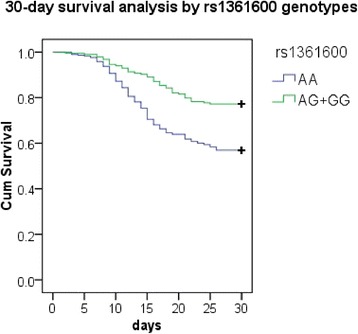
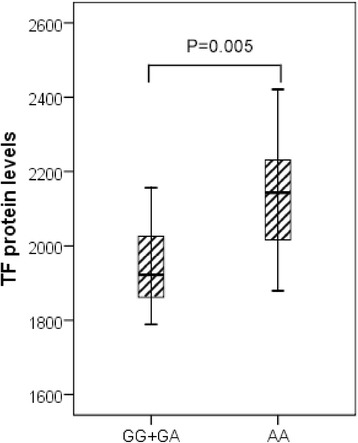
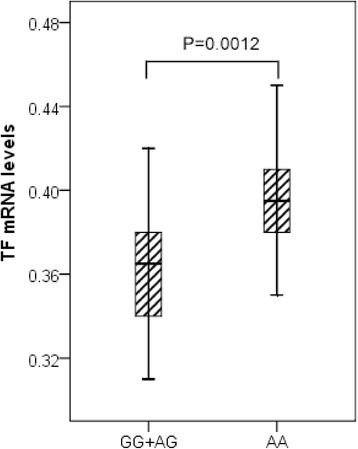
Association analysis revealed that three TF SNPs in perfect linkage disequilibrium, rs1361600, rs3917615 and rs958587, were significantly associated with outcome of severe sepsis. G allele frequency of rs1361600 in survivor patients was significantly higher than that in nonsurvivor severe sepsis patients (P =4.91 × 10(-5), odds ratio (OR) =0.48, 95% confidence interval (CI) 0.33 to 0.69). The association remained significant after adjustment for covariates in multiple logistic regression analysis and for multiple comparisons. Lipopolysaccharide-induced TF-mRNA expression levels in peripheral blood mononuclear cells from subjects carrying rs1361600 AG and GG genotypes, were significantly lower than those subjects carrying AA genotype (P =0.0012). Moreover, severe sepsis patients of GG and GA genotypes showed lower serum levels of TF than patients with AA genotype (P adj =0.02). The plasma levels of TF were also associated with outcome of severe sepsis patients (P adj =0.01). However, genotype and allele analyses did not show any significant difference between sepsis and severe sepsis patients.
Our findings indicate that common genetic variation in TF was significantly associated with outcome of severe sepsis in Chinese Han population.
炎症和凝血的激活在脓毒症中密切相关且相互依存。组织因子(TF)及其内源性抑制剂组织因子途径抑制剂(TFPI)是凝血过程起始的主要调节因子。TF和TFPI血浆水平的改变与脓毒症患者更差的预后相关。本研究的目的是调查TF和TFPI基因中的单核苷酸多态性(SNP)是否与严重脓毒症患者的风险和预后相关。
对脓毒症患者样本(n = 577)和严重脓毒症患者样本(n = 476)中的TF和TFPI的17个SNP进行基因分型,并在该病例对照队列中进行关联测试。然后,我们研究了相关SNP与相应基因的mRNA表达和蛋白质水平之间的相关性。使用实时定量逆转录 - 聚合酶链反应测定TF的mRNA水平,并使用酶联免疫吸附测定(ELISA)方法测量TF的可溶性血浆水平。
关联分析显示,处于完全连锁不平衡状态的三个TF SNP,rs1361600、rs3917615和rs958587,与严重脓毒症的预后显著相关。存活患者中rs1361600的G等位基因频率显著高于非存活严重脓毒症患者(P = 4.91×10⁻⁵,优势比(OR)= 0.48,95%置信区间(CI)0.33至0.69)。在多因素逻辑回归分析中对协变量进行调整以及进行多重比较后,该关联仍然显著。携带rs1361600 AG和GG基因型的受试者外周血单核细胞中脂多糖诱导的TF - mRNA表达水平显著低于携带AA基因型的受试者(P = 0.0012)。此外,GG和GA基因型的严重脓毒症患者的血清TF水平低于AA基因型患者(校正P = 0.02)。TF的血浆水平也与严重脓毒症患者的预后相关(校正P = 0.01)。然而,基因型和等位基因分析未显示脓毒症患者和严重脓毒症患者之间存在任何显著差异。
我们的研究结果表明,TF中的常见基因变异与中国汉族人群严重脓毒症的预后显著相关。