Shapiro Adam B, Gao Ning, O'Connell Nichole, Hu Jun, Thresher Jason, Gu Rong-Fang, Overman Ross, Hardern Ian M, Sproat Graham G
Biology Department, Infection Innovative Medicines Unit, AstraZeneca R&D Boston, Waltham, MA, USA.
Virol J. 2014 Nov 19;11:191. doi: 10.1186/s12985-014-0191-2.
There are no approved small molecule drug therapies for human respiratory syncytial virus (hRSV), a cause of morbidity and mortality in at-risk newborns, the immunocompromised, and the elderly. We have investigated as a potential novel hRSV drug target the protein-protein interaction between the C-terminus of the viral phosphoprotein (P) and the viral nucleocapsid protein (N), components of the ribonucleoprotein complex that contains, replicates, and transcribes the viral RNA genome. Earlier work by others established that the 9 C-terminal residues of P are necessary and sufficient for binding to N.
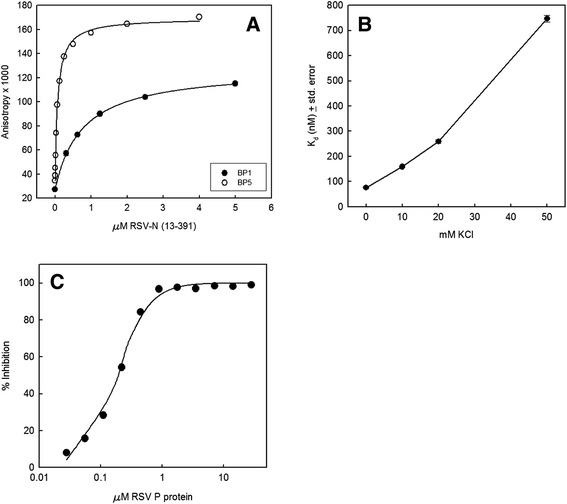
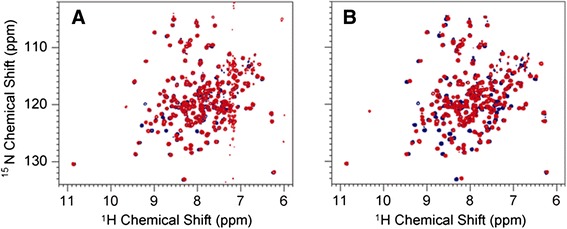
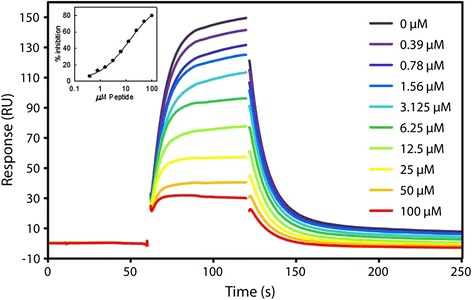
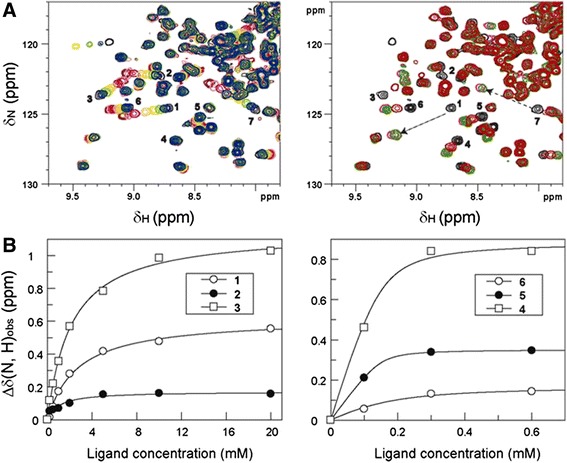
We used a fluorescence anisotropy assay, surface plasmon resonance and 2-D NMR to quantify the affinities of peptides based on the C terminus of P for RNA-free, monomeric N-terminal-truncated N(13-391). We calculated the contributions to the free energies of binding of P to N(13-391) attributable to the C-terminal 11 residues, phosphorylation of the C-terminal 2 serine residues, the C-terminal Asp-Phe, and the phenyl ring of the C-terminal Phe.
Binding studies confirmed the crucial role of the phosphorylated C-terminal peptide D(pS)DNDL(pS)LEDF for binding of P to RNA-free, monomeric N(13-391), contributing over 90% of the binding free energy at low ionic strength. The phenyl ring of the C-terminal Phe residue contributed an estimated -2.7 kcal/mole of the free energy of binding, the C-terminal Asp-Phe residues contributed -3.8 kcal/mole, the sequence DSDNDLSLE contributed -3.1 kcal/mole, and phosphorylation of the 2 Ser residues contributed -1.8 kcal/mole. Due to the high negative charge of the C-terminal peptide, the affinity of the P C-terminus for N(13-391) decreased as the ionic strength increased.
The results support the idea that the interaction of the C-terminal residues of P with N constitutes a protein-protein interaction hotspot that may be a suitable target for small-molecule drugs that inhibit viral genome replication and transcription.
对于人类呼吸道合胞病毒(hRSV),目前尚无获批的小分子药物疗法。hRSV是导致高危新生儿、免疫功能低下者及老年人发病和死亡的病因。我们研究了病毒磷蛋白(P)的C末端与病毒核衣壳蛋白(N)之间的蛋白质-蛋白质相互作用,将其作为一种潜在的新型hRSV药物靶点。病毒核糖核蛋白复合体包含、复制并转录病毒RNA基因组,P和N是该复合体的组成成分。其他人早期的研究表明,P的9个C末端残基对于与N的结合是必要且充分的。
我们使用荧光各向异性测定法、表面等离子体共振和二维核磁共振来量化基于P的C末端的肽与无RNA的单体N末端截短型N(13 - 391)的亲和力。我们计算了P与N(13 - 391)结合自由能中可归因于C末端11个残基、C末端2个丝氨酸残基的磷酸化、C末端的天冬氨酸-苯丙氨酸以及C末端苯丙氨酸苯环的贡献。
结合研究证实了磷酸化的C末端肽D(pS)DNDL(pS)LEDF对于P与无RNA的单体N(13 - 391)结合的关键作用,在低离子强度下,其对结合自由能的贡献超过90%。C末端苯丙氨酸残基的苯环对结合自由能的贡献估计为-2.7千卡/摩尔,C末端的天冬氨酸-苯丙氨酸残基贡献-3.8千卡/摩尔,序列DSDNDLSLE贡献-3.1千卡/摩尔,2个丝氨酸残基的磷酸化贡献-1.8千卡/摩尔。由于C末端肽的高负电荷,随着离子强度增加,P的C末端与N(13 - 391)的亲和力降低。
结果支持这样一种观点,即P的C末端残基与N的相互作用构成了一个蛋白质-蛋白质相互作用热点,可能是抑制病毒基因组复制和转录的小分子药物的合适靶点。