McCaskey Michael A, Schuster-Amft Corina, Wirth Brigitte, Suica Zorica, de Bruin Eling D
Research Department, Reha Rheinfelden, Salinenstrasse 98, 4310 Rheinfelden, Switzerland.
BMC Musculoskelet Disord. 2014 Nov 19;15:382. doi: 10.1186/1471-2474-15-382.
Proprioceptive training (PrT) is popularly applied as preventive or rehabilitative exercise method in various sports and rehabilitation settings. Its effect on pain and function is only poorly evaluated. The aim of this systematic review was to summarise and analyse the existing data on the effects of PrT on pain alleviation and functional restoration in patients with chronic (≥ 3 months) neck- or back pain.
Relevant electronic databases were searched from their respective inception to February 2014. Randomised controlled trials comparing PrT with conventional therapies or inactive controls in patients with neck- or low back pain were included. Two review authors independently screened articles and assessed risk of bias (RoB). Data extraction was performed by the first author and crosschecked by a second author. Quality of findings was assessed and rated according to GRADE guidelines. Pain and functional status outcomes were extracted and synthesised qualitatively and quantitatively.
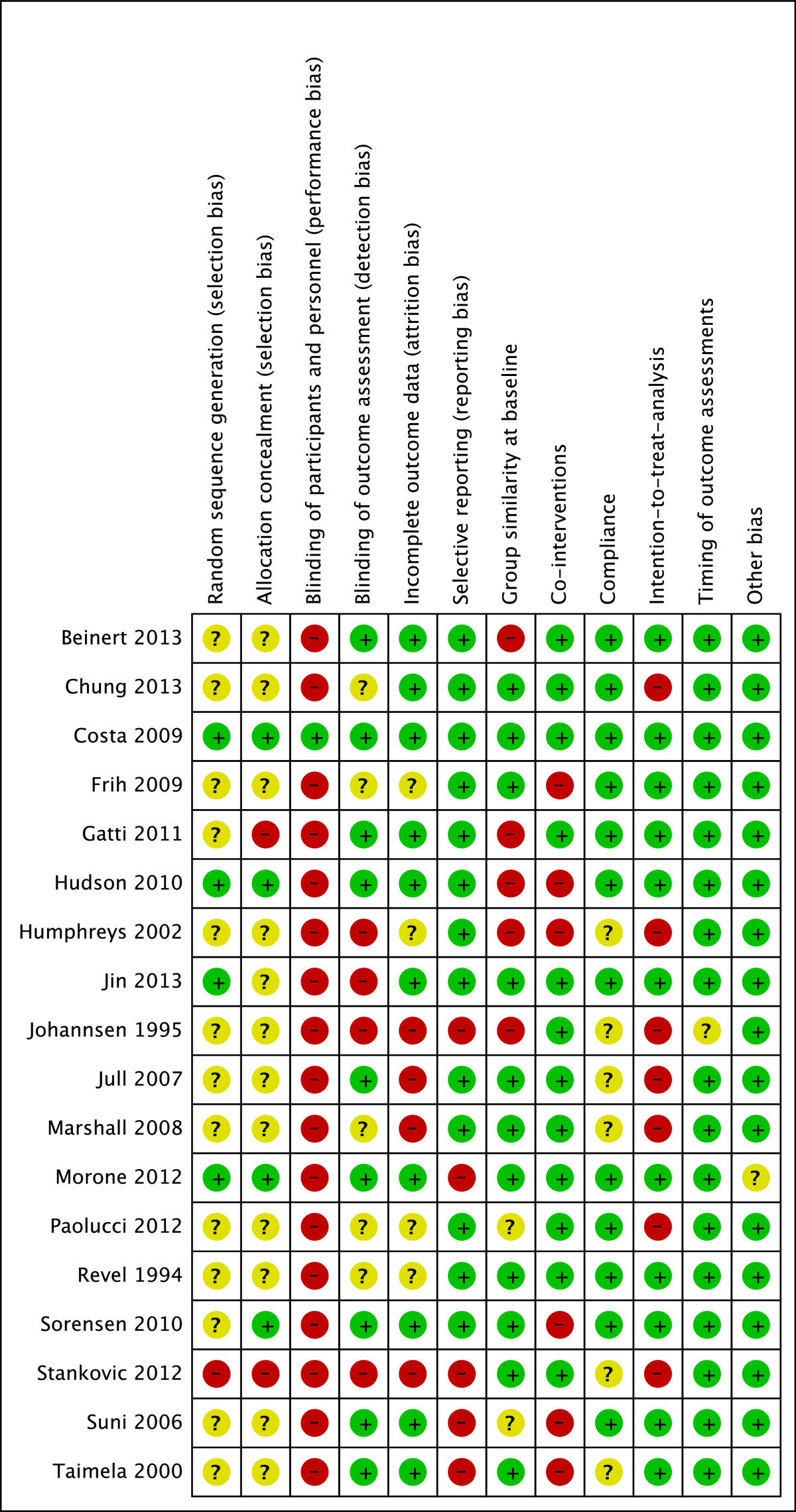
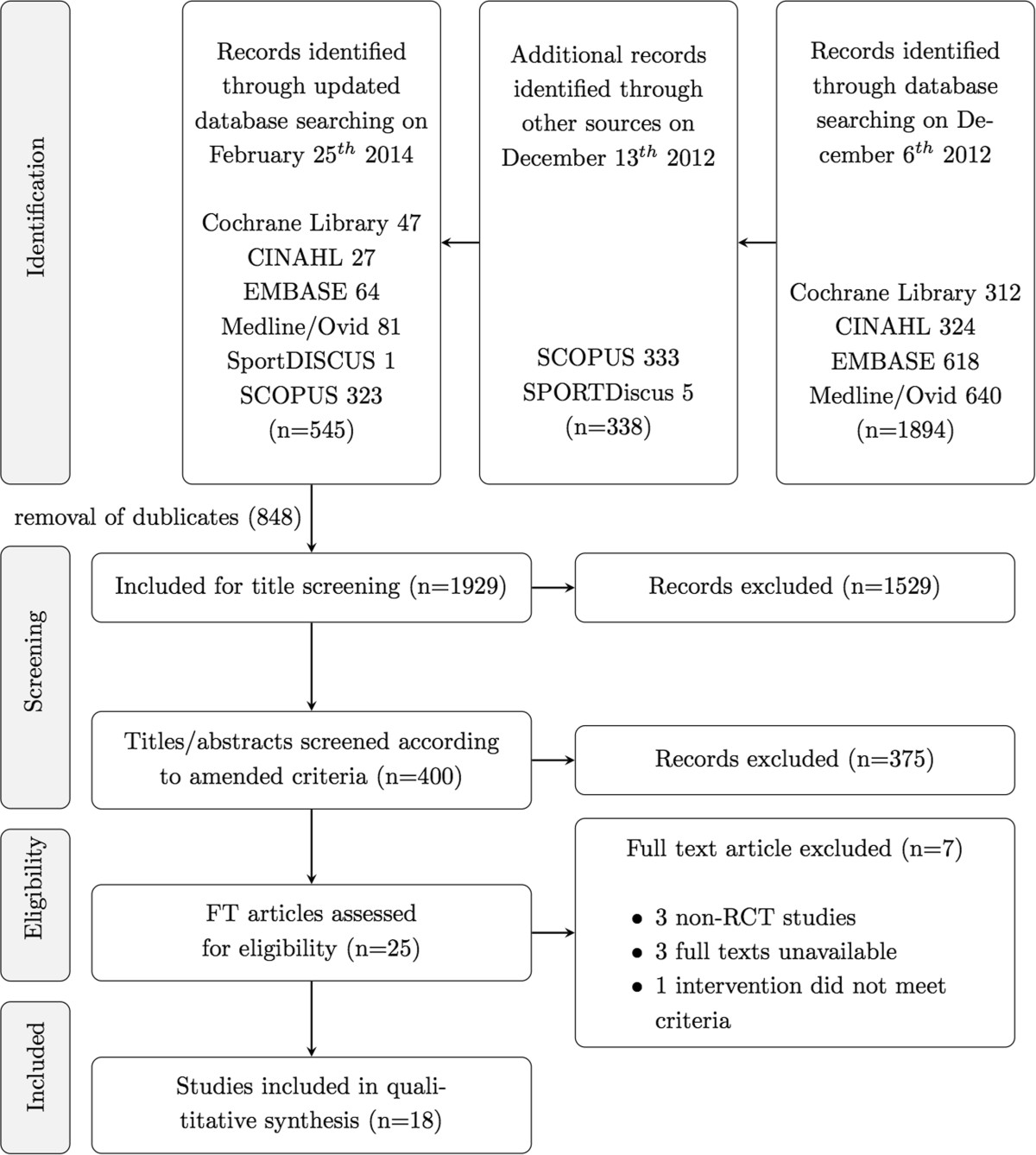
In total, 18 studies involving 1380 subjects described interventions related to PrT (years 1994-2013). 6 studies focussed on neck-, 12 on low back pain. Three main directions of PrT were identified: Discriminatory perceptive exercises with somatosensory stimuli to the back (pPrT, n=2), multimodal exercises on labile surfaces (mPrT, n=13), or joint repositioning exercise with head-eye coordination (rPrT, n=3). Comparators entailed usual care, home based training, educational therapy, strengthening, stretching and endurance training, or inactive controls. Quality of studies was low and RoB was deemed moderate to high with a high prevalence of unclear sequence generation and group allocation (>60%). Low quality evidence suggests PrT may be more effective than not intervening at all. Low quality evidence suggests that PrT is no more effective than conventional physiotherapy. Low quality evidence suggests PrT is inferior to educational and behavioural approaches.
There are few relevant good quality studies on proprioceptive exercises. A descriptive summary of the evidence suggests that there is no consistent benefit in adding PrT to neck- and low back pain rehabilitation and functional restoration.
本体感觉训练(PrT)作为一种预防或康复锻炼方法,在各种体育和康复环境中广泛应用。但其对疼痛和功能的影响评估不足。本系统评价的目的是总结和分析现有数据,以探讨PrT对慢性(≥3个月)颈痛或背痛患者疼痛缓解和功能恢复的影响。
检索相关电子数据库自建库至2014年2月的数据。纳入比较PrT与传统疗法或非活性对照治疗颈痛或下腰痛患者的随机对照试验。两名综述作者独立筛选文章并评估偏倚风险(RoB)。数据提取由第一作者完成,第二作者进行交叉核对。根据GRADE指南评估并分级研究结果的质量。提取疼痛和功能状态结局并进行定性和定量综合分析。
共有18项研究(1994 - 2013年)涉及1380名受试者,描述了与PrT相关的干预措施。6项研究聚焦于颈部疼痛,12项研究聚焦于下腰痛。确定了PrT的三个主要方向:对背部进行体感刺激的辨别性感知练习(pPrT,n = 2)、在不稳定表面上进行的多模式练习(mPrT,n = 13)或伴有头眼协调的关节重新定位练习(rPrT,n = 3)。对照措施包括常规护理、家庭训练、教育疗法、强化训练、伸展和耐力训练或非活性对照。研究质量较低,RoB被认为为中度至高度,序列产生和分组分配不明确的比例较高(>60%)。低质量证据表明PrT可能比不干预更有效。低质量证据表明PrT并不比传统物理治疗更有效。低质量证据表明PrT不如教育和行为方法。
关于本体感觉练习的高质量相关研究较少。证据的描述性总结表明,在颈痛和下腰痛的康复及功能恢复中添加PrT并没有一致的益处。