Zimmermann Barbara, Nelson Lindsey, Wabakken Petter, Sand Håkan, Liberg Olof
Faculty of Applied Ecology and Agricultural Sciences, Hedmark University College, Evenstad , N-2480 Koppang , Norway and.
Department of Ecology, Grimsö Wildlife Research Station, Swedish University of Agricultural Science , SE-73091 Riddarhyttan , Sweden.
Behav Ecol. 2014 Nov;25(6):1353-1364. doi: 10.1093/beheco/aru134. Epub 2014 Aug 20.
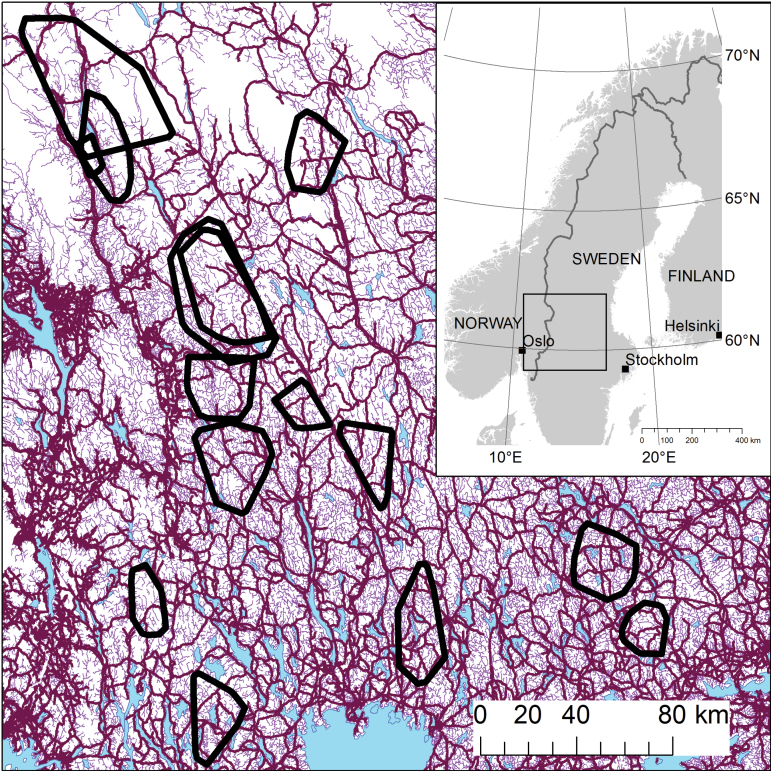
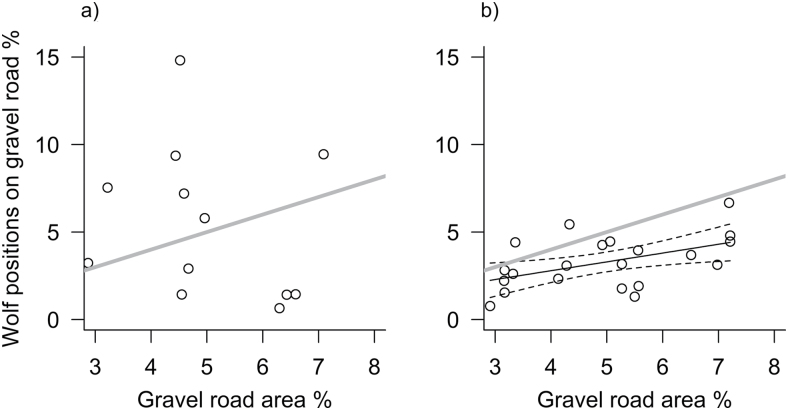
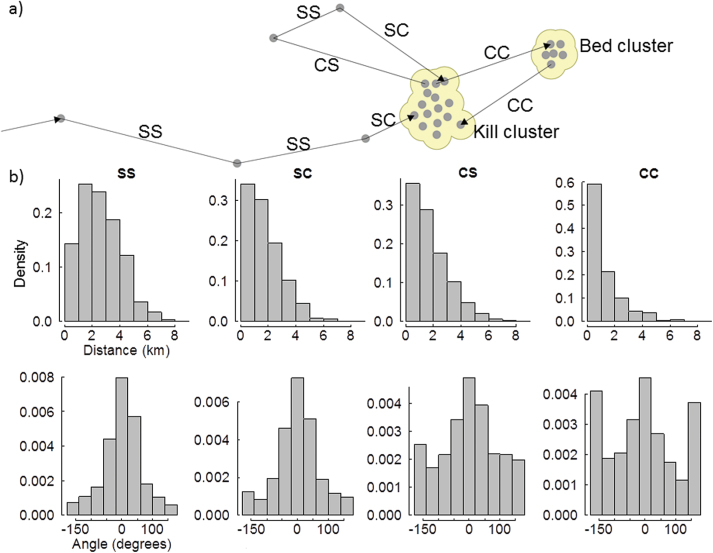
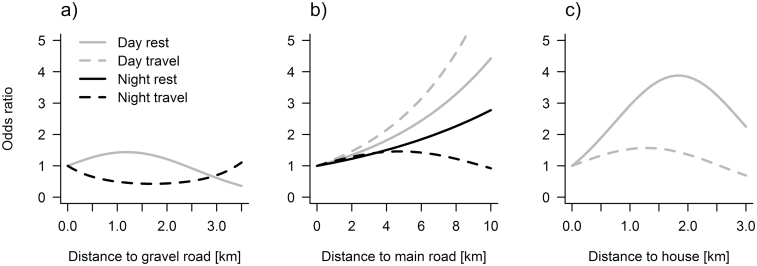
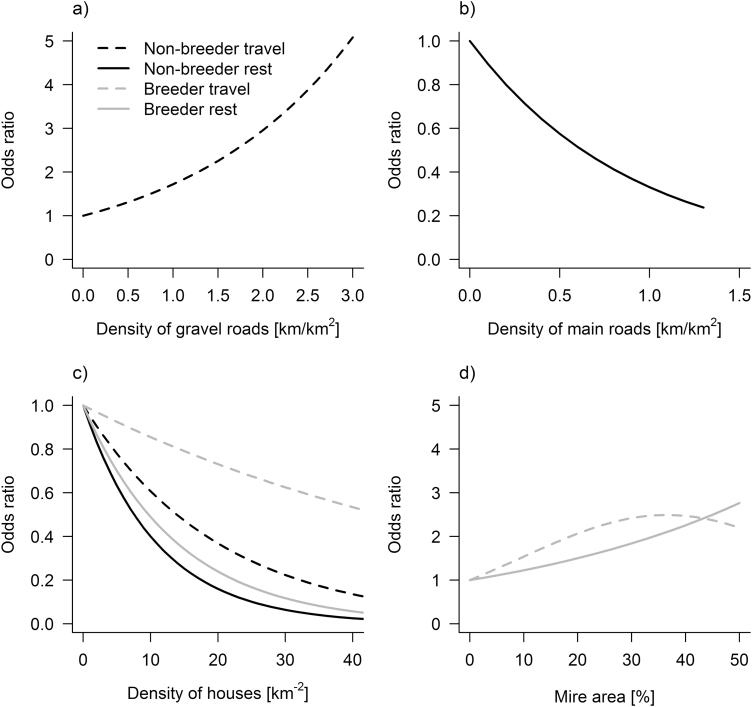
Throughout their recent recovery in several industrialized countries, large carnivores have had to cope with a changed landscape dominated by human infrastructure. Population growth depends on the ability of individuals to adapt to these changes by making use of new habitat features and at the same time to avoid increased risks of mortality associated with human infrastructure. We analyzed the summer movements of 19 GPS-collared resident wolves ( L.) from 14 territories in Scandinavia in relation to roads. We used resource and step selection functions, including >12000 field-checked GPS-positions and 315 kill sites. Wolves displayed ambivalent responses to roads depending on the spatial scale, road type, time of day, behavioral state, and reproductive status. At the site scale (approximately 0.1 km), they selected for roads when traveling, nearly doubling their travel speed. Breeding wolves moved the fastest. At the patch scale (10 km), house density rather than road density was a significant negative predictor of wolf patch selection. At the home range scale (approximately 1000 km), breeding wolves increased gravel road use with increasing road availability, although at a lower rate than expected. Wolves have adapted to use roads for ease of travel, but at the same time developed a cryptic behavior to avoid human encounters. This behavioral plasticity may have been important in allowing the successful recovery of wolf populations in industrialized countries. However, we emphasize the role of roads as a potential cause of increased human-caused mortality.
在几个工业化国家近期的恢复过程中,大型食肉动物不得不应对由人类基础设施主导的变化了的景观。种群增长取决于个体通过利用新的栖息地特征来适应这些变化的能力,同时还要避免与人类基础设施相关的死亡风险增加。我们分析了来自斯堪的纳维亚14个领地的19只佩戴GPS项圈的常住狼(L.)的夏季活动与道路的关系。我们使用了资源和步长选择函数,包括超过12000个经过实地核查的GPS位置和315个捕杀地点。狼对道路的反应因空间尺度、道路类型、一天中的时间、行为状态和繁殖状态而异。在地点尺度(约0.1公里),它们在行进时选择道路,行进速度几乎翻倍。繁殖期的狼移动速度最快。在斑块尺度(10公里),房屋密度而非道路密度是狼选择斑块的显著负预测因子。在家域尺度(约1000公里),繁殖期的狼随着道路可用性的增加而增加对砾石路的使用,尽管增加速率低于预期。狼已经适应利用道路以便于出行,但同时也发展出一种隐秘行为以避免与人类相遇。这种行为可塑性在工业化国家狼种群的成功恢复中可能起到了重要作用。然而,我们强调道路作为人为死亡率增加的一个潜在原因的作用。