Guyenet Patrice G
Department of Pharmacology, University of Virginia, Charlottesville, Virginia.
Compr Physiol. 2014 Oct;4(4):1511-62. doi: 10.1002/cphy.c140004.
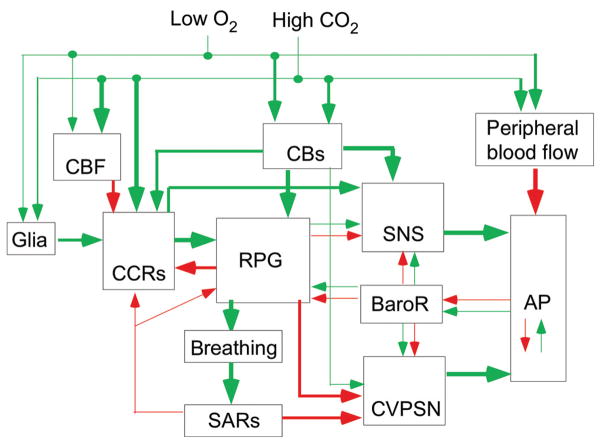
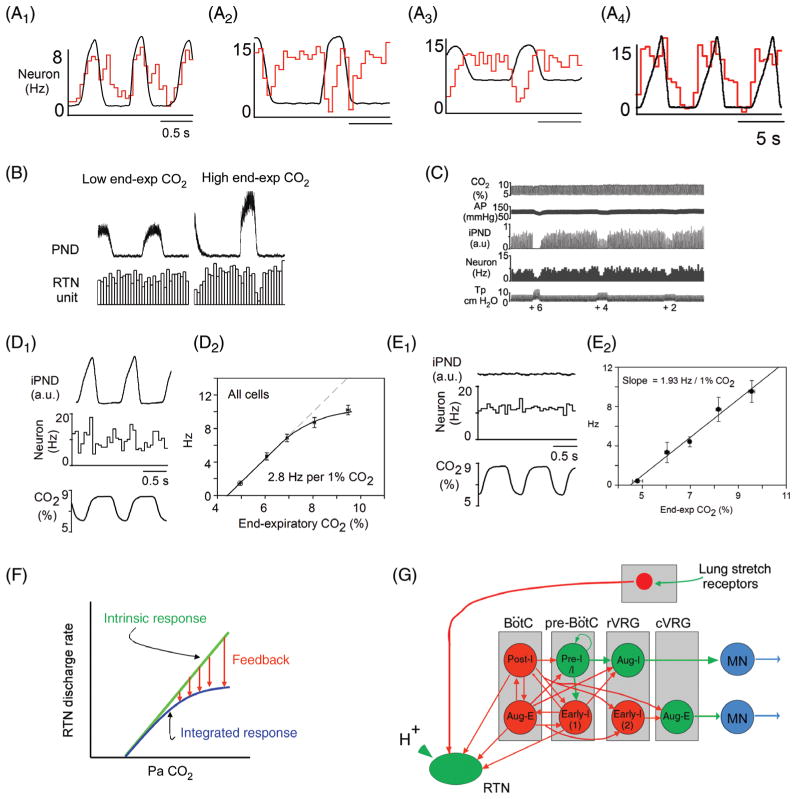
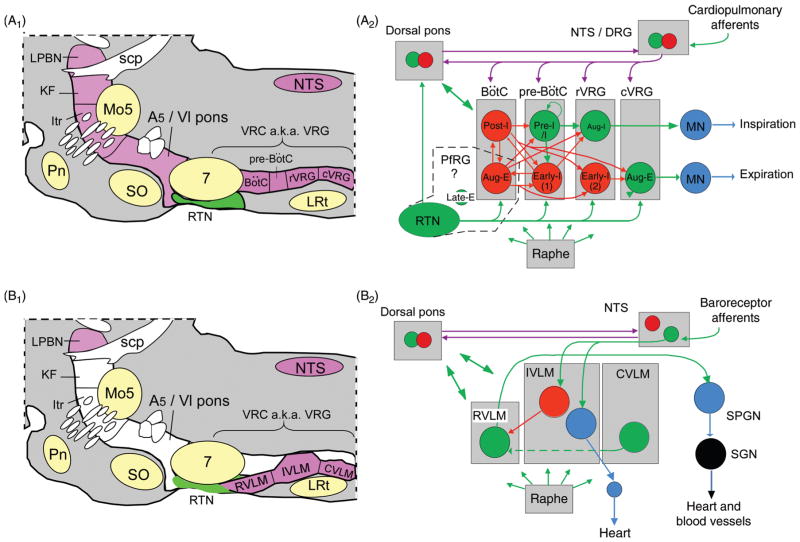
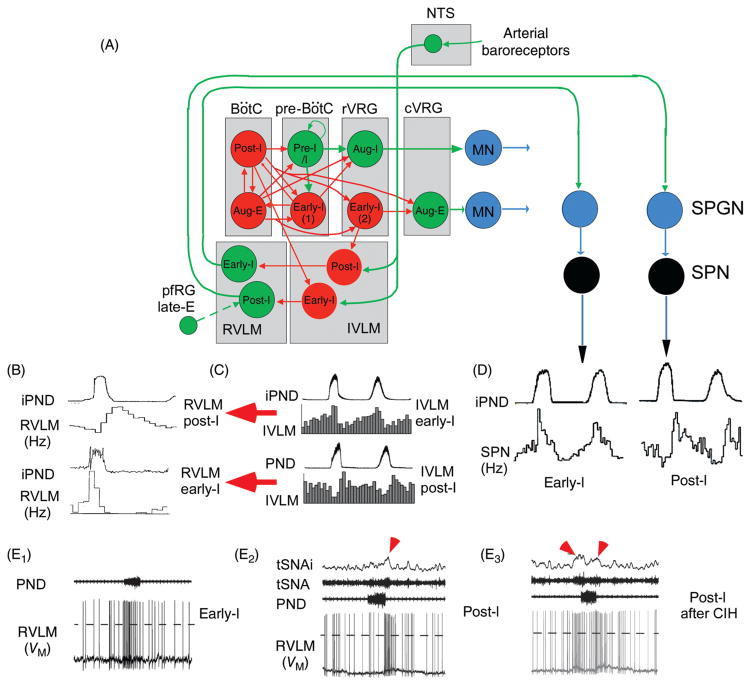
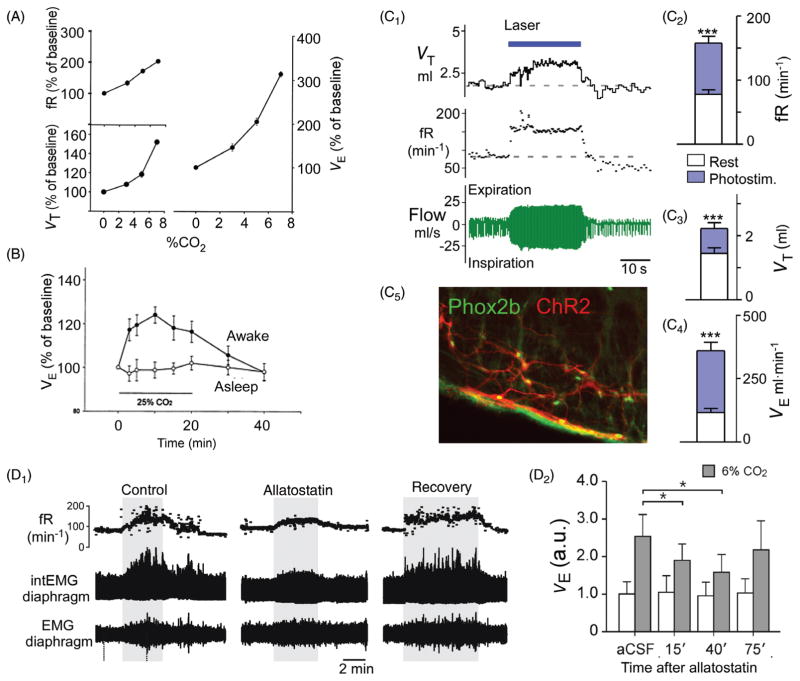
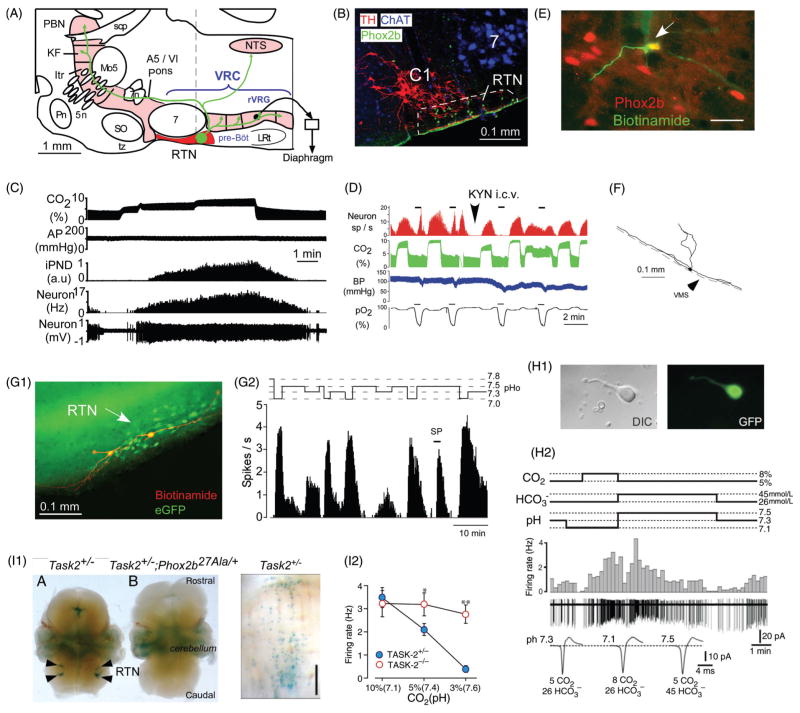
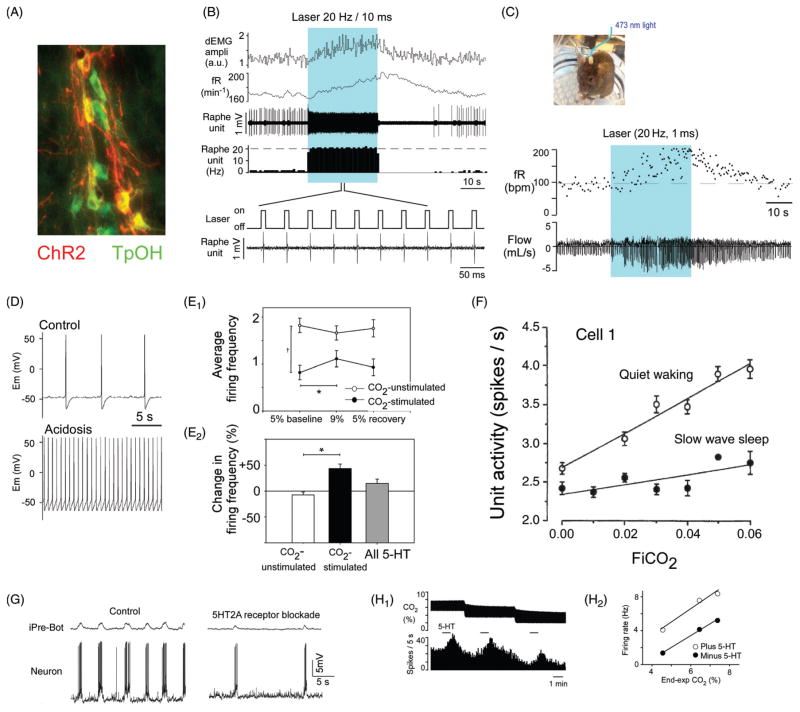
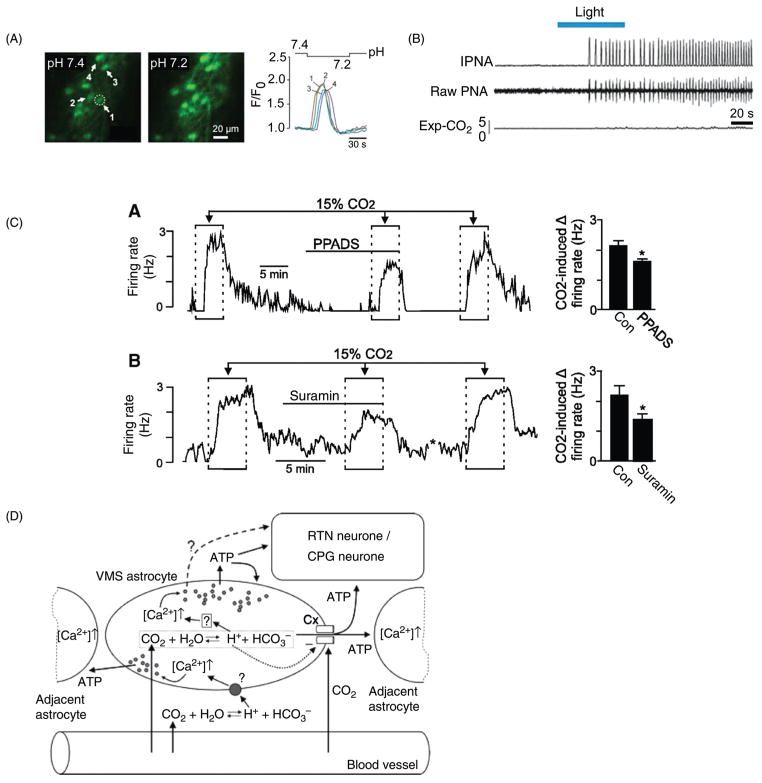
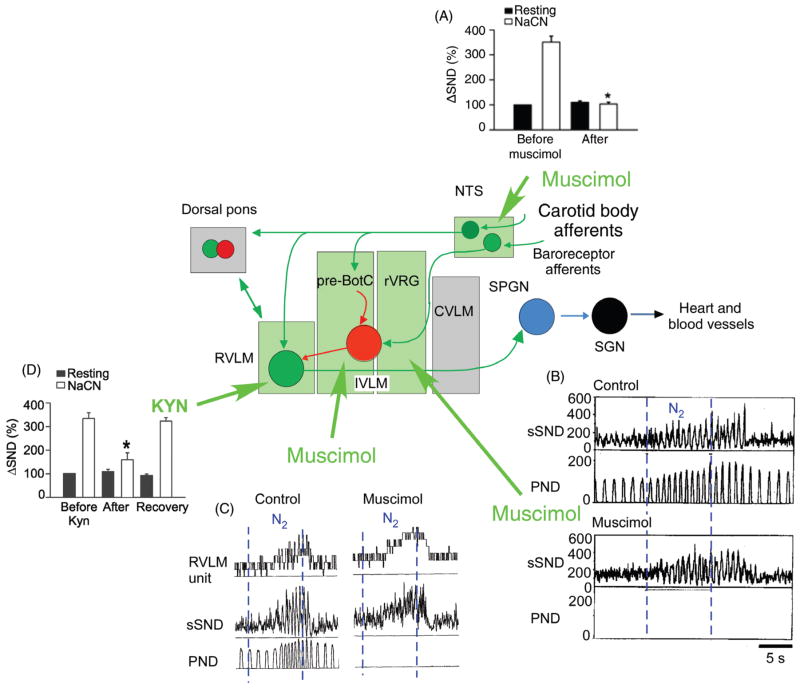
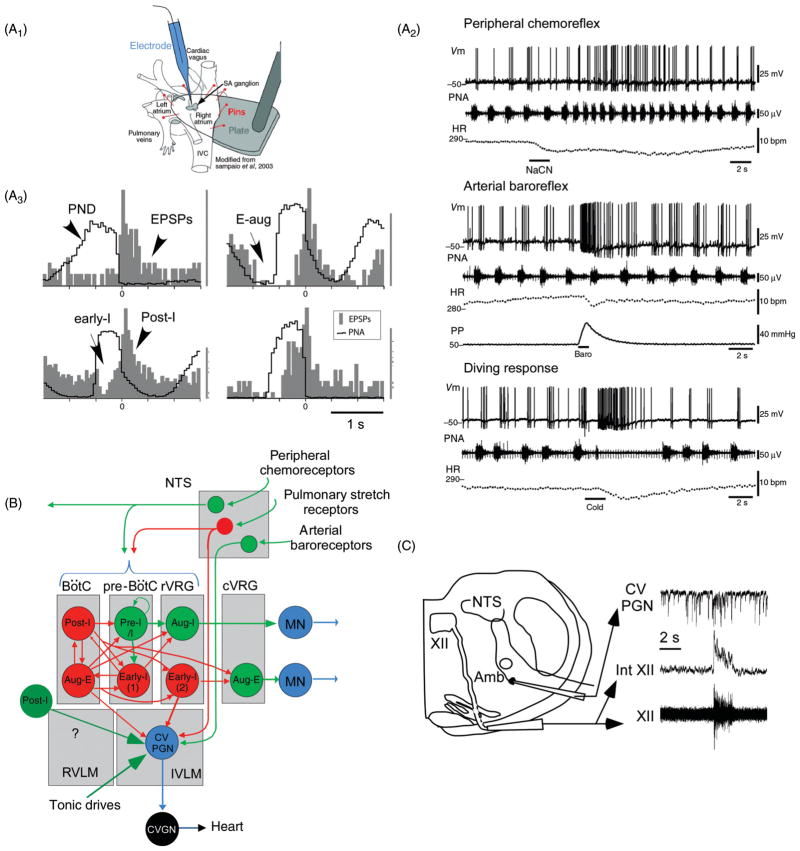
Lung ventilation fluctuates widely with behavior but arterial PCO2 remains stable. Under normal conditions, the chemoreflexes contribute to PaCO2 stability by producing small corrective cardiorespiratory adjustments mediated by lower brainstem circuits. Carotid body (CB) information reaches the respiratory pattern generator (RPG) via nucleus solitarius (NTS) glutamatergic neurons which also target rostral ventrolateral medulla (RVLM) presympathetic neurons thereby raising sympathetic nerve activity (SNA). Chemoreceptors also regulate presympathetic neurons and cardiovagal preganglionic neurons indirectly via inputs from the RPG. Secondary effects of chemoreceptors on the autonomic outflows result from changes in lung stretch afferent and baroreceptor activity. Central respiratory chemosensitivity is caused by direct effects of acid on neurons and indirect effects of CO2 via astrocytes. Central respiratory chemoreceptors are not definitively identified but the retrotrapezoid nucleus (RTN) is a particularly strong candidate. The absence of RTN likely causes severe central apneas in congenital central hypoventilation syndrome. Like other stressors, intense chemosensory stimuli produce arousal and activate circuits that are wake- or attention-promoting. Such pathways (e.g., locus coeruleus, raphe, and orexin system) modulate the chemoreflexes in a state-dependent manner and their activation by strong chemosensory stimuli intensifies these reflexes. In essential hypertension, obstructive sleep apnea and congestive heart failure, chronically elevated CB afferent activity contributes to raising SNA but breathing is unchanged or becomes periodic (severe CHF). Extreme CNS hypoxia produces a stereotyped cardiorespiratory response (gasping, increased SNA). The effects of these various pathologies on brainstem cardiorespiratory networks are discussed, special consideration being given to the interactions between central and peripheral chemoreflexes.
肺通气随行为变化波动很大,但动脉血二氧化碳分压保持稳定。在正常情况下,化学反射通过由低位脑干回路介导的微小纠正性心肺调整,有助于动脉血二氧化碳分压的稳定。颈动脉体(CB)的信息通过孤束核(NTS)谷氨酸能神经元到达呼吸模式发生器(RPG),这些神经元也靶向延髓头端腹外侧区(RVLM)的交感神经节前神经元,从而提高交感神经活动(SNA)。化学感受器还通过RPG的输入间接调节交感神经节前神经元和心迷走神经节前神经元。化学感受器对自主神经输出的继发效应源于肺牵张传入和压力感受器活动的变化而产生。中枢呼吸化学敏感性是由酸对神经元的直接作用以及二氧化碳通过星形胶质细胞的间接作用引起的。中枢呼吸化学感受器尚未明确确定,但后包钦格复合体(RTN)是一个特别有力的候选者。RTN缺失可能导致先天性中枢性低通气综合征出现严重的中枢性呼吸暂停。与其他应激源一样,强烈的化学感觉刺激会引起觉醒并激活促进觉醒或注意力的回路。这些通路(如蓝斑、中缝核和食欲素系统)以状态依赖的方式调节化学反射,强烈的化学感觉刺激对它们的激活会增强这些反射。在原发性高血压、阻塞性睡眠呼吸暂停和充血性心力衰竭中,慢性升高的CB传入活动有助于提高SNA,但呼吸不变或变得周期性(严重心力衰竭)。极端的中枢神经系统缺氧会产生一种刻板的心肺反应(喘息、SNA增加)。讨论了这些各种病理情况对脑干心肺网络的影响,并特别考虑了中枢和外周化学反射之间的相互作用。