
创伤与免疫的交叉:出血后的免疫功能障碍
The Intersection of Trauma and Immunity: Immune Dysfunction Following Hemorrhage.
作者信息
Salvo Nicholas, Charles Angel M, Mohr Alicia M
机构信息
Department of Surgery, Sepsis and Critical Illness Research Center, College of Medicine, University of Florida, 1600 SW Archer Road Box 100108, Gainesville, FL 32610, USA.
出版信息
Biomedicines. 2024 Dec 19;12(12):2889. doi: 10.3390/biomedicines12122889.
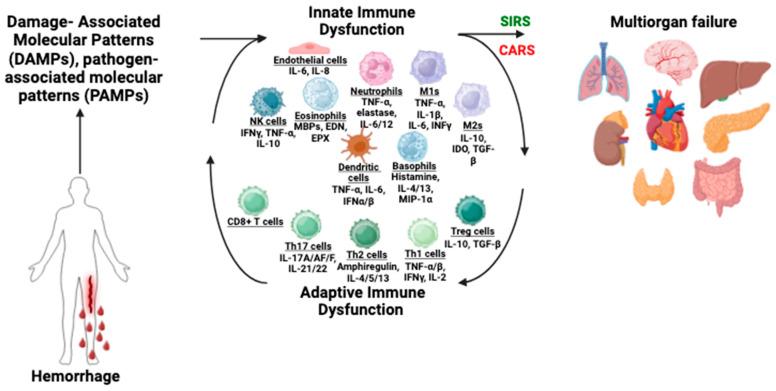
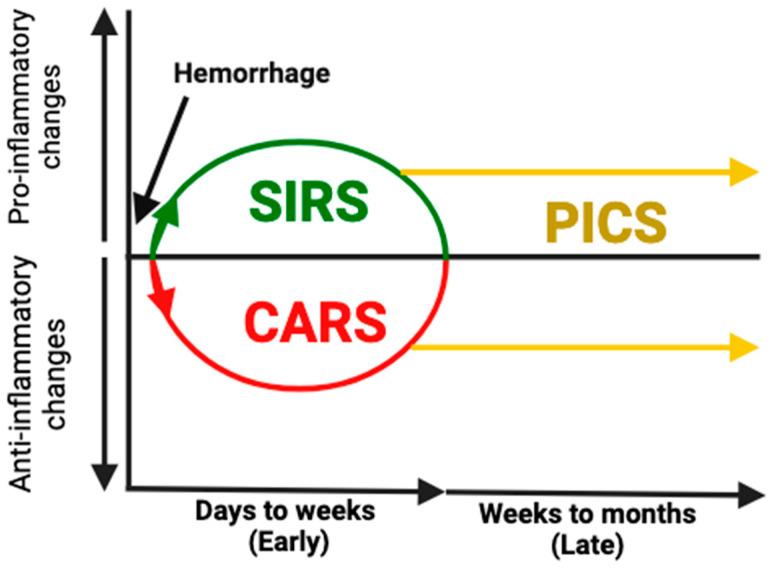
Hemorrhagic shock is caused by rapid loss of a significant blood volume, which leads to insufficient blood flow and oxygen delivery to organs and tissues, resulting in severe physiological derangements, organ failure, and death. Physiologic derangements after hemorrhage are due in a large part to the body's strong inflammatory response, which leads to severe immune dysfunction, and secondary complications such as chronic immunosuppression, increased susceptibility to infection, coagulopathy, multiple organ failure, and unregulated inflammation. Immediate management of hemorrhagic shock includes timely control of the source of bleeding, restoring intravascular volume, preferably with whole blood, and prevention of ischemia and organ failure by optimizing tissue oxygenation. However, currently, there are no clinically effective treatments available that can stabilize the immune response to hemorrhage and reinstate homeostatic conditions. In this review, we will discuss what is known about immunologic dysfunction following hemorrhage and potential therapeutic strategies.
失血性休克是由大量血液快速流失引起的,这会导致器官和组织的血流及氧气供应不足,从而引发严重的生理紊乱、器官衰竭和死亡。出血后的生理紊乱在很大程度上归因于机体强烈的炎症反应,这会导致严重的免疫功能障碍以及诸如慢性免疫抑制、感染易感性增加、凝血病、多器官衰竭和炎症失控等继发性并发症。失血性休克的紧急处理包括及时控制出血源、恢复血管内容量(最好使用全血)以及通过优化组织氧合来预防缺血和器官衰竭。然而,目前尚无临床有效的治疗方法能够稳定对出血的免疫反应并恢复内稳态。在这篇综述中,我们将讨论关于出血后免疫功能障碍的已知情况以及潜在的治疗策略。
 Zotero 插件