Schmidt Skye A, Foley Patricia L, Jeong Dong-Hoon, Rymarquis Linda A, Doyle Francis, Tenenbaum Scott A, Belasco Joel G, Green Pamela J
Delaware Biotechnology Institute and Department of Plant and Soil Sciences, University of Delaware, Newark, DE 19711, USA.
Kimmel Center for Biology and Medicine at the Skirball Institute and Department of Microbiology, New York University School of Medicine, New York, NY 10016, USA.
Nucleic Acids Res. 2015 Jan;43(1):309-23. doi: 10.1093/nar/gku1258. Epub 2014 Nov 27.
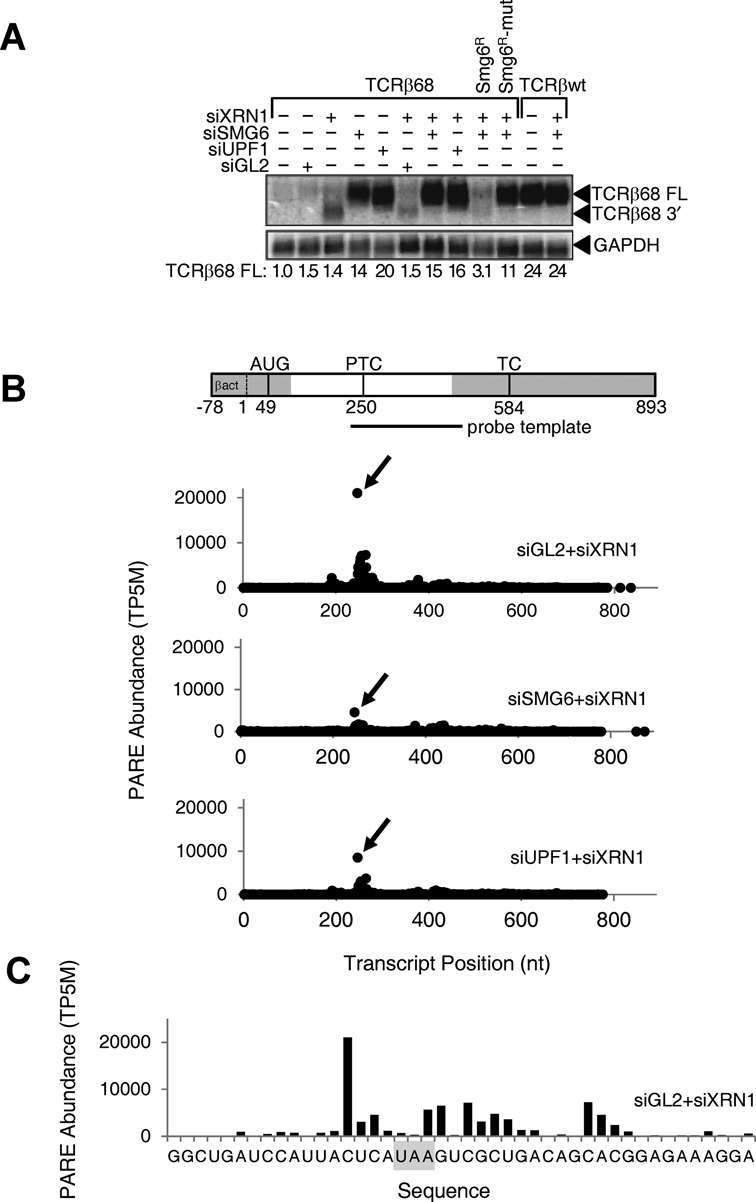
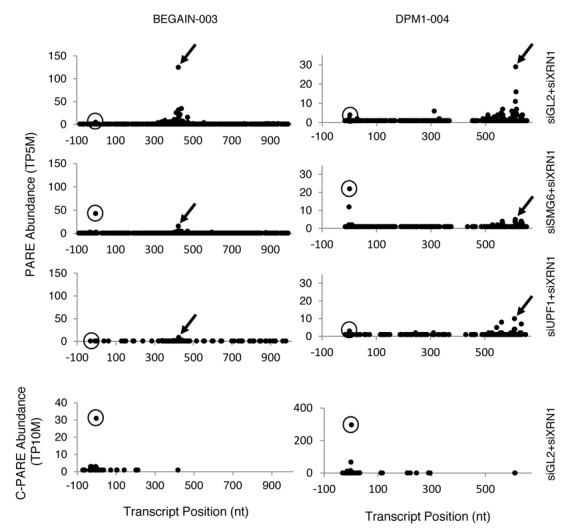
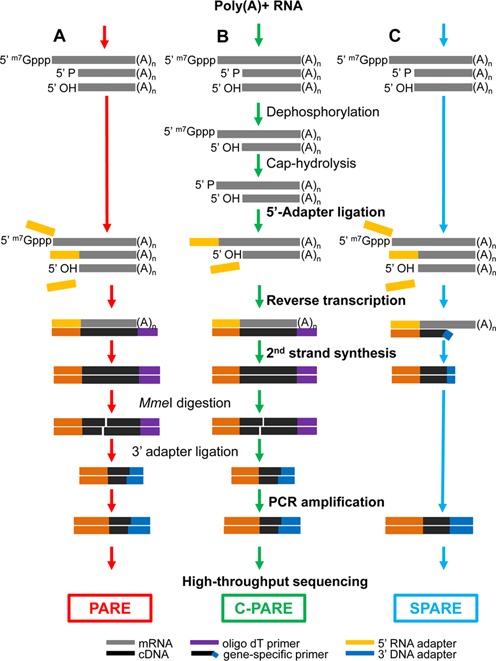
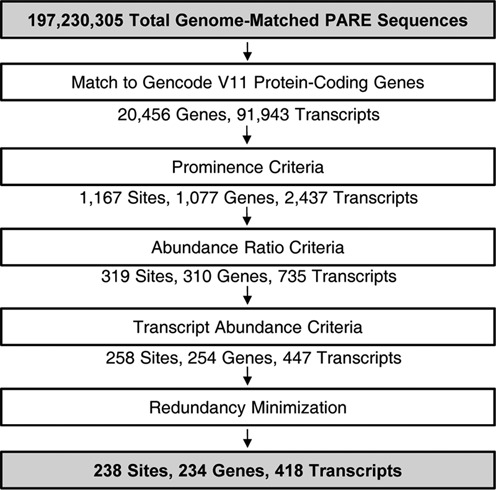
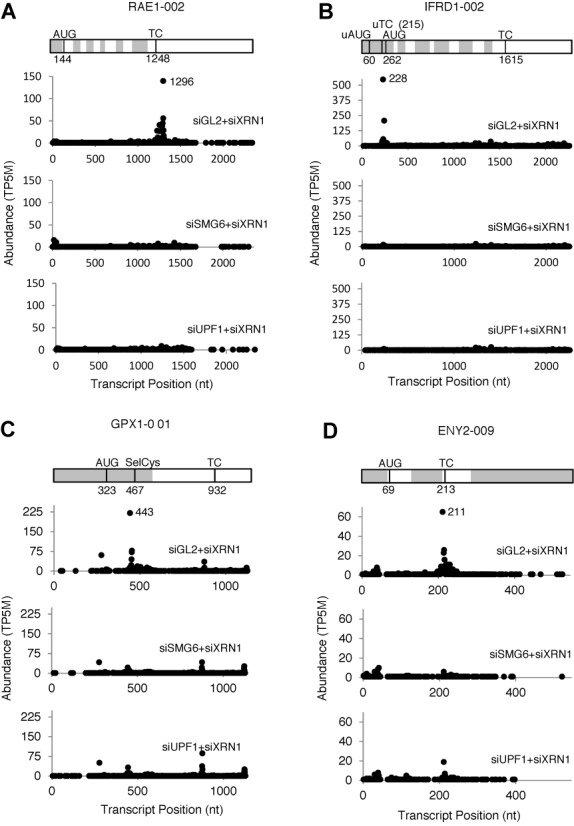
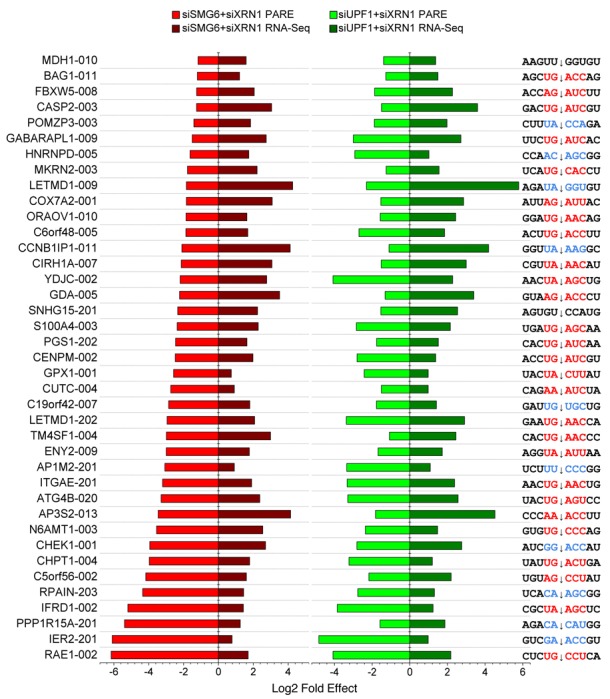
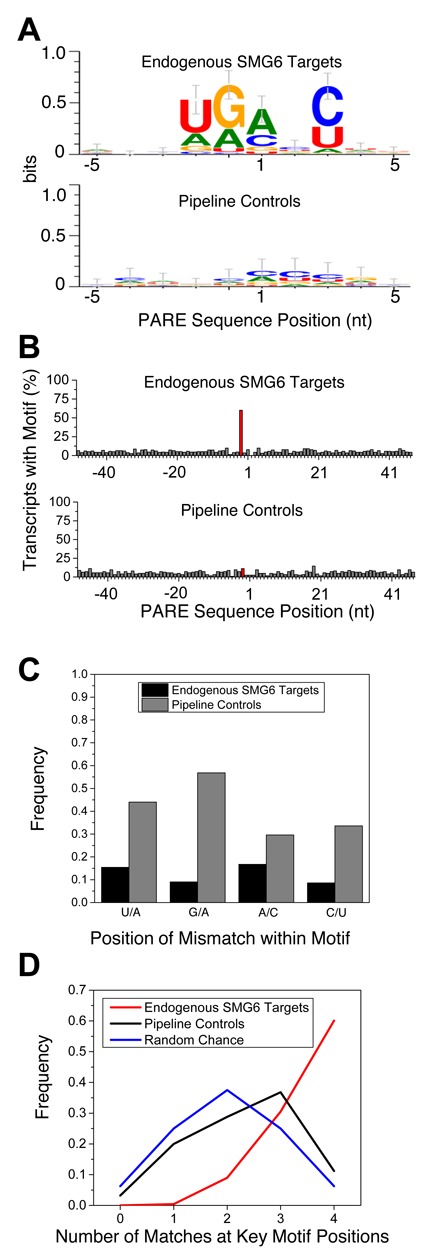
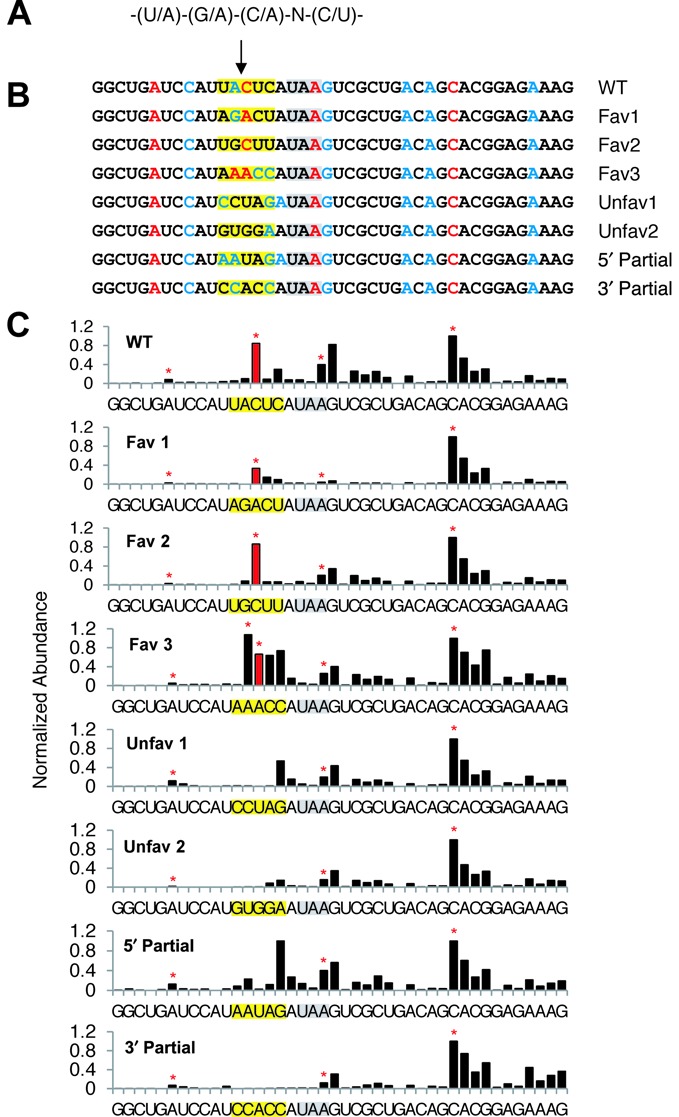
In metazoans, cleavage by the endoribonuclease SMG6 is often the first degradative event in non-sense-mediated mRNA decay (NMD). However, the exact sites of SMG6 cleavage have yet to be determined for any endogenous targets, and most evidence as to the identity of SMG6 substrates is indirect. Here, we use Parallel Analysis of RNA Ends to specifically identify the 5' termini of decay intermediates whose production is dependent on SMG6 and the universal NMD factor UPF1. In this manner, the SMG6 cleavage sites in hundreds of endogenous NMD targets in human cells have been mapped at high resolution. In addition, a preferred sequence motif spanning most SMG6 cleavage sites has been discovered and validated by mutational analysis. For many SMG6 substrates, depletion of SMG6 resulted in the accumulation of decapped transcripts, an effect indicative of competition between SMG6-dependent and SMG6-independent NMD pathways. These findings provide key insights into the mechanisms by which mRNAs targeted by NMD are degraded.
在多细胞动物中,核糖核酸内切酶SMG6的切割通常是非义介导的mRNA降解(NMD)过程中的首个降解事件。然而,对于任何内源性靶标,SMG6的精确切割位点尚未确定,并且关于SMG6底物身份的大多数证据都是间接的。在此,我们使用RNA末端平行分析来特异性鉴定其产生依赖于SMG6和通用NMD因子UPF1的衰变中间体的5'末端。通过这种方式,已在高分辨率下绘制了人类细胞中数百个内源性NMD靶标的SMG6切割位点。此外,通过突变分析发现并验证了跨越大多数SMG6切割位点的优选序列基序。对于许多SMG6底物,SMG6的缺失导致脱帽转录本的积累,这一效应表明SMG6依赖性和非SMG6依赖性NMD途径之间存在竞争。这些发现为NMD靶向的mRNA的降解机制提供了关键见解。