Sanchez-Garcia Félix, Villagrasa Patricia, Matsui Junji, Kotliar Dylan, Castro Verónica, Akavia Uri-David, Chen Bo-Juen, Saucedo-Cuevas Laura, Rodriguez Barrueco Ruth, Llobet-Navas David, Silva Jose M, Pe'er Dana
Department of Biological Sciences and Department of Systems Biology, Columbia University, New York, NY 10027, USA; Department of Computer Science, Columbia University, New York, NY 10027, USA.
Icahn School of Medicine at Mount Sinai, The Mount Sinai Hospital, New York, NY 10029, USA.
Cell. 2014 Dec 4;159(6):1461-75. doi: 10.1016/j.cell.2014.10.048. Epub 2014 Nov 26.
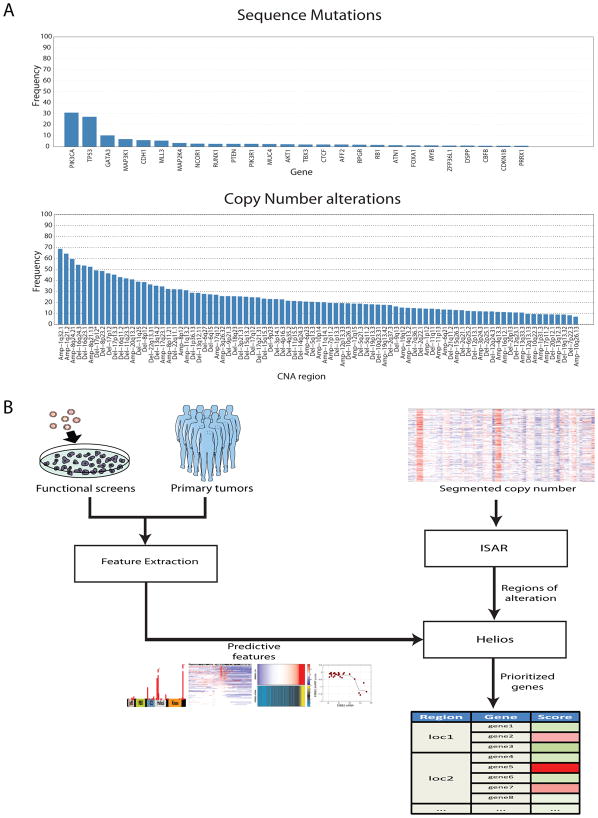
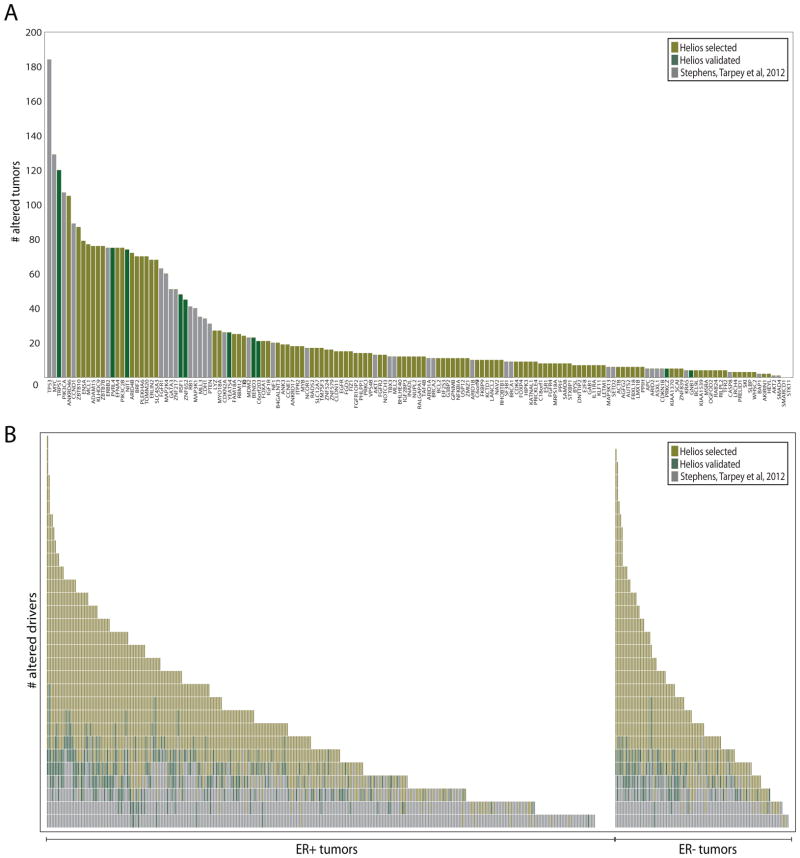
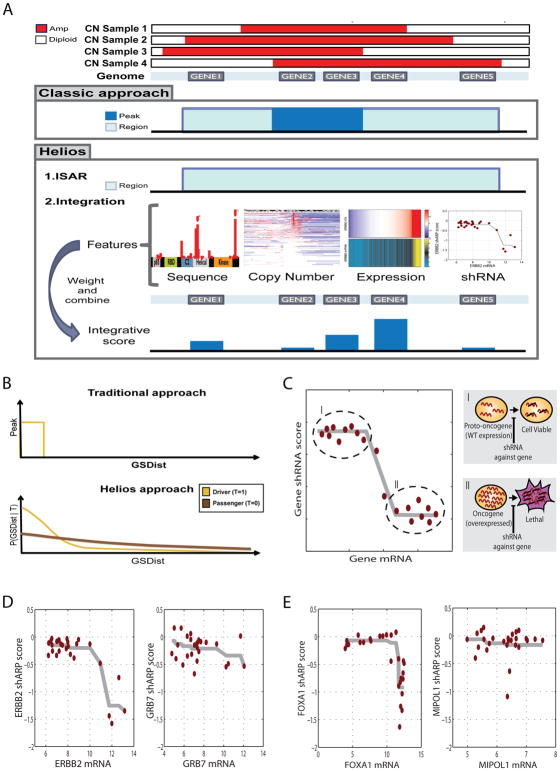
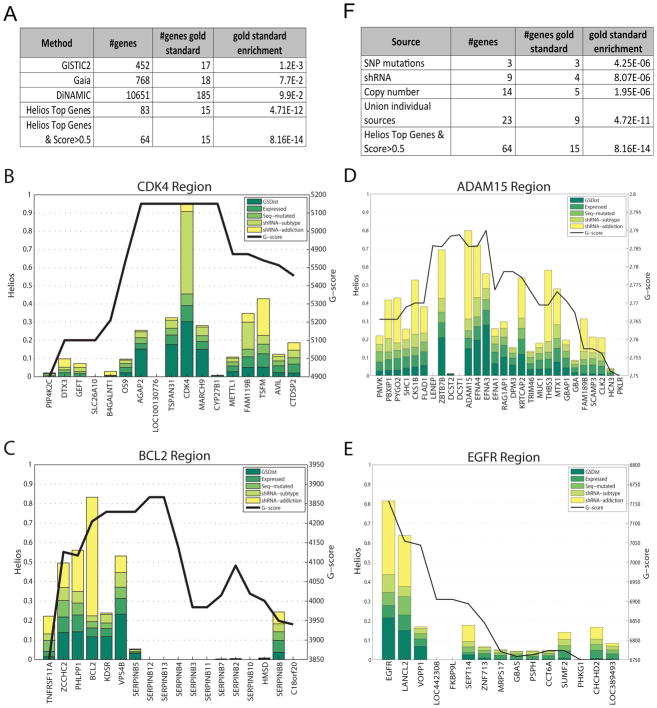
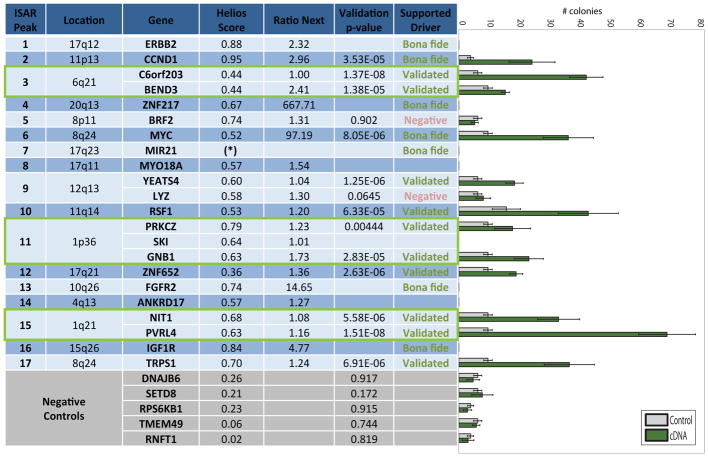
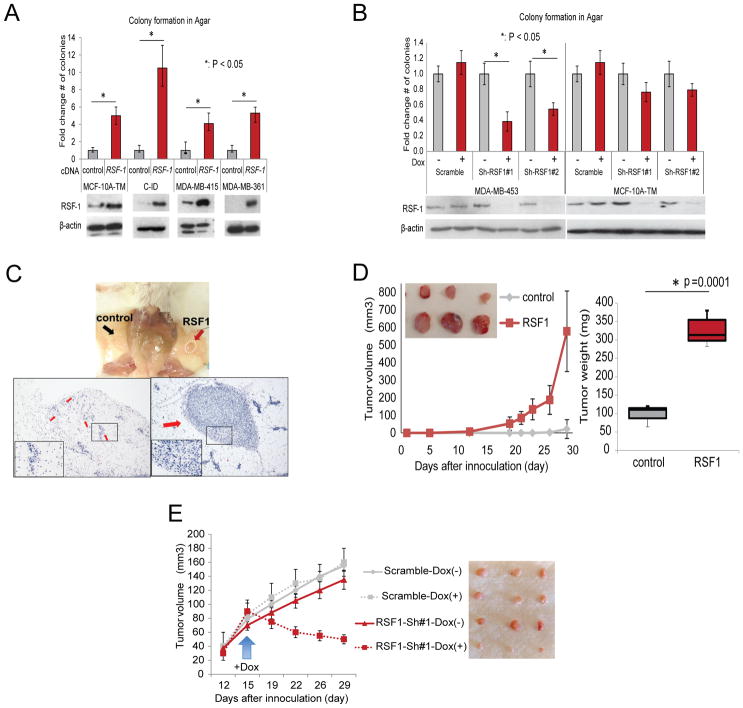
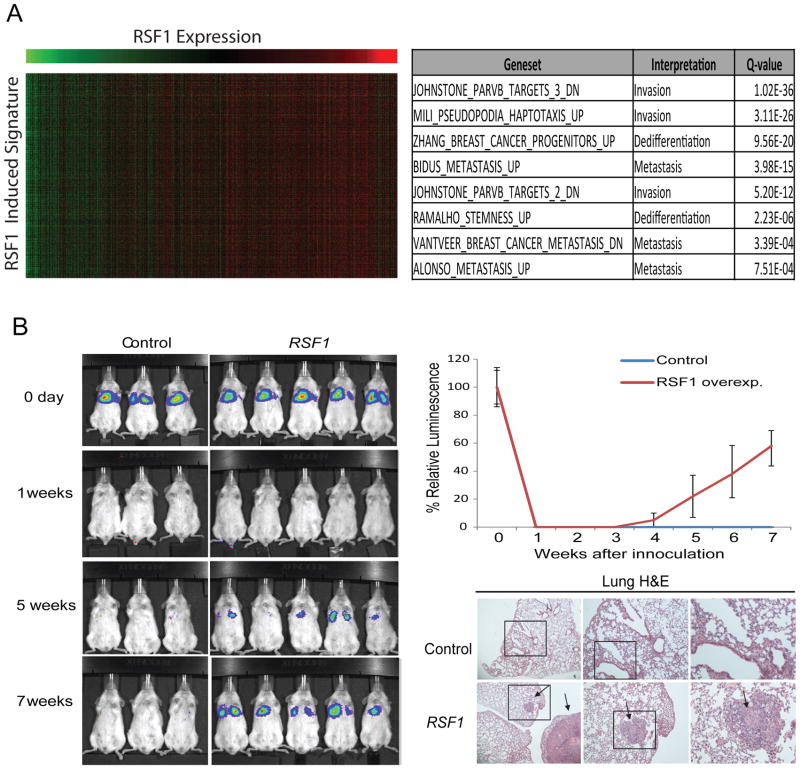
Identifying driver genes in cancer remains a crucial bottleneck in therapeutic development and basic understanding of the disease. We developed Helios, an algorithm that integrates genomic data from primary tumors with data from functional RNAi screens to pinpoint driver genes within large recurrently amplified regions of DNA. Applying Helios to breast cancer data identified a set of candidate drivers highly enriched with known drivers (p < 10(-14)). Nine of ten top-scoring Helios genes are known drivers of breast cancer, and in vitro validation of 12 candidates predicted by Helios found ten conferred enhanced anchorage-independent growth, demonstrating Helios's exquisite sensitivity and specificity. We extensively characterized RSF-1, a driver identified by Helios whose amplification correlates with poor prognosis, and found increased tumorigenesis and metastasis in mouse models. We have demonstrated a powerful approach for identifying driver genes and how it can yield important insights into cancer.
识别癌症中的驱动基因仍然是治疗发展和对该疾病基本认识的关键瓶颈。我们开发了Helios算法,该算法将原发性肿瘤的基因组数据与功能性RNA干扰筛选数据相结合,以在DNA的大型反复扩增区域内精确找出驱动基因。将Helios应用于乳腺癌数据,确定了一组高度富集已知驱动基因的候选驱动基因(p < 10(-14))。Helios评分最高的十个基因中有九个是已知的乳腺癌驱动基因,对Helios预测的12个候选基因进行的体外验证发现,其中十个基因赋予了增强的非锚定依赖性生长能力,证明了Helios具有极高的灵敏度和特异性。我们对RSF-1进行了广泛的表征,RSF-1是Helios识别出的一个驱动基因,其扩增与预后不良相关,并在小鼠模型中发现其肿瘤发生和转移增加。我们展示了一种识别驱动基因的强大方法,以及它如何能为癌症带来重要见解。