Jeon Hyungjun, Vigdorovich Vladimir, Garrett-Thomson Sarah C, Janakiram Murali, Ramagopal Udupi A, Abadi Yael M, Lee Jun Sik, Scandiuzzi Lisa, Ohaegbulam Kim C, Chinai Jordan M, Zhao Ruihua, Yao Yu, Mao Ying, Sparano Joseph A, Almo Steven C, Zang Xingxing
Department of Microbiology and Immunology, Albert Einstein College of Medicine, Bronx, NY 10461, USA.
Department of Biochemistry, Physiology and Biophysics, Albert Einstein College of Medicine, Bronx, NY 10461, USA.
Cell Rep. 2014 Nov 6;9(3):1089-98. doi: 10.1016/j.celrep.2014.09.053. Epub 2014 Oct 30.
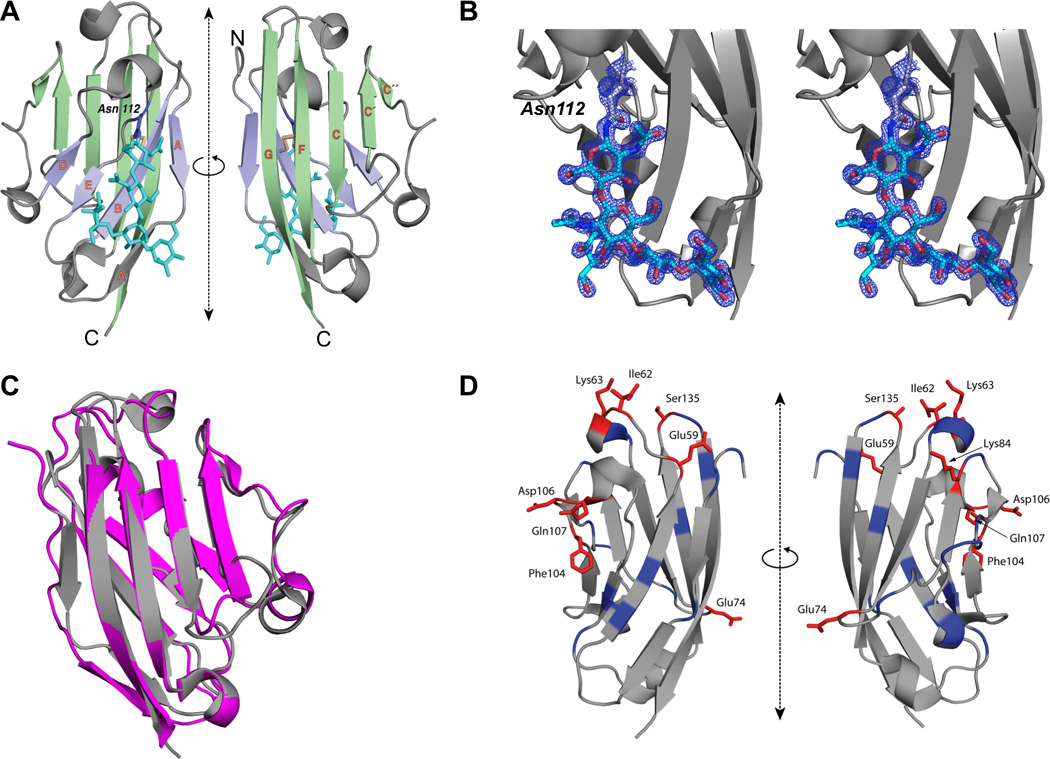
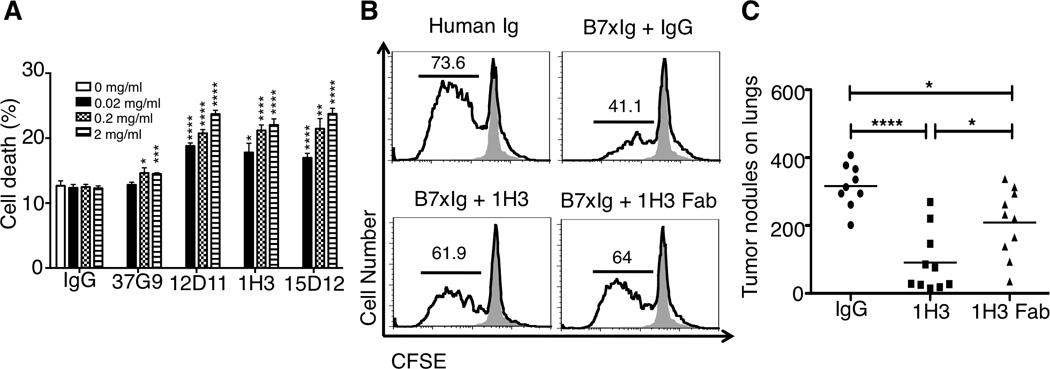
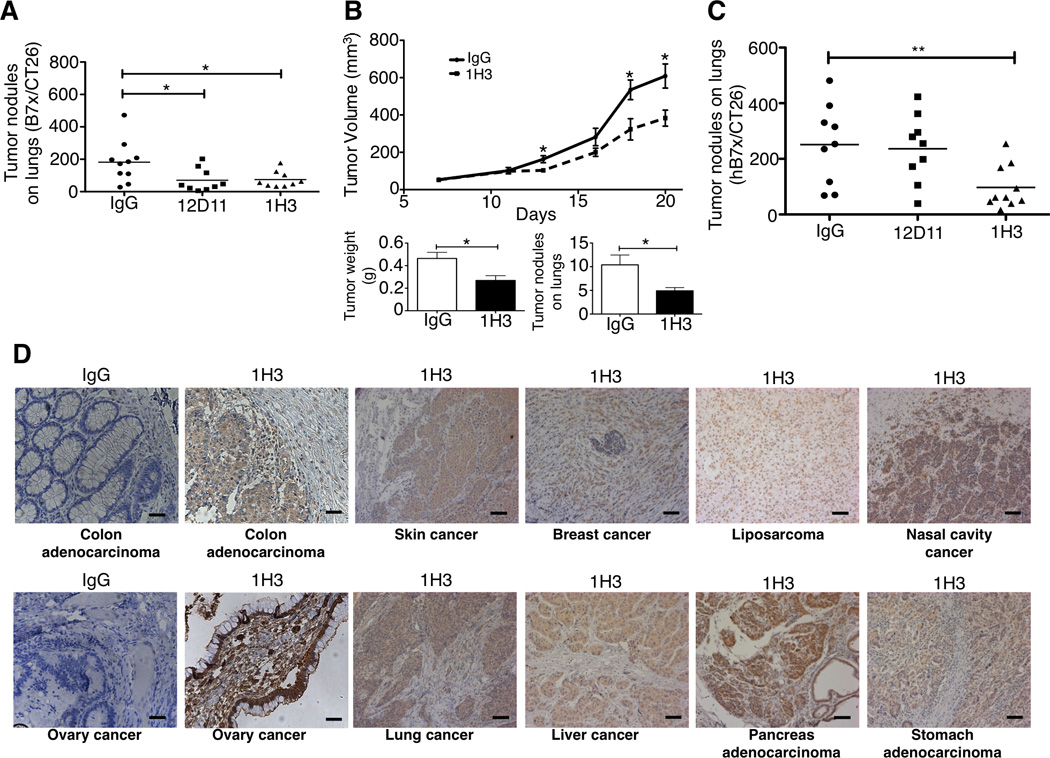
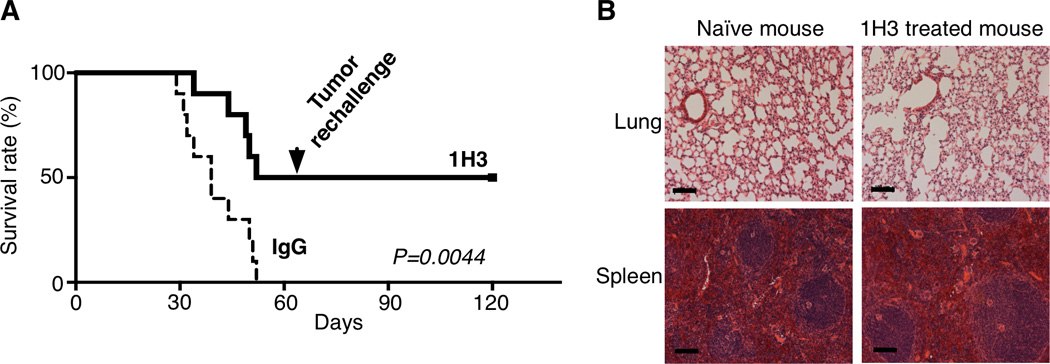
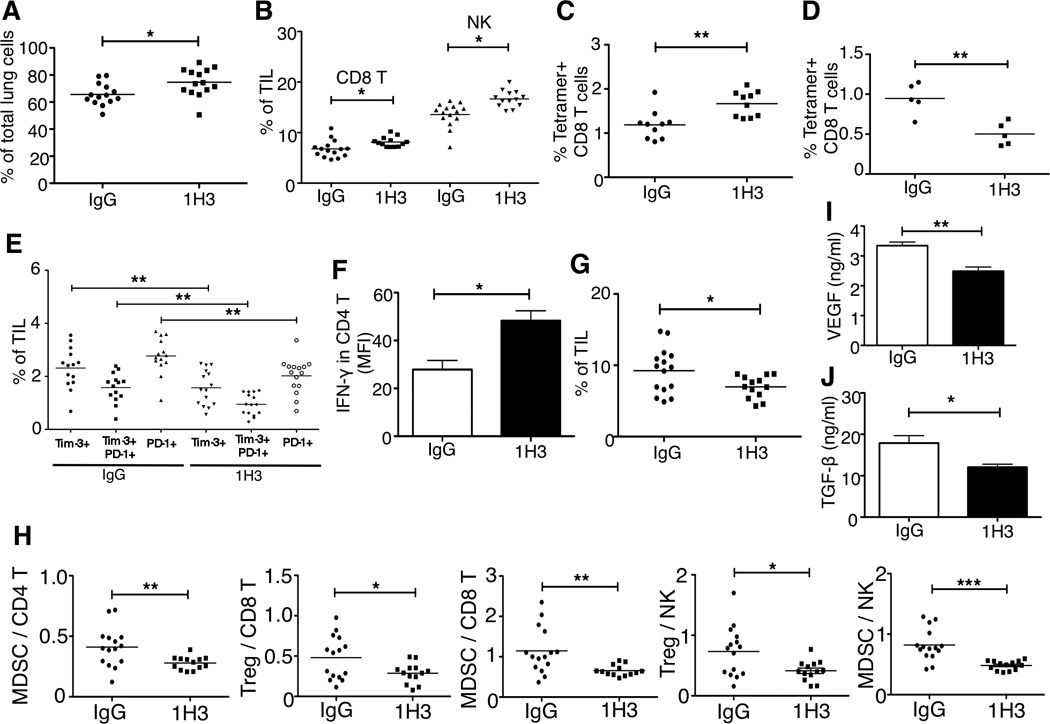
B7x (B7-H4 or B7S1) is a member of the B7 family that can inhibit T cell function. B7x protein is absent in most normal human tissues and immune cells, but it is overexpressed in human cancers and often correlates with negative clinical outcome. The expression pattern and function of B7x suggest that it may be a potent immunosuppressive pathway in human cancers. Here, we determined the crystal structure of the human B7x immunoglobulin variable (IgV) domain at 1.59 Å resolution and mapped the epitopes recognized by monoclonal antibodies. We developed an in vivo system to screen therapeutic monoclonal antibodies against B7x and found that the clone 1H3 significantly inhibited growth of B7x-expressing tumors in vivo via multiple mechanisms. Furthermore, the surviving mice given 1H3 treatment were resistant to tumor rechallenge. Our data suggest that targeting B7x on tumors is a promising cancer immunotherapy and humanized 1H3 may be efficacious for immunotherapy of human cancers.
B7x(B7-H4或B7S1)是B7家族的一员,能够抑制T细胞功能。B7x蛋白在大多数正常人体组织和免疫细胞中不存在,但在人类癌症中过度表达,且常与不良临床结果相关。B7x的表达模式和功能表明,它可能是人类癌症中一种强大的免疫抑制途径。在此,我们确定了人B7x免疫球蛋白可变(IgV)结构域的晶体结构,分辨率为1.59 Å,并绘制了单克隆抗体识别的表位。我们开发了一种体内系统来筛选针对B7x的治疗性单克隆抗体,发现克隆1H3通过多种机制在体内显著抑制表达B7x的肿瘤生长。此外,接受1H3治疗后存活的小鼠对肿瘤再次攻击具有抗性。我们的数据表明,靶向肿瘤上的B7x是一种有前景的癌症免疫疗法,人源化的1H3可能对人类癌症的免疫治疗有效。