Norden Diana M, Muccigrosso Megan M, Godbout Jonathan P
Department of Neuroscience, The Ohio State University, 333 W. 10th Ave, Columbus, OH 43210, USA.
Department of Neuroscience, The Ohio State University, 333 W. 10th Ave, Columbus, OH 43210, USA; Institute for Behavioral Medicine Research, The Ohio State University, 460 Medical Center Dr., Columbus, OH 43210, USA; Center for Brain and Spinal Cord Repair, The Ohio State University, 460 W. 12th Ave, Columbus, OH 43210, USA.
Neuropharmacology. 2015 Sep;96(Pt A):29-41. doi: 10.1016/j.neuropharm.2014.10.028. Epub 2014 Nov 13.
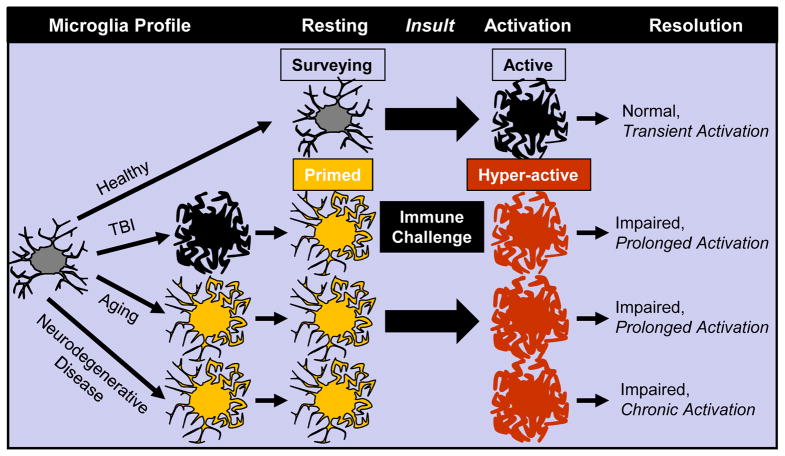
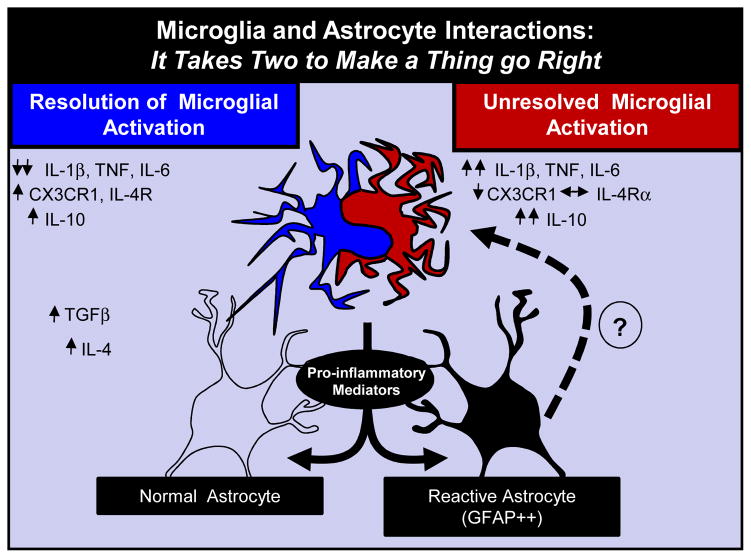
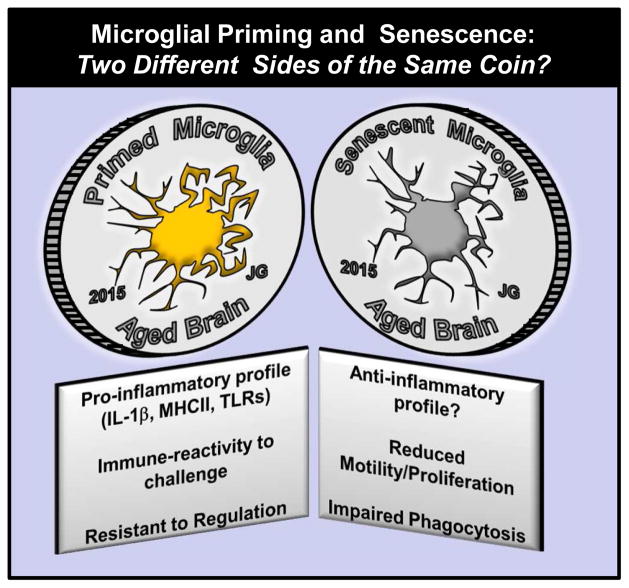
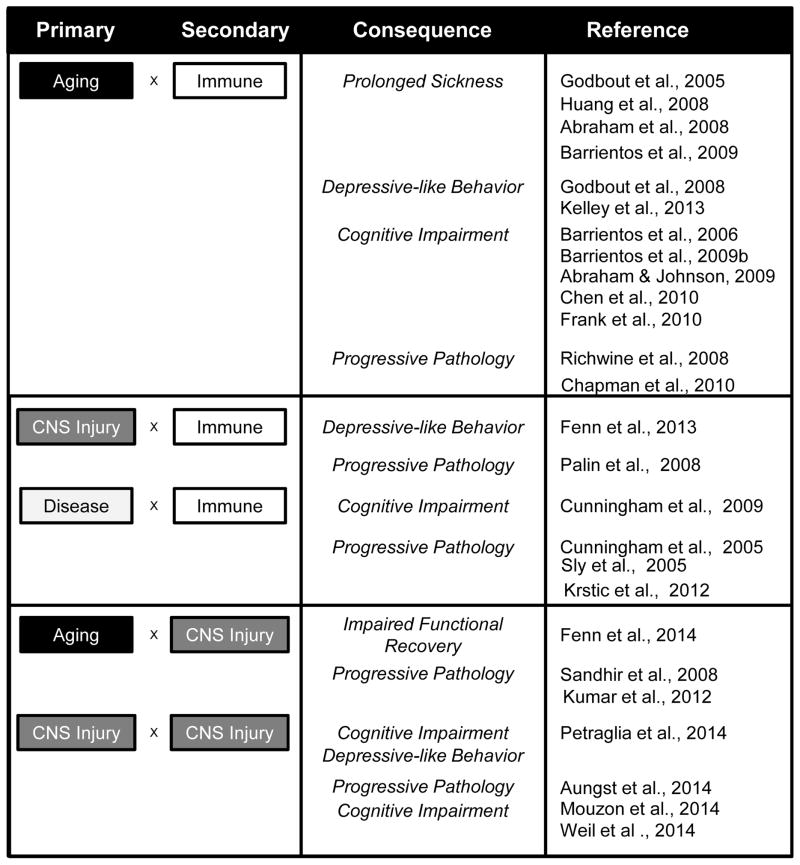
Glia of the central nervous system (CNS) help to maintain homeostasis in the brain and support efficient neuronal function. Microglia are innate immune cells of the brain that mediate responses to pathogens and injury. They have key roles in phagocytic clearing, surveying the local microenvironment and propagating inflammatory signals. An interruption in homeostasis induces a cascade of conserved adaptive responses in glia. This response involves biochemical, physiological and morphological changes and is associated with the production of cytokines and secondary mediators that influence synaptic plasticity, cognition and behavior. This reorganization of host priorities represents a beneficial response that is normally adaptive but may become maladaptive when the profile of microglia is compromised. For instance, microglia can develop a primed or pro-inflammatory mRNA, protein and morphological profile with aging, traumatic brain injury and neurodegenerative disease. As a result, primed microglia exhibit an exaggerated inflammatory response to secondary and sub-threshold challenges. Consequences of exaggerated inflammatory responses by microglia include the development of cognitive deficits, impaired synaptic plasticity and accelerated neurodegeneration. Moreover, impairments in regulatory systems in these circumstances may make microglia more resistant to negative feedback and important functions of glia can become compromised and dysfunctional. Overall, the purpose of this review is to discuss key concepts of microglial priming and immune-reactivity in the context of aging, traumatic CNS injury and neurodegenerative disease. This article is part of a Special Issue entitled 'Neuroimmunology and Synaptic Function'.
中枢神经系统(CNS)中的神经胶质细胞有助于维持大脑的内环境稳态,并支持高效的神经元功能。小胶质细胞是大脑中的固有免疫细胞,介导对病原体和损伤的反应。它们在吞噬清除、监测局部微环境和传播炎症信号方面发挥着关键作用。内环境稳态的中断会在神经胶质细胞中引发一系列保守的适应性反应。这种反应涉及生化、生理和形态学变化,并与影响突触可塑性、认知和行为的细胞因子和二级介质的产生有关。宿主优先级的这种重新调整代表了一种有益的反应,通常是适应性的,但当小胶质细胞的状态受损时可能会变得适应不良。例如,随着年龄增长、创伤性脑损伤和神经退行性疾病的发生,小胶质细胞会形成一种预激或促炎的mRNA、蛋白质和形态学特征。结果,预激的小胶质细胞对继发性和亚阈值挑战表现出过度的炎症反应。小胶质细胞过度炎症反应的后果包括认知缺陷的发展、突触可塑性受损和神经退行性变加速。此外,在这些情况下调节系统的损伤可能会使小胶质细胞对负反馈更具抗性,神经胶质细胞的重要功能可能会受到损害并出现功能障碍。总的来说,本综述的目的是在衰老、创伤性中枢神经系统损伤和神经退行性疾病的背景下讨论小胶质细胞预激和免疫反应性的关键概念。本文是名为“神经免疫学与突触功能”的特刊的一部分。