Zhou Li-quan, Dean Jurrien
Laboratory of Cellular and Developmental Biology, NIDDK, National Institutes of Health, Bethesda, MD 20892, USA.
Laboratory of Cellular and Developmental Biology, NIDDK, National Institutes of Health, Bethesda, MD 20892, USA.
Trends Cell Biol. 2015 Feb;25(2):82-91. doi: 10.1016/j.tcb.2014.09.006. Epub 2014 Oct 21.
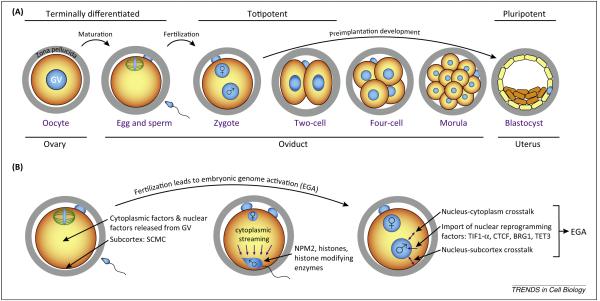
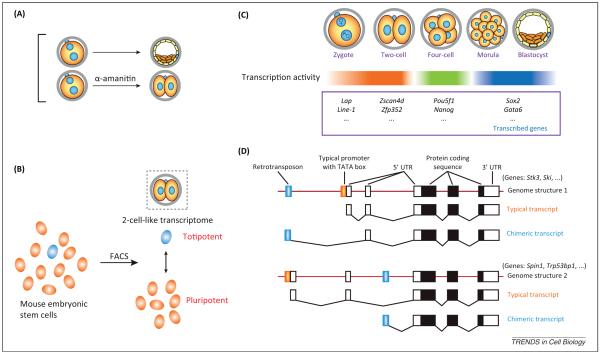
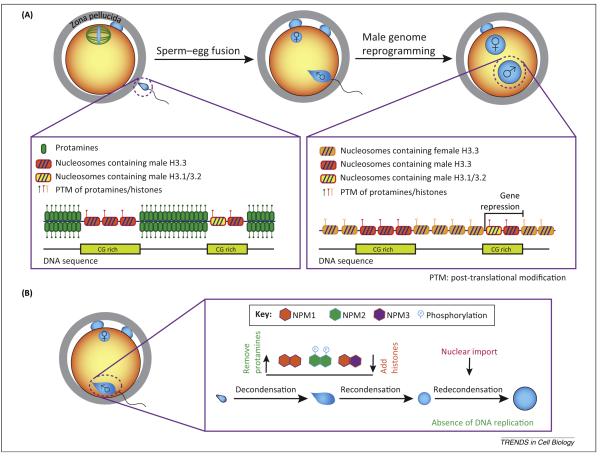
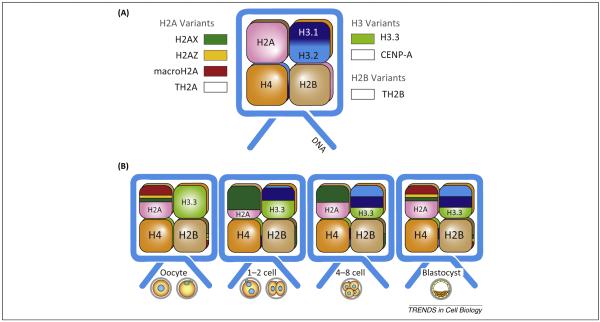
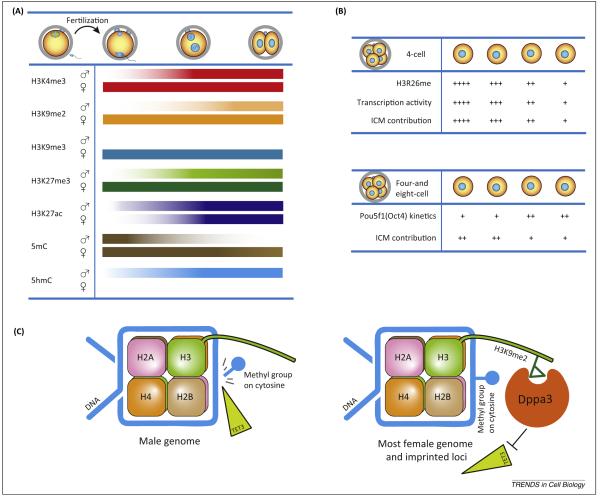
Despite investigative interest, the artificial derivation of pluripotent stem cells remains inefficient and incomplete reprogramming hinders its potential as a reliable tool in regenerative medicine. By contrast, fusion of terminally differentiated gametes at fertilization activates efficient epigenetic reprogramming to ensure totipotency of early embryos. Understanding the epigenetic mechanisms required for the transition from the fertilized egg to the embryo can improve efforts to reprogram differentiated cells to pluripotent/totipotent cells for therapeutic use. We review recent discoveries that are providing insight into the molecular mechanisms required for epigenetic reprogramming to totipotency in vivo.
尽管受到研究关注,但多能干细胞的人工诱导仍然效率低下,不完全重编程阻碍了其作为再生医学中可靠工具的潜力。相比之下,受精时终末分化配子的融合激活了高效的表观遗传重编程,以确保早期胚胎的全能性。了解从受精卵到胚胎转变所需的表观遗传机制,有助于改进将分化细胞重编程为多能/全能细胞用于治疗的方法。我们综述了最近的发现,这些发现为体内表观遗传重编程至全能性所需的分子机制提供了见解。