Hatipoglu Gökçe, Hock Stefan W, Weiss Ruth, Fan Zheng, Sehm Tina, Ghoochani Ali, Buchfelder Michael, Savaskan Nicolai E, Eyüpoglu Ilker Y
Department of Neurosurgery, Universitätsklinikum Erlangen, Friedrich Alexander University Erlangen-Nürnberg (FAU), Erlangen, Germany.
Cancer Sci. 2015 Feb;106(2):160-70. doi: 10.1111/cas.12580. Epub 2015 Feb 15.
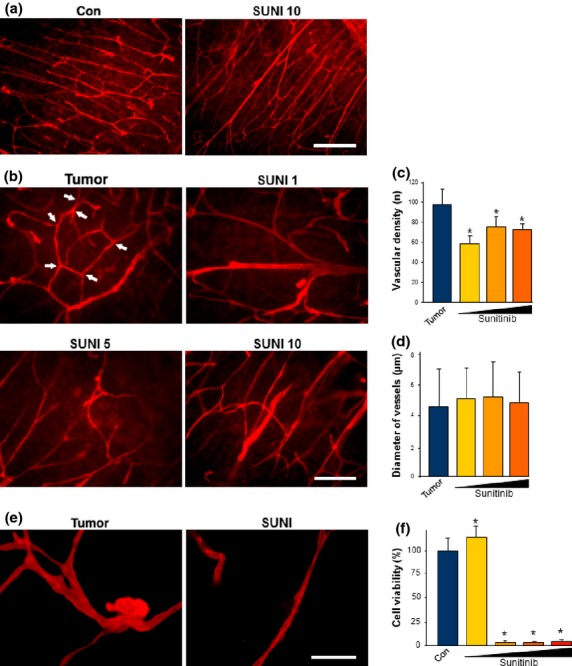
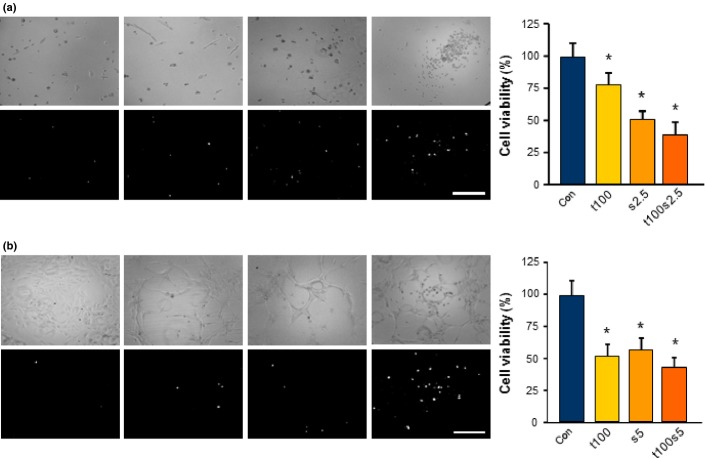
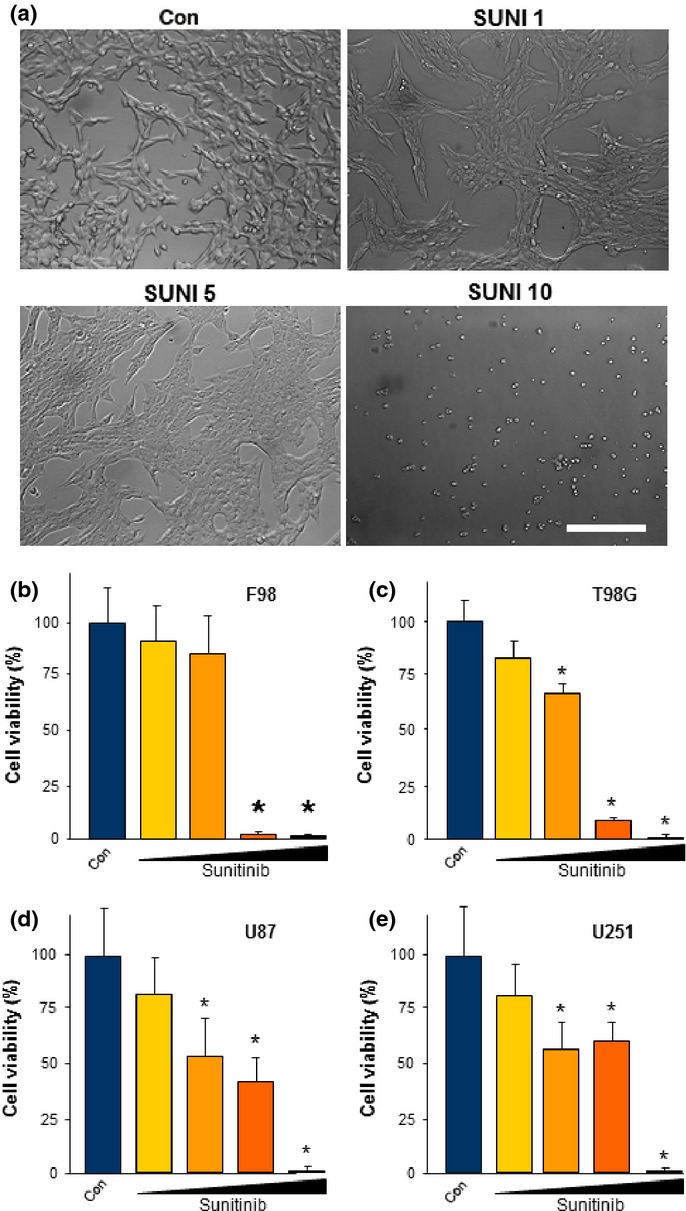
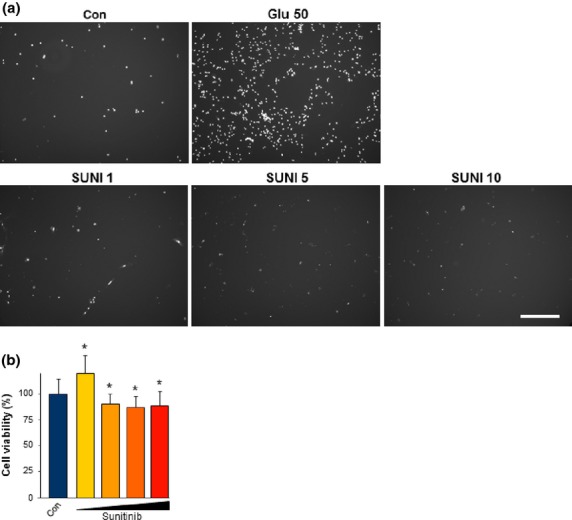
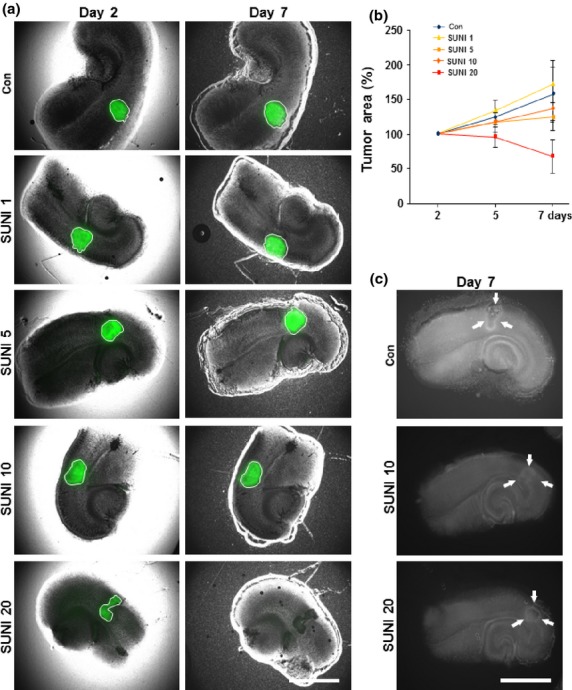
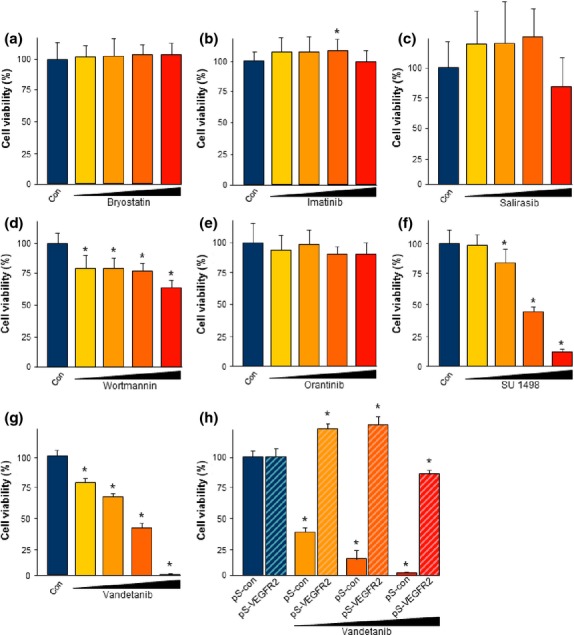
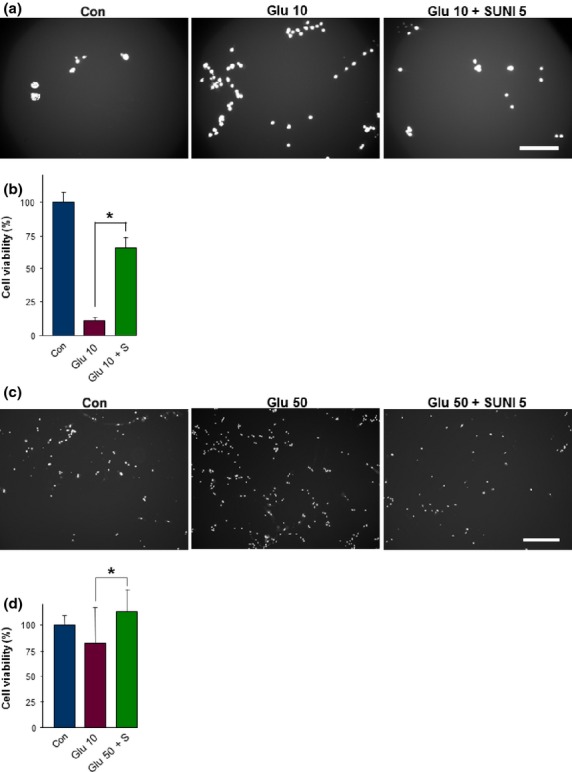
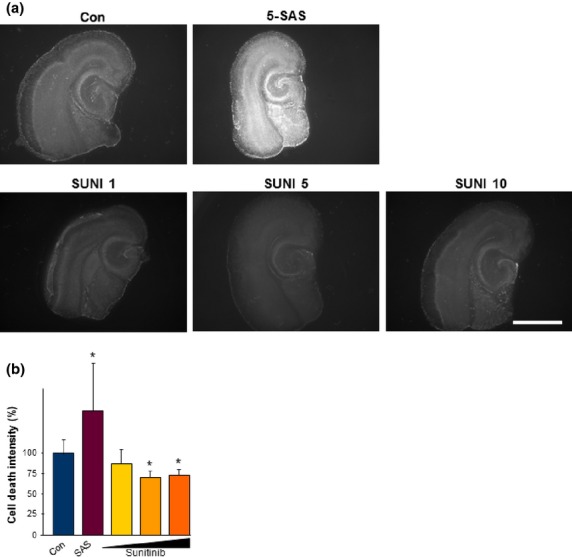
Malignant gliomas can be counted to the most devastating tumors in humans. Novel therapies do not achieve significant prolonged survival rates. The cancer cells have an impact on the surrounding vital tissue and form tumor zones, which make up the tumor microenvironment. We investigated the effects of sunitinib, a small molecule multitargeted receptor tyrosine kinase inhibitor, on constituents of the tumor microenvironment such as gliomas, astrocytes, endothelial cells, and neurons. Sunitinib has a known anti-angiogenic effect. We found that sunitinib normalizes the aberrant tumor-derived vasculature and reduces tumor vessel pathologies (i.e. auto-loops). Sunitinib has only minor effects on the normal, physiological, non-proliferating vasculature. We found that neurons and astrocytes are protected by sunitinib against glutamate-induced cell death, whereas sunitinib acts as a toxin towards proliferating endothelial cells and tumor vessels. Moreover, sunitinib is effective in inducing glioma cell death. We determined the underlying pathways by which sunitinib operates as a toxin on gliomas and found vascular endothelial growth factor receptor 2 (VEGFR2, KDR/Flk1) as the main target to execute gliomatoxicity. The apoptosis-inducing effect of sunitinib can be mimicked by inhibition of VEGFR2. Knockdown of VEGFR2 can, in part, foster the resistance of glioma cells to receptor tyrosine kinase inhibitors. Furthermore, sunitinib alleviates tumor-induced neurodegeneration. Hence, we tested whether temozolomide treatment could be potentiated by sunitinib application. Here we show that sunitinib can amplify the effects of temozolomide in glioma cells. Thus, our data indicate that combined treatment with temozolomide does not abrogate the effects of sunitinib. In conclusion, we found that sunitinib acts as a gliomatoxic agent and at the same time carries out neuroprotective effects, reducing tumor-induced neurodegeneration. Thus, this report uncovered sunitinib's actions on the brain tumor microenvironment, revealing novel aspects for adjuvant approaches and new clinical assessment criteria when applied to brain tumor patients.
恶性胶质瘤堪称人类最具毁灭性的肿瘤之一。新型疗法并未显著提高患者的长期生存率。癌细胞会影响周围的重要组织并形成肿瘤区域,这些区域构成了肿瘤微环境。我们研究了小分子多靶点受体酪氨酸激酶抑制剂舒尼替尼对肿瘤微环境成分(如胶质瘤、星形胶质细胞、内皮细胞和神经元)的影响。舒尼替尼具有已知的抗血管生成作用。我们发现舒尼替尼可使异常的肿瘤衍生血管正常化,并减少肿瘤血管病变(即自环)。舒尼替尼对正常的、生理性的、非增殖性血管影响较小。我们发现神经元和星形胶质细胞受到舒尼替尼的保护,免受谷氨酸诱导的细胞死亡,而舒尼替尼对增殖的内皮细胞和肿瘤血管则起到毒素的作用。此外,舒尼替尼可有效诱导胶质瘤细胞死亡。我们确定了舒尼替尼对胶质瘤发挥毒素作用的潜在途径,发现血管内皮生长因子受体2(VEGFR2,KDR/Flk1)是执行胶质瘤毒性的主要靶点。抑制VEGFR2可模拟舒尼替尼的凋亡诱导作用。敲低VEGFR2可部分增强胶质瘤细胞对受体酪氨酸激酶抑制剂的抗性。此外,舒尼替尼可减轻肿瘤诱导的神经退行性变。因此,我们测试了舒尼替尼联合应用是否能增强替莫唑胺的治疗效果。在此我们表明,舒尼替尼可增强替莫唑胺对胶质瘤细胞的作用。因此,我们的数据表明,替莫唑胺联合治疗不会消除舒尼替尼的作用。总之,我们发现舒尼替尼是一种胶质瘤毒性药物,同时具有神经保护作用,可减少肿瘤诱导的神经退行性变。因此,本报告揭示了舒尼替尼对脑肿瘤微环境的作用,为辅助治疗方法以及应用于脑肿瘤患者时的新临床评估标准揭示了新的方面。