Zhang Yi, Wang Yingfeng, Yang Kai, Tian Lichun, Fu Xin, Wang Yan, Sun Yueqian, Jiang Qian, Lu Wenju, Wang Jian
State Key Laboratory of Respiratory Diseases, Guangzhou Institute of Respiratory Disease, Guangzhou Medical University, Guangzhou, Guangdong, China; The 2nd Affiliated Hospital of Guangzhou Medical University, Guangzhou, Guangdong, China; Division of Pulmonary & Critical Care Medicine, Johns Hopkins University School of Medicine, Baltimore, Maryland, United States of America.
State Key Laboratory of Respiratory Diseases, Guangzhou Institute of Respiratory Disease, Guangzhou Medical University, Guangzhou, Guangdong, China.
PLoS One. 2014 Dec 2;9(12):e112695. doi: 10.1371/journal.pone.0112695. eCollection 2014.
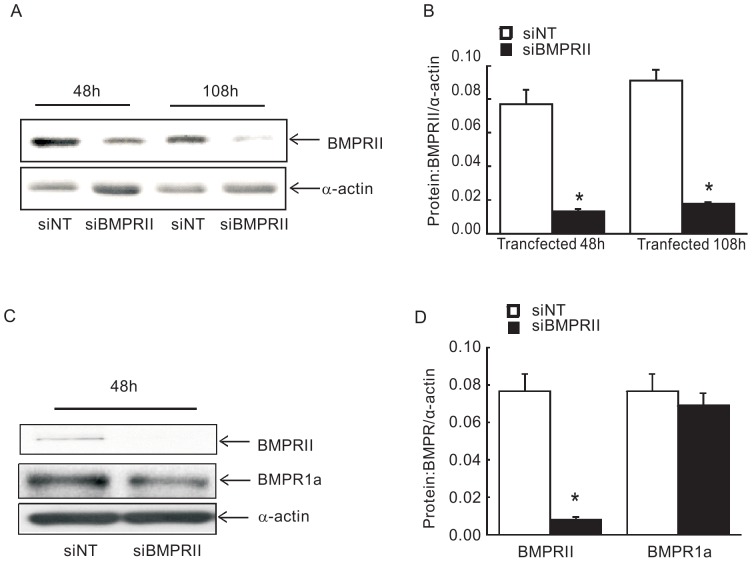
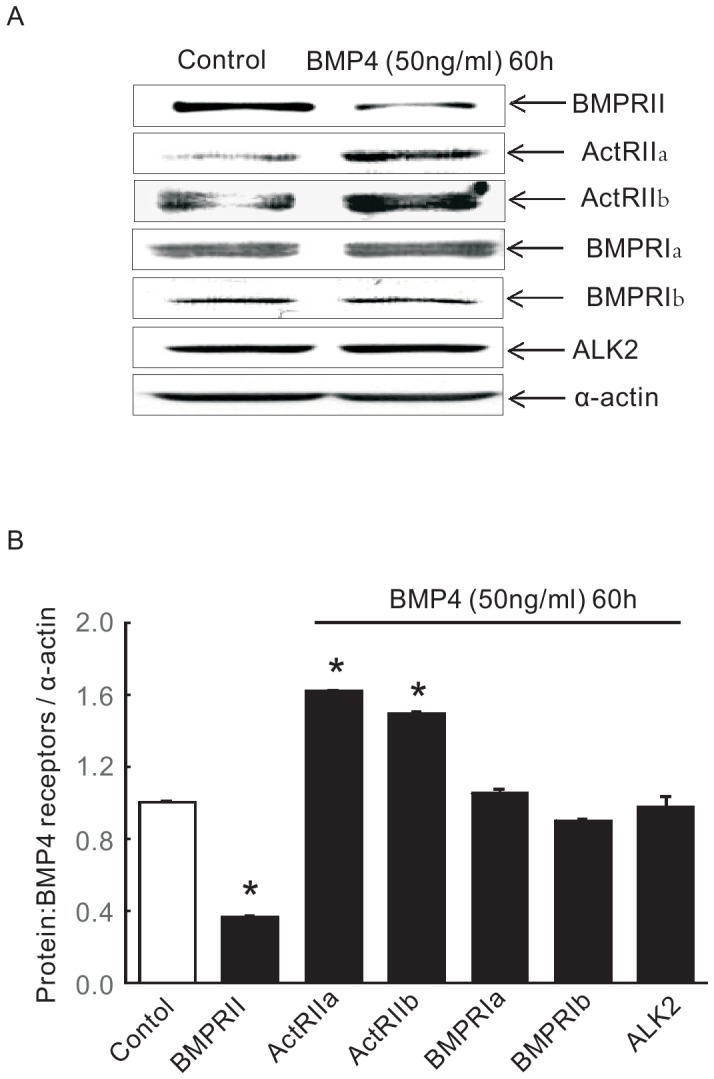
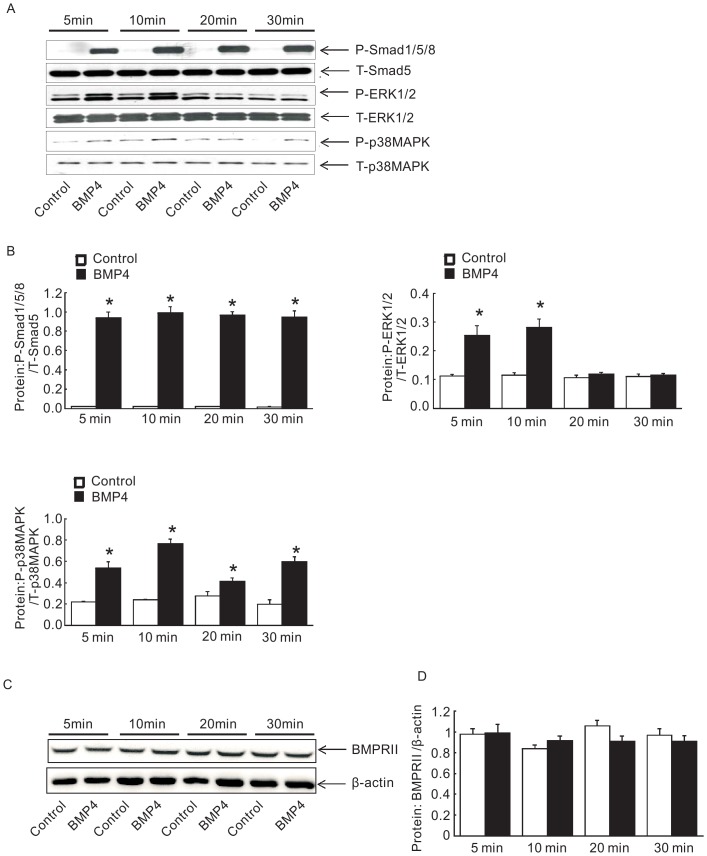
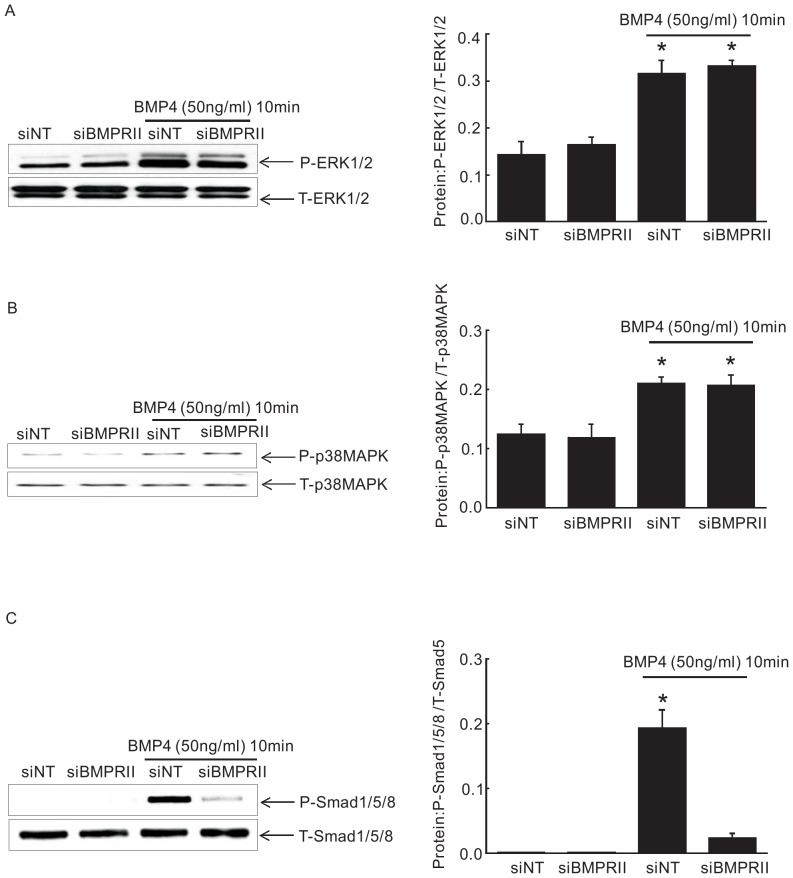
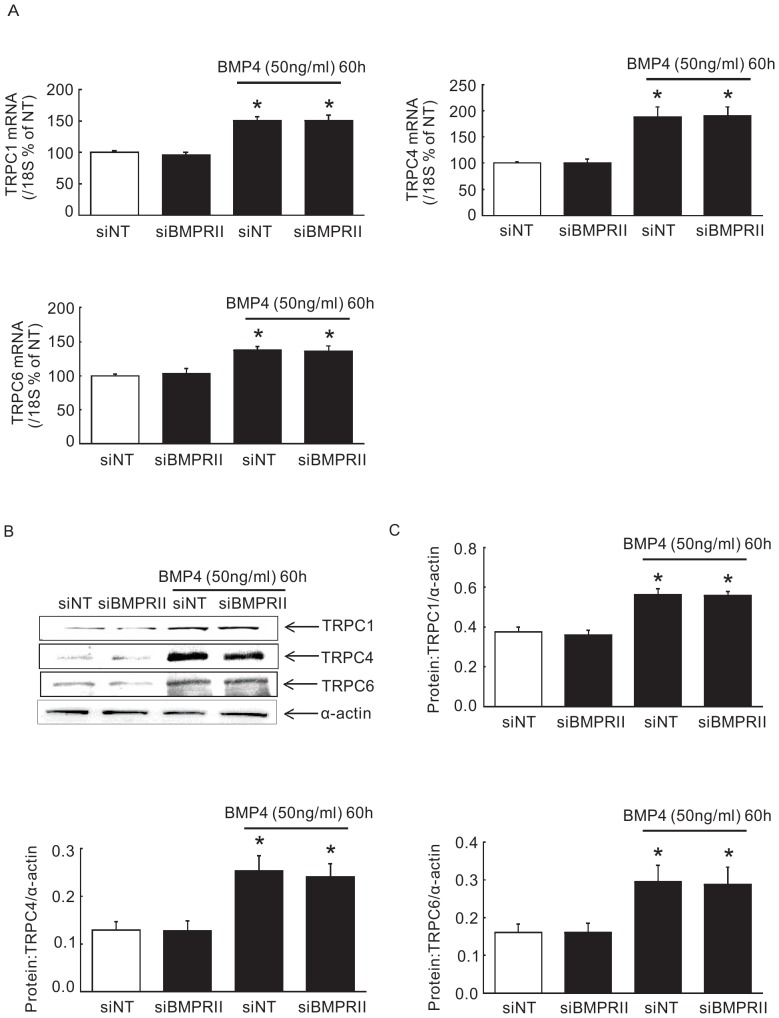
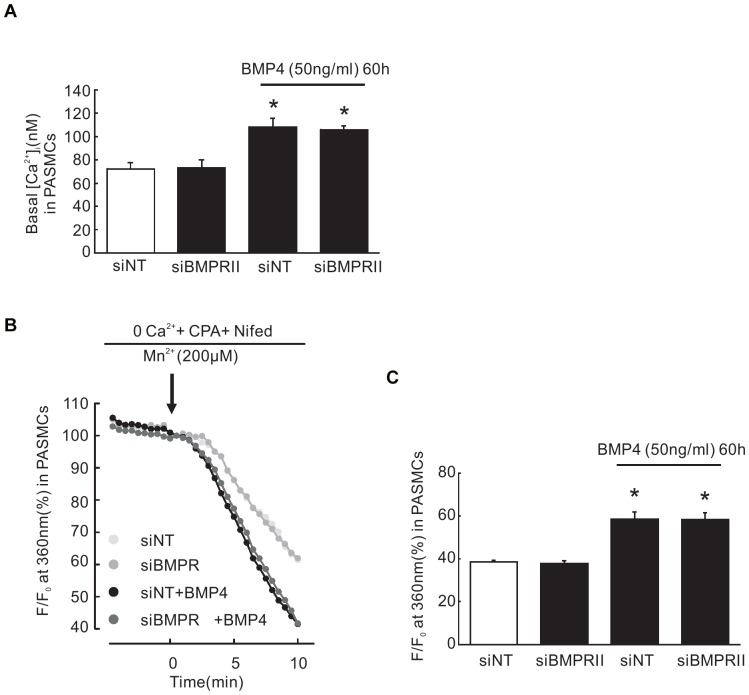
Multiple abnormalities of bone morphogenetic protein (BMPs) signaling are implicated in the process of pulmonary arterial hypertension (PAH). BMP4 plays an important role during the process of pulmonary arterial remodeling and mutant of the principle BMP4 receptor, BMP receptors II (BMPRII), is found to associate with the development of PAH. However, the likely mechanism defining the contribution of BMPRII to BMP4 mediated signaling in pulmonary arterial smooth muscle cells (PASMCs) remains comprehensively unclear. We previously found that enhanced store operated calcium entry (SOCE) and basal intracellular calcium concentration [Ca2+]i were induced by BMP4 via upregulation of TRPC1, 4 and 6 expression in PASMCs, and that BMP4 modulated TRPC channel expression through activating p38MAPK and ERK1/2 signaling pathways. In this study, BMPRII siRNA was used to knockdown BMPRII expression to investigate whether BMP4 upregulates the expression of TRPC and activating Smad1/5/8, ERK1/2 and p38MAPK pathway via BMPRII in distal PASMCs. Our results showed that knockdown of BMPRII: 1) attenuated BMP4 induced activation of P-Smad1/5/8, without altering BMP4 induced P-p38MAPK and P-ERK1/2 activation in PASMCs; 2) did not attenuate the BMP4-induced TRPC1, 4 and 6 expression; 3) did not affect BMP4-enhanced SOCE and basal [Ca2+]i. Thus, we concluded that BMP4 activated Smad1/5/8 pathway is BMPRII-dependent, while the BMP4 - ERK/p-P38 - TRPC - SOCE signaling axis are likely mediated through other receptor rather than BMPRII.
骨形态发生蛋白(BMPs)信号传导的多种异常与肺动脉高压(PAH)的发生过程有关。BMP4在肺动脉重塑过程中起重要作用,并且主要的BMP4受体——BMP受体II(BMPRII)的突变与PAH的发生有关。然而,BMPRII在肺动脉平滑肌细胞(PASMCs)中对BMP4介导的信号传导作用的潜在机制仍完全不清楚。我们之前发现,BMP4通过上调PASMCs中TRPC1、4和6的表达诱导储存操纵性钙内流(SOCE)增强和基础细胞内钙浓度[Ca2+]i升高,并且BMP4通过激活p38MAPK和ERK1/2信号通路调节TRPC通道表达。在本研究中,使用BMPRII siRNA敲低BMPRII表达,以研究BMP4是否通过BMPRII上调远端PASMCs中TRPC的表达并激活Smad1/5/8、ERK1/2和p38MAPK通路。我们的结果表明,敲低BMPRII:1)减弱了BMP4诱导的P-Smad1/5/8激活,而不改变BMP4诱导的P-p38MAPK和P-ERK1/2在PASMCs中的激活;2)没有减弱BMP4诱导的TRPC1、4和6表达;3)不影响BMP4增强的SOCE和基础[Ca2+]i。因此,我们得出结论,BMP4激活的Smad1/5/8通路依赖于BMPRII,而BMP4-ERK/p-P38-TRPC-SOCE信号轴可能通过其他受体而非BMPRII介导。