Zigler J Samuel, Sinha Debasish
The Johns Hopkins University School of Medicine, The Wilmer Eye Institute, 400 North Broadway, Smith Building Room M037, Baltimore, MD 21231, USA.
The Johns Hopkins University School of Medicine, The Wilmer Eye Institute, 400 North Broadway, Smith Building Room M035, Baltimore, MD 21231, USA.
Prog Retin Eye Res. 2015 Jan;44:62-85. doi: 10.1016/j.preteyeres.2014.11.002. Epub 2014 Nov 13.
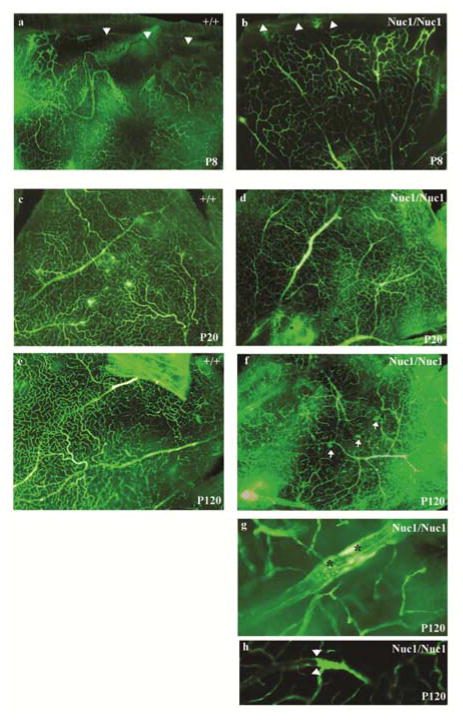
Crystallins, the highly abundant proteins of the ocular lens, are essential determinants of the transparency and refractivity required for lens function. Initially thought to be lens-specific and to have evolved as lens proteins, it is now clear that crystallins were recruited to the lens from proteins that existed before lenses evolved. Crystallins are expressed outside of the lens and most have been shown to have cellular functions distinct from their roles as structural elements in the lens. For one major crystallin group, the β/γ-crystallin superfamily, no such functions have yet been established. We have explored possible functions for the polypeptides (βA3-and βA1-crystallins) encoded by Cryba1, one of the 6 β-crystallin genes, using a spontaneous rat mutant and genetically engineered mouse models. βA3-and βA1-crystallins are expressed in retinal astrocytes and retinal pigment epithelial (RPE) cells. In both cell types, these proteins appear to be required for the proper acidification of the lysosomes. In RPE cells, elevated pH in the lysosomes is shown to impair the critical processes of phagocytosis and autophagy, leading to accumulation of undigested cargo in (auto) phagolysosomes. We postulate that this accumulation may cause pathological changes in the cells resembling some of those characteristic of age-related macular degeneration (AMD). Our studies suggest an important regulatory function of βA3/A1-crystallin in astrocytes. We provide evidence that the cellular function of βA3/A1-crystallin involves its interaction with V-ATPase, the proton pump responsible for acidification of the endolysosomal system.
晶状体蛋白是眼晶状体中含量极高的蛋白质,是晶状体功能所需透明度和折射性的关键决定因素。最初认为晶状体蛋白是晶状体特有的,并且是作为晶状体蛋白进化而来的,现在很清楚,晶状体蛋白是从晶状体进化之前就存在的蛋白质中招募到晶状体中的。晶状体蛋白在晶状体之外表达,并且大多数已被证明具有与其在晶状体中作为结构元件的作用不同的细胞功能。对于一个主要的晶状体蛋白组,即β/γ-晶状体蛋白超家族,尚未确定此类功能。我们使用自发大鼠突变体和基因工程小鼠模型,探索了由6个β-晶状体蛋白基因之一的Cryba1编码的多肽(βA3-和βA1-晶状体蛋白)的可能功能。βA3-和βA1-晶状体蛋白在视网膜星形胶质细胞和视网膜色素上皮(RPE)细胞中表达。在这两种细胞类型中,这些蛋白质似乎是溶酶体正常酸化所必需的。在RPE细胞中,溶酶体pH升高会损害吞噬作用和自噬的关键过程,导致未消化的货物在(自)吞噬溶酶体中积累。我们推测这种积累可能会导致细胞发生病理变化,类似于年龄相关性黄斑变性(AMD)的一些特征性变化。我们的研究表明βA3/A1-晶状体蛋白在星形胶质细胞中具有重要的调节功能。我们提供的证据表明,βA3/A1-晶状体蛋白的细胞功能涉及其与V-ATPase的相互作用,V-ATPase是负责内溶酶体系统酸化的质子泵。